
Beneath the Surface: Selangor's Hidden Battle Against Water Losses Exposes the True Cost of Ageing Pipes
Malaysia has long grappled with the persistent issue of non-revenue water (NRW), a complex challenge that goes far beyond simple percentage targets. While significant strides have been made, the remaining losses are proving to be the most stubborn, deeply embedded within the nation's aging water infrastructure.
The Unseen Drain: Why Further NRW Reductions Are a Herculean Task
For decades, the focus has been on chipping away at NRW figures, chasing ever-lower percentages. However, the losses that persist are often the most insidious, hidden beneath our streets in deteriorating pipes, manifesting as frequent bursts, and creating a mounting repair burden with every kilometer of aging network left underground.
The National Water Services Commission (SPAN) has consistently tracked NRW as a critical indicator of the water sector's health. Data over the years reveals that this is not an isolated problem confined to a few struggling operators, but a systemic challenge affecting the entire nation.
This difficulty in achieving deeper reductions is starkly illustrated by missed national targets. In a parliamentary session on February 24, 2026, the Deputy Prime Minister acknowledged that Malaysia would not meet its goals of 31 percent NRW by 2025 and 25 percent by 2030. Factors such as the financial strain on some water operators, tariffs that failed to cover operational costs, and pandemic-related program delays were cited as contributing reasons.
The revised national ambition now aims for 28.8 percent NRW by 2030. Yet, for utilities serving densely populated areas, the fundamental question remains: how can losses be further curtailed when vast swathes of the water network are old, extensive, and prohibitively expensive to replace?
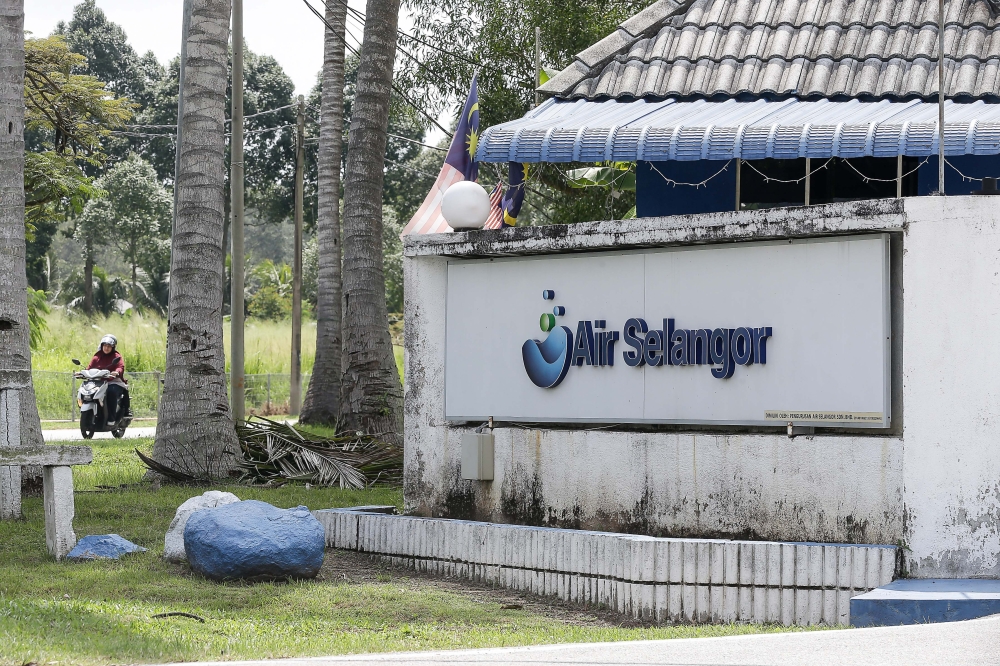
This is precisely the quandary facing Air Selangor, even after achieving substantial reductions in its NRW rate over recent years. The challenge has shifted from broad-stroke improvements to tackling the deeply entrenched issues within its aging infrastructure.
The Escalating Difficulty: When Every Drop Saved Costs More
According to SPAN's reporting, NRW continues to be a persistent hurdle across Malaysia's water sector. Data from 2015 to 2024 shows that losses in Peninsular Malaysia and Labuan have consistently hovered above 33 percent, despite ongoing efforts by utilities to mitigate them.
The causes of NRW are multifaceted, encompassing everything from physical pipe leaks and bursts to commercial losses stemming from inaccurate metering, water theft via illegal connections, ground movement, inadequate maintenance, and funding limitations. However, for Air Selangor, the narrative is evolving.
The utility has witnessed a positive trend, with its NRW rate declining from 31.7 percent in 2018 to 26.8 percent last year, setting a target of 25 percent by 2030. But the critical question is how much further this rate can realistically be pushed down.
Defining the "Economic Level" of Water Loss
“The extent to which we can reduce the NRW rate is determined by a calculation known as the economic level of NRW,” explained Adam Saffian Ghazali, CEO of Air Selangor, in an exclusive interview. “Essentially, the higher the tariff, the lower the economic NRW rate becomes. Based on our current tariff structure, our NRW team estimates this level to be around 23 to 24 percent.”
This suggests that while further reductions are still achievable, each subsequent percentage point gained may demand a disproportionately higher investment and effort. This aligns with global research in water loss management, which indicates that even in state-of-the-art networks, a certain level of water loss is inevitable. Pushing beyond this point can lead to costs that outweigh the benefits.
The Funding Conundrum: Tariffs, Investment, and the Cost of NRW
In Malaysia, the NRW challenge is intrinsically linked to funding constraints. A sector analysis from December 2025 highlighted that tariff limitations have hampered reinvestment, leaving water operators with an estimated annual revenue shortfall of RM1.2 billion. The report underscored that replacing aging pipes is the single most crucial measure for reducing NRW.
Meanwhile, the financial toll of these losses remains substantial. A May 2025 estimate from a financial services firm suggested that Malaysian water operators are losing approximately RM2 billion annually due to NRW.
For Adam Saffian, the true value of NRW reduction extends beyond mere figures. “For instance, even if we achieve a 5 percent NRW rate, but customers experience water outages when they turn on their taps, then the achievement is meaningless,” he stated. This underscores Air Selangor's commitment to proactively detecting bursts before they impact consumers.
The Toughest Nut to Crack: Unearthing Hidden Leaks
Non-revenue water is not a monolithic problem; it encompasses physical leaks from pipes, commercial losses related to metering and billing inaccuracies, and water that is consumed but not billed. However, not all these components are equally challenging to address.
For Air Selangor, the most formidable obstacle now lies in mitigating physical leaks originating from the pipe network itself. “We operate across three distinct areas, managing an extensive network of pipes of varying ages, which inherently makes them more susceptible to leaks,” Adam Saffian elaborated.
As of 2025, the utility oversees a vast network spanning 31,817 kilometers of pipes across Selangor, Kuala Lumpur, and Putrajaya. This sheer scale, he explained, contributes to the difficulty in reducing physical leaks compared to other forms of NRW.
Issues related to meters, for example, are more readily managed through systematic replacement programs and internal audits. Similarly, water theft and unauthorized usage can be tackled through enforcement measures. Buried leaks, in contrast, present a far greater challenge. They are harder to detect, more costly to repair, and their prevalence is directly tied to the condition of the aging network.
“Annually, we detect approximately 200,000 leaks across our service areas,” Adam Saffian reported. Air Selangor's data for 2024 alone shows the detection of 257,448 leaks throughout Selangor, Kuala Lumpur, and Putrajaya.
Leveraging Technology: The Rise of District Metering Zones
To combat this persistent issue, Air Selangor has been expanding its use of District Metering Zones (DMZs). This strategy allows for closer monitoring of pressure levels and facilitates quicker identification of leaks within specific network segments.
Currently, DMZ coverage stands at around 80 percent, with a strategic goal to increase this to at least 95 percent by 2028. “Once we have identified a potential water loss within a DMZ, we deploy sensors known as Permanent Leak Noise Correlating Loggers (PLNCL),” Adam Saffian explained. “These sensors detect the acoustic signature of a leak, enabling us to pinpoint its location more accurately within the network.”
This technological approach helps the utility narrow down leak detection efforts more efficiently across its vast infrastructure. Industry best practices, as outlined in a widely cited 2008 guide, emphasize that effective leakage management relies on a four-pronged approach: pressure management, prompt and high-quality repairs, active leakage detection, and robust pipeline asset management. This highlights that leak reduction is rarely achieved through a single intervention.
The Weight of History: How Old Pipes Undermine the System
The persistent nature of the NRW problem is intrinsically linked to the age of Malaysia's existing water infrastructure. Some of the pipes managed by Air Selangor are as old as 90 years, with parts of the older network still comprising asbestos cement materials.
The Klang Valley's modern water infrastructure has roots stretching back over a century to the British colonial era, when early waterworks and reservoirs were established to serve a burgeoning urban center. While much of this original system has been replaced, remnants of older materials continue to be in use today.
Adam Saffian acknowledged that Air Selangor continues to manage a significant number of very old pipes. “This is because segments of our network date back to the British colonial period. I recall visiting a site where a leaking asbestos cement pipe was marked with its installation year. It was from 1915,” he shared.
The Lingering Legacy of Asbestos Cement Pipes
Of the estimated 6,000 kilometers of asbestos cement pipes originally installed, 1,089 kilometers have been replaced, leaving approximately 5,000 kilometers still in service. The distribution of these aging pipes is uneven across the network, with Kuala Lumpur bearing the largest share, accounting for roughly 1,481 kilometers of the remaining 5,000 kilometers, or about 30 percent of the total.
Air Selangor indicates that these asbestos cement pipes were typically designed for a lifespan of 30 to 40 years, contingent on installation conditions, soil environment, and operational stresses. The majority of those still in use have long surpassed their intended service life and are now considered aging assets.
As these pipes age, they become increasingly brittle and structurally compromised, making them more vulnerable to cracks, bursts, and subsequent leaks, leading to significant NRW losses. They exhibit reduced tolerance to pressure fluctuations and external loads, resulting in higher maintenance and operational costs. This degradation ultimately impacts network reliability and service performance.
Air Selangor’s pipe replacement strategy is implemented in phases, prioritizing high-risk areas. This includes pipelines that are aging or in poor condition, locations experiencing frequent leaks and bursts, and critical or pressure-sensitive lines where repair work could disrupt supply to a large number of consumers.
The pace of these replacements is contingent on annual capital expenditure allocations and approvals from relevant authorities. The aging pipes are typically replaced with modern materials such as ductile iron, high-density polyethylene, and mild steel, which are engineered for service lives of 50 years or more.
Despite the challenges, Air Selangor's data indicates a positive trend in pipe integrity. Pipe burst incidents per 100 kilometers per year have fallen from 13.52 in 2018 to 3.25 in 2024, suggesting an improvement in network conditions even as the utility continues to manage a vast and aging infrastructure.
However, identifying these vulnerable points is only part of the battle. Even with advanced detection methods, the repair or replacement of aging pipes across a live, extensive network remains a time-consuming, costly, and meticulously planned undertaking.
Technology's Promise, Replacement's Reality: The Enduring Cost of Renewal
Advanced tools such as zonal monitoring, acoustic sensors, and rapid data analysis are instrumental in helping utilities respond to leaks more swiftly. Air Selangor is actively enhancing its capabilities in this regard by improving oversight across its entire network.
A key initiative involves striving for 24/7 network visibility, enabling earlier detection of pressure drops and allowing for the investigation of potential bursts before customers report them. Adam Saffian noted that this level of monitoring is already in place in one region, primarily in Sepang.
He further stated that Air Selangor has made substantial investments in digitalization and is now exploring the integration of artificial intelligence (AI) and machine learning as the “final frontier” in data analysis. Currently, these initiatives are in the proof-of-concept stage.
“Presently, our staff must manually extract and analyze data from the system, a process that can take up to a week. However, with AI embedded into the system and powered by machine learning, we can identify potential leaking areas much faster. What takes a week manually could be accomplished in a day with AI,” he explained.
Despite these technological advancements, the fundamental reality remains: repairing and replacing old pipes is an inherently expensive undertaking. Air Selangor's own expenditure data illustrates the escalating financial burden of maintaining the network. Repair and maintenance spending surged from RM328.74 million in 2020 to RM531.92 million in 2024.
Adam Saffian estimates that Air Selangor currently replaces approximately 300 kilometers of pipes annually, a process that incurs costs ranging from RM460 million to RM480 million. He highlighted that such works are particularly challenging in densely populated urban areas, where replacement in built-up sections of Selangor and Kuala Lumpur is both costly and disruptive to daily life.
A financial sector report from May 2025 indicated that each one percent reduction in NRW can necessitate an investment of RM800 million to RM1 billion, placing additional pressure on already constrained budgets. Air Selangor's pipe replacement program, initiated annually in 2016, was expanded to approximately 300 kilometers per year from 2024. A further increase to 400 kilometers annually is planned from 2034 onwards, subject to funding availability and implementation capacity.
This ongoing, substantial investment in infrastructure renewal likely represents the clearest explanation for why reducing NRW remains a formidable challenge, even for Malaysia's largest water utility. The objective has transcended merely improving a percentage; it is now about sustaining the functionality of an aging network while the slow, costly, and physically demanding work of renewal continues beneath the surface of our communities.




 Explore AI Teaching Tools
Comments (0)
Please login to comment
No comments yet
Be the first to comment on this article