
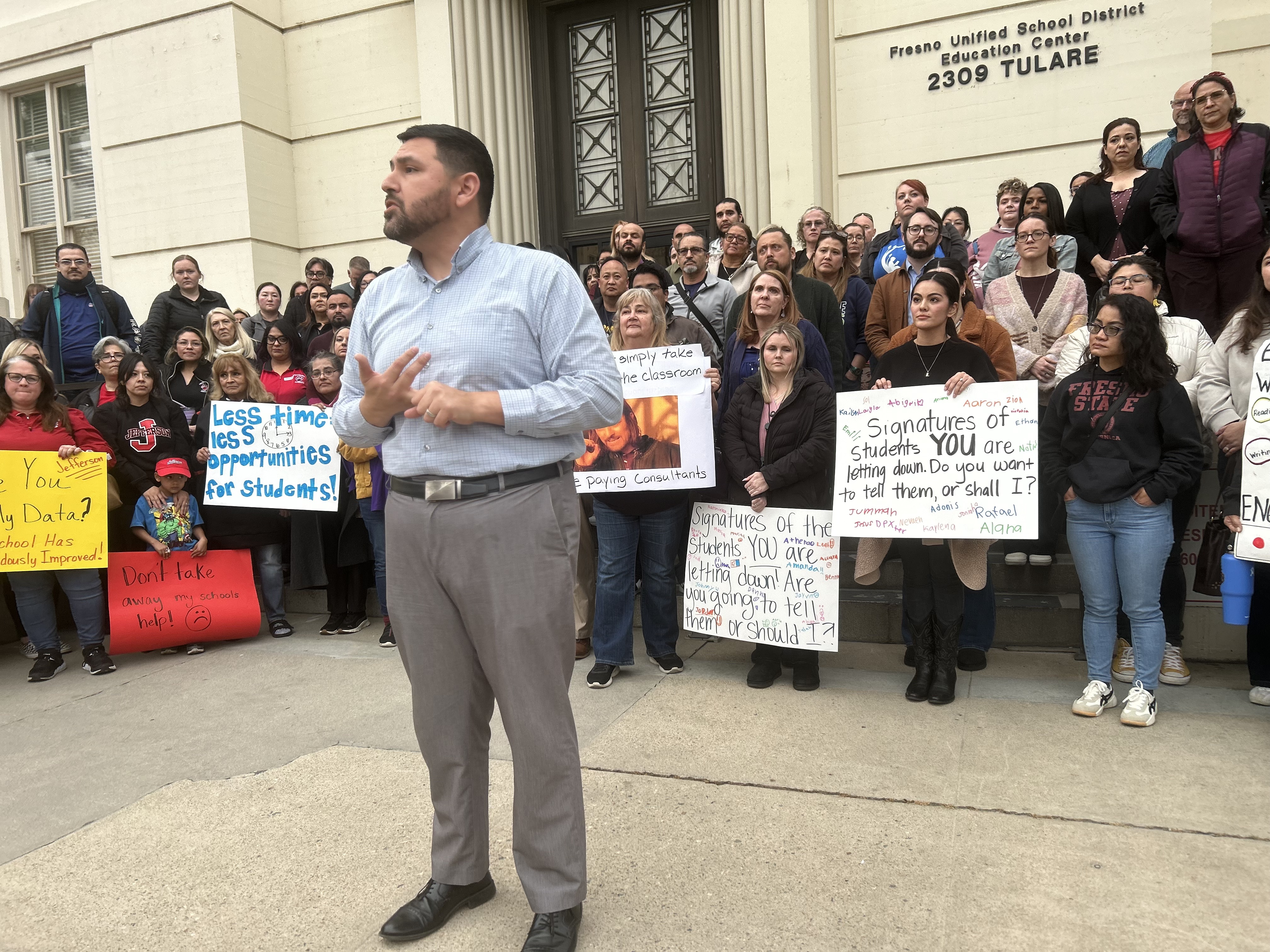
Fresno Unified Grapples with Deep Cuts: Essential Student Support Positions on the Chopping Block
In a move sending ripples of concern through its vast student body, Fresno Unified School District, California's third-largest, has finalized hundreds of layoff notices. These cuts, targeting crucial roles in mental health, foster youth services, and chronic absenteeism interventions, come at a time when educators and students alike are sounding the alarm about the escalating need for these very supports.
A Fiscal Reckoning Hits Student Services
The district is navigating a challenging post-pandemic financial landscape, a reality mirrored across many California school districts. Declining enrollment, escalating operational expenses, and the depletion of one-time federal pandemic relief funds have forced Fresno Unified into a painful budget balancing act. This year's reductions, however, are particularly stark, impacting positions that directly serve students' academic, emotional, and attendance needs.
Fresno Unified issued over 260 preliminary layoff notices in February and March to address a projected $59 million budget deficit. Since then, the identified shortfall has grown, exacerbated by rising special education and transportation costs, projecting a continued financial strain into the next fiscal year. This marks the third consecutive school year of budget reductions for the 70,000-student district.
While previous years saw cuts that largely avoided direct classroom impact, the current fiscal year's decisions target roles vital to student well-being and success. The finalized layoffs include preschool teachers, counselors, psychologists, campus safety staff, and intervention specialists, with mental health and student support services bearing a significant portion of the non-teaching staff reductions.
The Unfolding Impact on Students and Staff
Superintendent Misty Her acknowledged the difficulty of these decisions, stating, "Every single decision we make is a hard decision. We have to balance our budget." The district maintains substantial reserves, exceeding the state-mandated 2% minimum, with approximately $93.2 million set aside this year and a projected $61 million for the next. However, these reserves have not shielded the district from implementing significant staff reductions.
Across California, school districts commonly resort to layoffs to close budget gaps. State law mandates preliminary layoff notices by March 15, with final notices due by May 15. While many preliminary notices are rescinded, Fresno Unified saw the majority of its notices upheld during a recent special board meeting. This decision allows staff with greater seniority to transition into available roles, potentially displacing less senior colleagues.
The finalized layoffs have ignited debate, with critics pointing to the increasing budget deficit, the impact on student support services, the district's healthy reserves, and a recent board decision to increase their stipends amidst the financial constraints.
Shifting Priorities: From Support to Scarcity
In an effort to trim $49 million for the upcoming 2024-25 school year, Fresno Unified focused its reductions at the district level. This involved scaling back consultant contracts, eliminating vacant positions, and reassigning teachers on special assignment back to classroom duties. Additionally, programs like the Designated Schools initiative, aimed at providing supplemental instruction but yielding inconsistent results, were cut.
The district and the Fresno Teachers Association have reached an agreement designed to maintain student support through alternative programs and minimize negative impacts on staff. This collaboration aims to mitigate the fallout from the broader cuts.
A significant move to address financial shortfalls involved approving early retirement for 573 employees in December, a strategy projected to save $56 million over five years. Some of these vacated positions will not be refilled.
However, the cuts slated for the 2026-27 school year, projected to save $39 million, are anticipated to have a more direct and palpable effect on students and school campuses. These reductions come despite a recent history of increased investment in mental health staffing.
The Erosion of Essential Support Networks
Following the pandemic, Fresno Unified made substantial investments in school psychology, counseling, and intervention positions to better identify and support struggling students and their families. This led to the establishment of robust support teams, particularly in middle and high schools.
The current budget cuts necessitate a recalibration of these staffing expectations. For instance, middle schools, which previously had at least two counselors, will now operate with one. High schools will see their counselor numbers reduced from 11 to a maximum of 10.
The approved cuts will eliminate 22 counselor positions, three psychologist roles, 14 child welfare and attendance specialist positions, and 49 liaisons dedicated to family support. These are the very individuals students and educators rely on to ensure regular school attendance, access to resources, and guidance on college admissions, financial aid, and career pathways.
While 10 counselor positions focused on college and career readiness have been preserved through a district-teacher agreement, other counseling roles funded by one-time pandemic relief will cease to exist. The elimination of Project ACCESS counselors will disproportionately affect foster youth and students experiencing homelessness, services that have provided critical assistance, from essential items for school events to support for leadership development.
Students like Miriam Rosales have spoken out about the profound impact of these programs, sharing how they fostered a sense of potential and belonging, counteracting the stigma of being a foster youth. The loss of these dedicated roles threatens to leave vulnerable students without vital lifelines.
Attendance Specialists: A Critical Line of Defense Under Threat
Teachers, counselors, psychologists, and attendance specialists have collaboratively developed strategies to address chronic absenteeism, a persistent challenge for the district. These specialists have been instrumental in re-engaging students who miss 10% or more of the school year, utilizing a multi-faceted approach including phone calls, home visits, parent-student meetings, and counseling.
Cecilia Aguayo, a child welfare and attendance specialist, emphasized the unique role these professionals play, stating that they are the primary staff addressing enrollment and attendance challenges. Their work directly supports students and families by identifying and resolving barriers to consistent school attendance, directly tackling issues that contribute to the very budget cuts now being implemented.
Navigating the Aftermath: What Comes Next?
Superintendent Her has assured the board that despite fewer positions and reduced hours, support services will continue. The district plans to redistribute responsibilities to ensure essential functions are maintained. However, this redistribution raises concerns about potential staff burnout and the capacity to serve the same number of students effectively.
Abigail Arii, director of student support services, acknowledged that the restructured system will inevitably differ from its previous iteration. "Those services may not be allocated to where they were," Arii stated, recognizing that this shift will likely impact the number of students who can receive support and necessitate careful coordination to manage the ripple effects.
The district has yet to fully detail its plan for this intricate redistribution of responsibilities. Beyond the student support roles, other critical positions facing cuts include three intervention specialists, seven nurses, 10 paraprofessionals, and 12 library technicians, impacting various facets of school operations and student learning environments.
The State Budget's Shadow
Across California, education leaders are urging Governor Gavin Newsom and the state Legislature to reconsider plans that could lead to billions in withheld education funding, potentially necessitating further district-level cuts. Governor Newsom's January proposal included holding back $5.6 billion from Proposition 98, the state's constitutional guarantee for school funding.
Fresno Unified union and district leaders have joined advocacy efforts calling for the governor to allocate these crucial funds. While the governor's revised proposal is anticipated, clarity on its impact for Fresno Unified remains elusive.
Patrick Jensen, the district's chief financial officer, has engaged with the governor's staff but has not received definitive information regarding the state budget's implications. While potential ongoing funding or one-time block grants are possibilities, Jensen expressed that "There’s nothing in the May revise that I would think would fundamentally change any of the decisions we’re making this year." The district's current fiscal decisions appear to be set, regardless of potential state-level adjustments.





 Explore AI Teaching Tools
Comments (0)
Please login to comment
No comments yet
Be the first to comment on this article