
Beyond the Buzzer: How Urban Debaters Forge Futures in a New Documentary
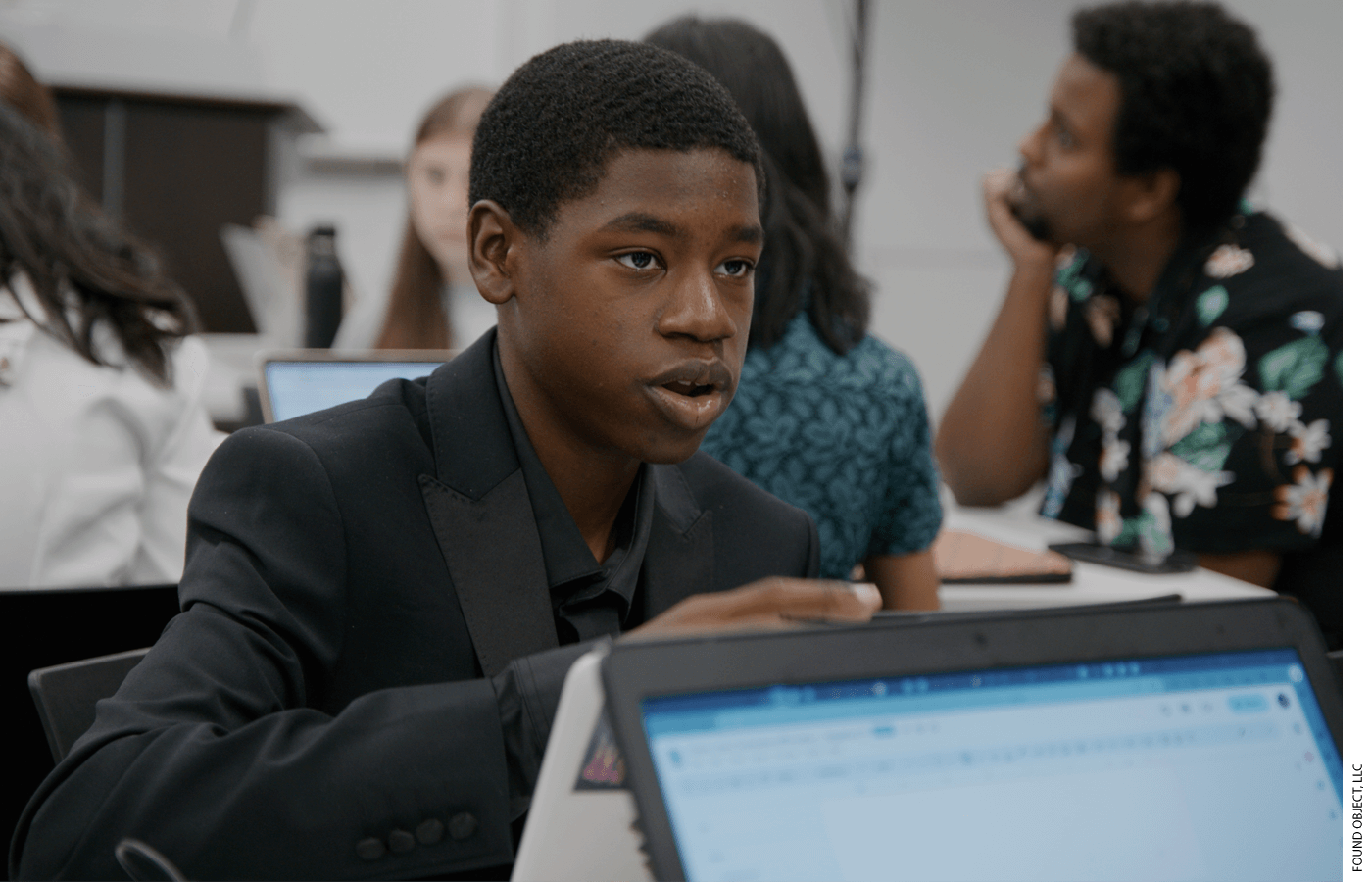
Forget the underdog narrative. A new documentary film, "Immutable," offers a profound look at young minds navigating complex societal issues, not just through competition, but through deeply ingrained family wisdom and a fierce drive for understanding. The film, set to stream on PBS starting March 6, centers on the Washington Urban Debate League (WUDL), showcasing students whose intellectual journeys are as rich and challenging as any on-screen drama.
The Crucible of Competition, The Hearth of Home
The cinematic landscape is dotted with stories of bright, disadvantaged students finding their voice and destiny through prestigious academic contests. Think of the intense math challenges in "Stand and Deliver" or the gripping spelling bee in "Akeelah and the Bee." These narratives often hinge on a pivotal adult figure igniting potential and guiding young protagonists toward triumphant validation.
"Immutable" initially appears to follow this familiar path. It introduces us to predominantly Black public school students from the Washington, D.C., area, grappling with formidable obstacles – from navigating neighborhoods touched by violence to personal battles with chronic illness and family health crises. As debaters, they are positioned as contenders against more privileged private school counterparts, inviting audiences to root for their success.
However, the film quickly pivots, revealing a depth that transcends the typical underdog tale. These students aren't waiting for external validation to ignite their intellect. Long before they step onto the debate stage, their home environments are already cultivating sophisticated perspectives on race, poverty, and justice.
A Mother's Wisdom, A Debater's Foundation
The film highlights the profound influence of mothers, who are the primary parental voices featured. Their conversations with their children are not mere encouragement; they are rigorous intellectual sparring sessions. One poignant scene shows Noah's mother, Delores, pushing him to deepen his analysis of capitalism.
“When you’re telling me about capitalism, I need you to go deeper with it,” she instructs. “Think how it relates to you. How does it impact . . . what’s happening with your grandmother or your dad’s parents or your dad or me?” This isn't just about winning a debate; it's about connecting abstract concepts to lived realities.
Delores later articulates the core of this approach: “I just made sure that he understood what he’s debating about. There are lives that are connected to what [they’re] debating about. And it’s real-world; it’s today.” This underscores how the WUDL debaters are not just students of rhetoric, but analysts of their own social fabric.
The Power of the Platform: Debate as a Catalyst
The Washington Urban Debate League provides a crucial arena for these students to articulate and refine the complex ideas they are already exploring. The league’s adult staff, while undoubtedly skilled educators, are not the primary drivers of the students' intellectual growth; rather, they facilitate a space where this growth can flourish.
One adult in the film expresses a powerful philosophy: “I feel that the best gift I can give them is to ensure that they are in the room with people that are free.” This sentiment speaks to the agency and intellectual liberation that debate can foster, allowing students to navigate the world by choice rather than by the dictates of survival.
Research consistently points to the substantial educational benefits of debate programs. Studies indicate higher reading scores and improved likelihood of high school completion and college attendance. These extracurricular programs, often voluntary, seem particularly impactful for students who thrive on competition, enjoy oral performance, and possess a keen interest in controversial social issues.
From Hesitation to Mastery: The Journey of a Debater
The path to mastery in debate is rarely linear. Noah's mother candidly recalls his early struggles: “In the beginning, he sucked. I mean, you can edit that if you want, but . . . it was torture watching him debate.” Her persistent questioning, “You want to keep going? Do you want to keep going?” highlights the grit required.
Noah's unwavering response, “I’m going to figure this out,” exemplifies the internal motivation that debate can unlock. His mother observes, “He found his community, the space where he could be competitive as well as show his intellect, all at the same time.” This dual outlet for ambition and intellect is a hallmark of successful debate programs.
"Immutable" distinguishes itself by presenting the WUDL debaters not as uniformly disadvantaged underdogs, but as individuals with diverse strengths and challenges. The film avoids the trope of inevitable victory, showcasing nuanced performances and acknowledging that not every debate results in a win. This authenticity resonates deeply.
Beyond the Scorecard: Character, Compassion, and Community
The documentary offers moving portraits of camaraderie and mutual support. Daniella, a passionate debater facing neurological challenges that can trigger debilitating panic attacks, finds unwavering support in her partner, Sitara. Sitara's calm presence and compassionate gaze during Daniella's struggles underscore the profound human connections forged within the competitive environment.
The film also celebrates the palpable love and respect between many of the young debaters and their mothers. These relationships serve as a powerful antidote to despair, showcasing resilience and deep familial bonds. This is a crucial element that elevates "Immutable" beyond a simple sports or academic film.
Within the WUDL, a unique cultural hybrid emerges. Students engage with complex technical topics, such as NATO's cybersecurity policy, while simultaneously developing their own vernacular for dissecting debate tactics. This blend of formal academic rigor and homegrown linguistic creativity reflects the vibrant intellectual ecosystem of the league.
A Legacy of Civic Engagement: From Jefferson to Today
The idea that debate cultivates better citizens is not new. As far back as 1788, Thomas Jefferson lauded George Wythe's teaching methods at William & Mary, which included regular lectures, moot courts, and parliamentary sessions where students debated law and legislation. Jefferson recognized the value of public speaking and parliamentary procedure in shaping young minds.
One mother in "Immutable" echoes this sentiment, stating, “You know, we talk about critical thinkers that are going to be the citizens that we’ve been waiting for. How else are they going to get created if we don’t promote these spaces for them to nurture that work?” This highlights the vital role of structured environments in developing future civic leaders.
Competitive debate inherently motivates individuals to engage deeply with complex public issues. The requirement to argue on substance, rather than resorting to personal attacks, strengthens analytical skills. The practice of addressing a judge, rather than an opponent, fosters a more objective and reasoned approach to argumentation.
Cultivating Critical Perspectives, Shaping Future Discourse
Competitive debate often requires students to argue assigned positions, a valuable exercise in understanding multiple facets of an issue. Emmanuel Makinde, a former WUDL debater now coaching and pursuing higher education, speaks to this transformative power in the film.
“Debate has allowed me to explore, not only critical perspectives about my own position as a Black person in America but also other people’s critical perspectives,” he explains. “It’s actually scary the extent to which things that I believed in firmly before debate I’ve like criticized now myself.” This intellectual humility and capacity for self-reflection are invaluable.
These outcomes have significant civic implications, directly addressing deficits seen in contemporary public discourse, such as ad hominem attacks, superficial arguments, and a general disdain for opposing viewpoints. The skills honed by these debaters are precisely those needed to foster more constructive public dialogue.
Beyond Debate: Expanding the Spectrum of Civic Skills
While the benefits of debate are clear, it is not a singular solution to all societal challenges. The format can sometimes present issues as strictly binary, overlooking the spectrum of potential solutions. Furthermore, its inherent structure of winners and losers might not always align with the goals of collaboration and consensus-building.
To broaden the scope of civic skill development, other student competitions offer complementary approaches. The Ethics Bowl, for instance, emphasizes constructive commentary on opponents' arguments and encourages dialogue. Judges in such competitions often assess a team's commitment to collaboration and the pursuit of truth over combativeness.
Students can also cultivate civic skills through engaging with challenging texts or collaboratively designing solutions for public problems. These methods prioritize dialogue and deliberation, addressing different aspects of civic engagement and public life. Citizenship itself can manifest in various forms, from acts of service to collaborative problem-solving and competitive advocacy.
"Immutable" offers a powerful testament to the potential of urban public school students. By showcasing their intellectual rigor, their deep familial connections, and their capacity for both fierce competition and profound compassion, the film suggests a hopeful future. If these young individuals are poised to lead, the public can indeed look forward with optimism.


 Explore AI Teaching Tools
Comments (0)
Please login to comment
No comments yet
Be the first to comment on this article