
India's Tech Giant Builds Its Own University: A Bold Answer to the Graduate Skills Gap
In a move that underscores a growing global disconnect between academia and industry, a leading Indian technology firm has established what is effectively a sprawling corporate university, transforming raw college graduates into job-ready professionals on a massive scale. This innovative model, born out of necessity in a rapidly evolving job market, offers a compelling preview of how businesses worldwide are grappling with the persistent challenge of ensuring new hires possess the skills demanded by the modern workforce.
Rishi Agrawal, a recent computer science graduate from a private engineering college in Bhopal, embodies the very dilemma many face. Hailing from a small village where higher education was a distant dream for his parents, Agrawal earned his degree with aspirations of a career in the fast-paced tech sector. However, his experience highlights a critical issue: the often-outdated curricula and teaching methods prevalent in many higher education institutions, even in a country experiencing explosive growth in its university system.
The Widening Chasm: Degrees vs. Employability
India's higher education landscape has seen remarkable expansion, with college enrollment more than tripling since 2005, now boasting the second-largest postsecondary sector globally. Despite this surge, the quality and relevance of education remain a significant concern for employers. Agrawal's sentiment—that his college coursework felt decades behind current industry standards—is a common refrain among graduates.
This disconnect is not unique to India. A significant majority of global employers surveyed by the World Economic Forum identify skills gaps as a major impediment to business transformation. The disparity between how confident educational providers are about their graduates' readiness and employers' actual perceptions is stark, creating a bottleneck in the talent pipeline.
A Campus Built for the Future of Work
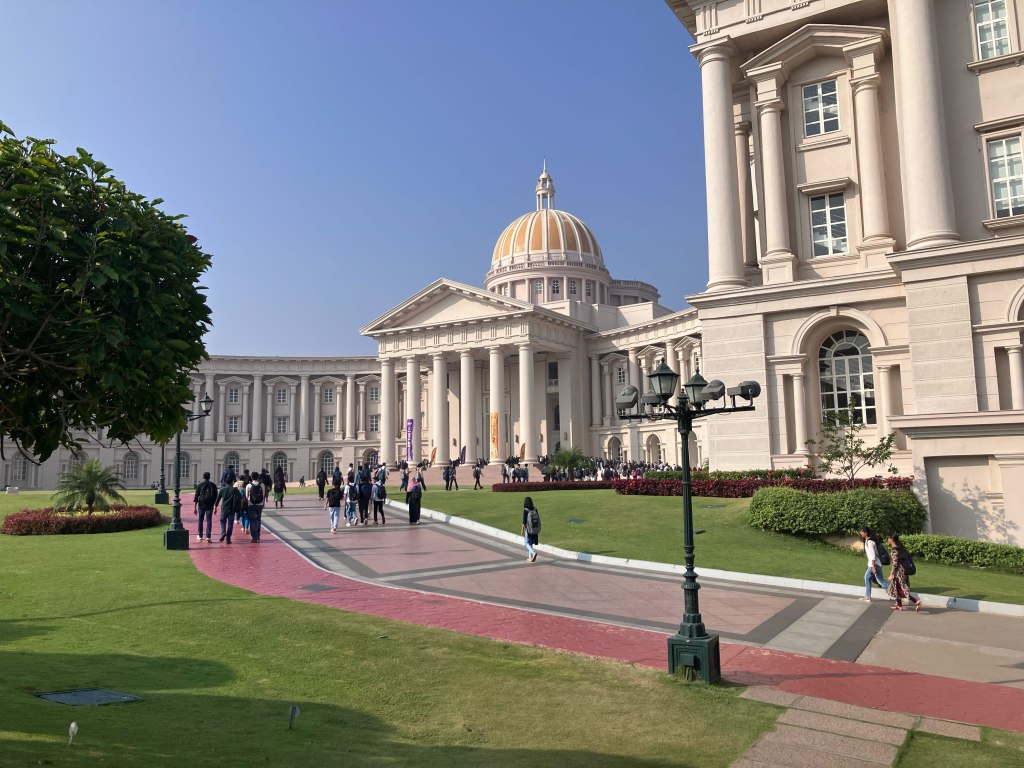
Seeking a direct solution, one of India's preeminent multinational services and consulting firms, Infosys, has invested heavily in its own educational infrastructure. The company's Global Education Center in Mysore, a sprawling 337-acre campus complete with residential facilities and dining halls, functions much like a traditional university but is meticulously designed around the dynamic needs of its clients and the relentless pace of project deadlines.
When visited recently, the center was actively training 9,000 new hires, affectionately known as "freshers," simultaneously. This immersive program signals a profound shift in how the company views higher education degrees: as indicators of potential and aptitude, rather than definitive proof of immediate workforce readiness. Infosys, a Bangalore-headquartered giant with substantial annual revenue, recognizes that the skills required for complex client projects—from optimizing airline operations to overhauling national healthcare IT systems—must be actively cultivated.
From Graduation to "Infoscion"
The training program at Infosys is a comprehensive, multi-week boot camp designed to bridge the gap between academic learning and practical application. Graduates, regardless of their specific engineering specialization, undergo an intensive curriculum that begins with foundational IT concepts essential for any programmer.
This core training covers vital areas such as algorithms, database management, and object-oriented programming. Following this foundational phase, trainees delve into specialized tracks, dedicating approximately ten weeks to in-demand fields like big data, cloud computing, and artificial intelligence, all tailored to current and future business requirements.
Beyond technical prowess, the program places significant emphasis on soft skills, recognizing their crucial role in client interactions and team collaboration. Sessions focus on effective communication, presentation skills, and the art of assertive yet professional engagement. The goal is to mold individuals not just into skilled technicians, but into well-rounded professionals capable of navigating the complexities of the corporate world.
Hands-On Learning, Real-World Impact
The pedagogical approach at the Mysore campus is heavily skewed towards practical, hands-on learning. Instructors emphasize a learning environment where approximately 60 to 70 percent of the coursework involves direct application and problem-solving, moving away from purely theoretical instruction.
For instance, in a recent session, trainees used a simulated dataset to write Python code for predicting healthcare costs, grappling with the practicalities of data standardization and its impact on analytical outcomes. This experiential learning ensures that graduates understand not just the "what" but the "why" behind technical concepts, preparing them to tackle real-world challenges with confidence.
The investment in this extensive training is substantial, with Infosys estimating the cost per fresher to be around $8,000, spread over 19 to 23 weeks. While trainees receive a salary during this period, successful completion hinges on passing a series of rigorous assessments. This ensures that only those who demonstrate the required competence transition to full-fledged "Infoscions," with a small percentage, typically between 5 and 8 percent, not meeting the program's standards.
Cultivating Client Empathy and Professionalism
A unique aspect of the Infosys training is its focus on "client orientation" as a skill that can be honed through practice. Behavioral skills classes equip trainees with the nuances of professional communication, including how to articulate project delays or clarify client expectations with sensitivity and clarity.
Trainees learn the importance of empathy in client relationships, understanding that a client's needs are not always explicitly stated. The program encourages foresight, enabling future employees to anticipate potential issues and proactively offer solutions, thereby fostering stronger client partnerships.
The diverse cohort of 20,000 young individuals who pass through the program annually brings a wealth of varied backgrounds from across India. This rich tapestry of linguistic and cultural diversity necessitates a focus on developing strong interpersonal and communication skills. Trainees learn to collaborate effectively with peers from different backgrounds and to present themselves professionally in a global business context.
A Pragmatic Approach to Skill Development
The program's success lies in its pragmatic approach, prioritizing interaction and active questioning over passive lecture-style delivery. This contrasts sharply with the rote learning that still characterizes many traditional university settings.
Instructors actively engage students in discussions that mirror real-world scenarios, such as understanding client satisfaction by drawing parallels to consumer behavior in online reviews. This method helps trainees grasp the underlying principles of meeting client needs, even when those needs are not clearly articulated.
While Indian universities, much like their counterparts globally, are increasingly incorporating practical elements into their curricula, Infosys's sustained commitment to its in-house training underscores the persistent gap between academic output and industry demand. Experts suggest this chasm is likely to persist for the foreseeable future, particularly given the rapid growth and inherent variability within India's vast higher education system.
The Global Trend: Corporate Education Takes Center Stage
The Infosys model, while perhaps an extreme example shaped by India's unique educational landscape and scale, reflects a broader global trend. Companies worldwide are recognizing the necessity of investing in their own talent development pipelines.
This phenomenon is not limited to India. In the United States, numerous corporations have established their own virtual and physical training centers to upskill both new and existing employees. Initiatives range from comprehensive onboarding experiences to specialized learning hubs designed to foster innovation and expertise.
The core principle remains consistent: degrees signal potential, but practical, industry-specific skills are paramount for immediate contribution. As companies continue to navigate an increasingly complex and rapidly changing business environment, the role of corporate education is set to expand, potentially reshaping the traditional pathways from college to career.




 Explore AI Teaching Tools
Comments (0)
Please login to comment
No comments yet
Be the first to comment on this article