
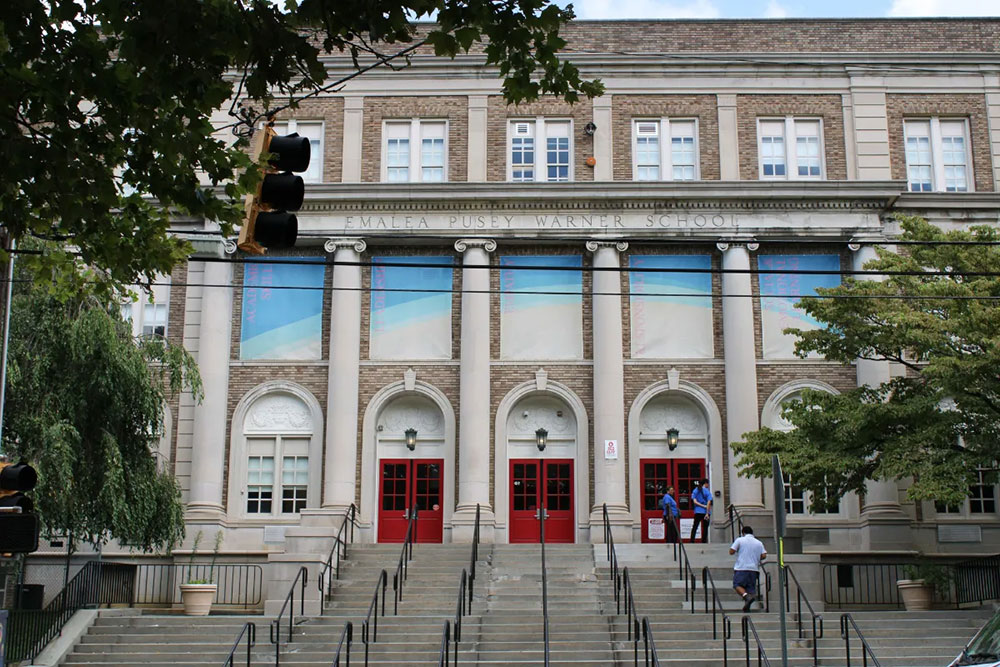
More than a dozen public schools in Delaware are operating at less than 60% capacity, with five schools more than half empty. This stark reality, revealed by data from the Delaware Department of Education, isn't just a statistic; it's a pressing challenge for educators and policymakers alike. It forces us to ask critical questions about resource allocation, community needs, and the very future of our school buildings.
Delaware Grapples with Underutilized School Buildings
The phenomenon of half-empty school buildings has prompted significant legislative attention. Delaware’s House Speaker Mimi Minor Brown has introduced a resolution aimed at creating a framework to identify and repurpose underutilized government facilities, including schools. This initiative seeks to foster a coordinated planning conversation between state officials and school districts.
The resolution, which has passed the House and awaits Senate consideration, is designed to initiate a dialogue rather than force immediate closures. It emphasizes a collaborative approach to understanding how these spaces might better serve community needs, potentially housing services like childcare or senior support.
"This starts a coordinated planning conversation."
This move comes at a time when enrollment trends across Delaware are not uniform. While some schools, particularly in New Castle County, face declining student populations, others in southern Delaware are experiencing surges. This disparity is fueled by factors such as the expansion of charter schools and evolving transportation patterns that allow students to attend schools outside their immediate neighborhoods.
The impact is visible in specific schools. Alexis I. duPont High School in the Red Clay Consolidated School District, for instance, is reportedly only 53% occupied. Similarly, Castle Hills Elementary School in the Colonial School District operates at a mere 48% capacity. These figures highlight a growing concern about the efficient use of public infrastructure.
Rethinking School Capacity and Utilization
While occupancy rates are a key metric, some school officials argue that they don't tell the whole story. Colonial School District Superintendent Jeff Menzer points out that capacity numbers can be misleading. The space required per student can vary significantly based on individual needs and the level of support provided.
For example, a classroom designed for 25 students might feel overcrowded if several students require intensive reading intervention, necessitating smaller group settings or additional support staff. This means a school with a lower recorded enrollment might still be stretched for space when accommodating diverse learning needs and fostering inclusive environments.
This nuanced perspective suggests that a simple headcount of empty desks may not accurately reflect a school's functional capacity. The complexity of modern education, with its emphasis on individualized learning and specialized support, adds layers to the definition of "underutilized."
Defining "Underutilized" in a Dynamic Educational Landscape
The proposed resolution aims to establish clear definitions for underutilized properties, but this is a complex undertaking. One school administrator suggested that high schools with fewer than 800 students warrant early conversations about their long-term sustainability. This threshold is particularly relevant for institutions offering a range of academic and career technical programs.
These early discussions should focus on "sustainable programming" and the necessary staffing to support it. It’s about ensuring that schools can continue to offer robust educational opportunities without being hampered by shrinking student bodies and the associated resource challenges.
A 2023 survey of 1,000 school administrators found that nearly 60% believe current capacity metrics fail to account for specialized student support services.
The challenge lies in balancing the need for efficient resource management with the imperative to provide high-quality education tailored to every student's needs. This requires a data-driven yet flexible approach that considers the unique circumstances of each school and its community.
Exploring Repurposing and Community Integration
The conversation about underutilized schools inevitably leads to questions of repurposing. House Speaker Minor-Brown's resolution encourages exploring how these buildings could be transformed to meet other community needs. This could range from providing much-needed childcare facilities to offering affordable senior housing.
Such repurposing could offer a dual benefit: addressing underutilized school infrastructure while simultaneously meeting critical community service gaps. It’s an opportunity to reimagine public assets for broader societal benefit.
The idea of repurposing school buildings is not entirely new. Similar discussions have arisen in other districts facing similar demographic shifts. The key is to develop a systematic and equitable process for identifying suitable properties and potential new uses.
Innovative Solutions for Underutilized Spaces
Beyond complete repurposing, there are other avenues to consider. Could these schools become hubs for community learning, offering adult education or vocational training programs? Could they house arts organizations or serve as incubation spaces for local businesses?
The potential applications are vast and depend on local context and community input. Engaging residents in this process is crucial to ensure that any changes serve the best interests of the entire community. This might involve partnerships with non-profits, local government agencies, or private developers.
For educators, this presents an opportunity to think creatively about how school spaces can be more dynamic and community-integrated. Imagine schools that are not just places of learning for children but also vibrant centers for lifelong education and community engagement.
The Role of Technology in Modernizing School Operations
While legislative and infrastructural discussions unfold, educators are continuously seeking ways to optimize their current resources and enhance student engagement. The effective use of technology can play a significant role in this, even within schools facing enrollment challenges.
Tools that streamline lesson planning and assessment can free up valuable teacher time, allowing them to focus more on individual student needs. For instance, platforms offering AI lesson plan generation and AI grading can significantly reduce administrative burdens. This is particularly helpful when class sizes might be smaller, allowing for more personalized attention.
Interactive tools also keep students engaged, regardless of the school's overall occupancy. Features like live quiz capabilities, word search game options, or trivia game formats can transform traditional lessons into dynamic learning experiences. These can be used effectively in any classroom setting.
Leveraging Digital Tools for Enhanced Learning
The integration of technology can also support more effective student grouping and collaborative learning. Smart student grouping tools can help teachers create diverse and effective teams for projects, ensuring that all students, regardless of the school's size, have opportunities for peer learning.
Interactive displays, such as those found in MentofyBoards, can provide engaging classroom widgets like countdown timers, scoreboards, or polls, further enhancing the learning environment. These tools help create a more dynamic and responsive classroom, making the most of the physical space available.
Even with fewer students, the quality of instruction and engagement remains paramount. Technology offers a powerful avenue to amplify teaching effectiveness and student participation, ensuring that every school, regardless of its enrollment numbers, can provide a rich educational experience.
Navigating the Future of Delaware's Schools
The situation in Delaware highlights a national trend: the need for flexible and adaptive educational systems. As demographics shift and communities evolve, so too must our approach to school infrastructure and resource management.
The conversation initiated by House Speaker Minor-Brown's resolution is a crucial first step. It acknowledges the reality of underutilized spaces and seeks proactive solutions rather than reactive measures. This forward-thinking approach is essential for the long-term health of Delaware's education system.
Ultimately, the goal is to ensure that every child in Delaware has access to a high-quality education, regardless of where they live or the occupancy rate of their local school. This requires a commitment to innovative thinking, collaborative planning, and a willingness to reimagine the role of school buildings in the 21st century.
The path forward will undoubtedly involve careful consideration of data, community needs, and educational best practices. By embracing a proactive and collaborative spirit, Delaware can transform its underutilized school buildings from challenges into opportunities, strengthening both its educational landscape and its communities.




 Explore AI Teaching Tools
Comments (0)
Please login to comment
No comments yet
Be the first to comment on this article