
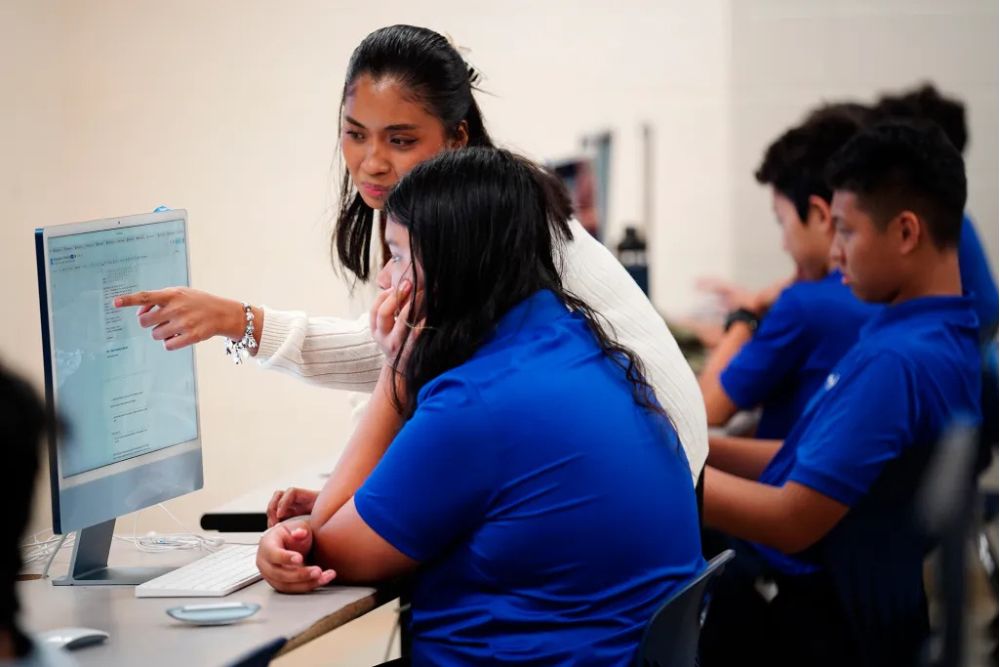
Hawaiʻi's schools are at a critical juncture, grappling with the pervasive influence of artificial intelligence. From the emergence of AI-focused charter schools to teachers confronting AI-generated assignments, the educational landscape is rapidly transforming. This seismic shift demands that educators not only understand AI's capabilities but also strategize how to integrate it responsibly and effectively, ensuring students are prepared for a future where AI is an undeniable force.
The AI Awakening: From Threat to Tool
The initial reaction to AI in education often centered on apprehension, particularly concerning academic integrity. Many educators, like Michael Latham, president of Punahou School, initially viewed AI as a potential threat to authentic learning, focusing on prevention of misuse.
However, the prevailing sentiment is shifting towards a more proactive approach. Schools are moving beyond mere detection and prohibition to actively teaching students how to leverage AI as a powerful tool. This pivot aims to cultivate thoughtful, critical, and aware users of AI technology.
“We wanted our students to become really thoughtful and critical users,” said Michael Latham, president of Punahou School. “to be able to understand these tools, but do so really with eyes wide open, aware of what some of the challenges would be.”
Public school systems are also exploring AI. Winston Sakurai, educational administrative services director in the Department of Education’s Office of Curriculum and Instructional Design, highlighted pilots of platforms like MagicSchool. These tools offer AI-driven features such as image generators and chatbots, designed to be adaptable for individual lessons.
While training is provided, Sakurai acknowledges the varied pace of adoption among educators. The challenge lies in finding a balance between embracing innovation and preventing teacher burnout.
Navigating the Uncharted Territory of AI in the Classroom
For some teachers, the advent of AI has prompted a reevaluation of traditional teaching methods. Cynthia Reves, a teacher at McKinley High School, has observed a growing uncertainty about the authenticity of student work, leading her to emphasize paper-and-pencil assignments and limit device usage.
Reves’s experience reflects a broader concern: the difficulty in detecting AI-generated content. Unlike previous eras where plagiarism could often be identified through simple searches, AI detection tools have proven unreliable, leaving educators in a state of doubt.
This uncertainty has led to practical adjustments. Reves now largely confines writing assignments to the classroom, requiring teacher sign-off to verify student authorship. This is a significant departure from past practices, illustrating the profound impact AI is having on pedagogical approaches.
Yet, Reves also recognizes the inevitability of AI. She has begun incorporating AI into her curriculum, allowing students to compare their work with AI-generated responses. This approach aims to foster critical evaluation skills, trusting students to discern the quality and validity of AI output.
“I feel like I’m walking backwards, and yet there’s this AI thing that’s pulling forward,” Reves remarked, describing the tension between traditional methods and emerging technology.
This evolving strategy reflects a growing understanding that rather than fighting AI, educators must teach students how to engage with it critically and discerningly. It’s about building a robust understanding of when and how AI can be a valuable asset, rather than a shortcut.
Early Encounters: Young Learners and AI
At the preschool level, the interaction with AI is proving to be surprisingly insightful and empowering for young students. Leslie Gleim’s preschoolers at Mid-Pacific Institute are actively engaging with ChatGPT, not as an infallible oracle, but as a tool to be tested and understood.
Gleim uses ChatGPT to transcribe student conversations, later prompting the AI to summarize themes. Crucially, she then involves the children in evaluating the AI’s output, fostering a sense of intellectual superiority and critical thinking.
This hands-on approach allows students to directly compare their own creative and logical thinking with that of the AI. The children’s enthusiastic rejection of inaccurate AI responses demonstrates their developing capacity for discernment.
For Gleim, ChatGPT serves as a time-saving transcription tool and a means to increase student intentionality. Knowing their words are being processed by AI encourages more thoughtful communication.
She emphasizes that AI is not the ultimate source of knowledge. By openly pointing out AI's errors, Gleim instills a vital lesson: AI is a tool, not an infallible authority.
Preparing for the AI-Driven Workforce
For students like Kingston Collman, a recent graduate of Hawaiʻi Technology Academy, AI represents both a challenge and an opportunity. Initially concerned about AI automating his dream job in game development, Collman pivoted to leverage AI for content creation.
He developed an AI assistant to streamline the production of social media videos, significantly reducing the time required for tasks like script generation and shot suggestion. This shift highlights how AI can enhance, rather than replace, human creativity and productivity.
Collman’s experience points to a future where understanding and utilizing AI will be crucial for career success. The ability to work alongside AI, optimizing processes and enhancing output, will be a key differentiator.
However, concerns about AI's impact on authenticity persist. The rise of "AI slop" on platforms like YouTube raises questions about the integrity of online content and the potential erosion of critical discernment among audiences.
Adriana Hunt, another HTA graduate, navigates a similar path in her art. While using AI to analyze her social media performance and suggest growth strategies, she draws a firm line at using AI to generate art itself.
Hunt views art as a personal expression of creativity, something she believes AI cannot replicate. She also worries that AI-generated art could set unrealistic standards, potentially diminishing human artistic endeavor.
Her perspective underscores the delicate balance between embracing AI's capabilities and preserving the unique value of human creativity and critical thought.
Building the Future: AI Literacy from the Ground Up
At Kūlia Academy, Hawaiʻi's first AI-focused middle and high school, the approach to AI is foundational and comprehensive. The curriculum integrates data science and coding as core subjects, aiming to equip students with a deep understanding of how AI functions.
Students at Kūlia are not just learning to use AI; they are learning to build it. The school's seven-year program is designed to prepare them for careers in AI engineering and cybersecurity.
This immersive approach ensures that students grasp the underlying principles of AI, enabling them to become creators and innovators rather than just consumers of technology.
Even in English classes, AI is integrated thoughtfully. Students use tools like ChatGPT for essay feedback, guided by teachers who help them critically assess the AI's suggestions. This fosters a nuanced understanding of AI's role in the learning process.
“We want them to know, inside and out, how it actually works,” said Andy Gokce, executive director of Kūlia Academy, emphasizing the school's goal of developing AI experts.
The emphasis at Kūlia Academy is on developing a profound, intrinsic understanding of AI, fostering a generation capable of leading the field and shaping its future trajectory.
Challenging the Machine: Students vs. AI
Tyler Kojima, a sixth-grade teacher at Waiākea Intermediate School, has found an innovative way to engage his students with AI: by challenging them to beat it. He tasks his students with defending historical inventions against a skeptical AI chatbot.
This exercise, framed as a competition, encourages students to think critically, articulate their arguments persuasively, and understand the limitations of AI. The goal is not just to use AI, but to outthink it.
Students must engage in a rapid-fire dialogue, responding to AI-generated challenges within a strict message limit. This fosters quick thinking and a deep understanding of the subject matter.
Kojima's approach acknowledges that while AI is a powerful tool, it is not omniscient. By setting clear limitations and encouraging critical evaluation, he empowers students to see AI as a formidable opponent that can be understood and overcome.
His philosophy aligns with a broader educational imperative: to equip students with the skills to navigate a world increasingly shaped by AI. This includes understanding its capabilities, its limitations, and how to use it responsibly.
The journey of AI integration in Hawaiʻi schools is dynamic and multifaceted. While some educators and students are forging ahead with innovative uses, others are cautiously adapting, and many are still exploring the best path forward. The key takeaway is that AI is no longer an abstract concept; it is a present reality that demands thoughtful engagement, strategic planning, and a commitment to fostering AI literacy for all students.



 Explore AI Teaching Tools
Comments (0)
Please login to comment
No comments yet
Be the first to comment on this article