
Texas's celebrated charter school sector, long a beacon of alternative education and a significant draw for students seeking diverse learning environments, is facing an unprecedented enrollment slowdown. For the first time in decades, the growth rate has dipped to its lowest point, a stark warning sign that the forces impacting traditional public schools may soon catch up to these independent institutions. This shift has profound implications for educators, administrators, and policymakers alike, demanding a reevaluation of strategies to maintain student engagement and institutional viability.
The Unforeseen Slowdown: A Shifting Demographic Landscape
For thirty years, Texas charter schools have consistently seen their enrollment climb, absorbing students even as traditional public schools experienced declines. This trend offered a unique narrative of choice and opportunity within the state's educational ecosystem. However, recent data reveals a dramatic deceleration, with year-over-year growth plummeting to a mere 2.4%.
This isn't just a statistical blip; it represents a fundamental change in the educational landscape. The once-reliable influx of new students is now a trickle, forcing schools to confront the stark reality of a shrinking student pool. This necessitates a proactive approach from educators to understand and adapt to these evolving demographics.
“They’re headed to a cliff, for sure,” states Bob Templeton, a senior consultant with STRIVE, an Austin-based public policy firm. “And I don’t know if it’s going to be next year, but it could definitely be within five years.”
The impact of this enrollment slowdown is multifaceted. Funding for Texas schools is directly tied to student attendance, meaning fewer students translate to reduced resources. This can create a domino effect, impacting everything from classroom supplies and teacher salaries to the very quality of instruction provided to the students who remain.
Factors Driving the Enrollment Shift: Beyond Birth Rates
While declining birth rates have been a long-standing concern for public education nationwide, experts point to a confluence of other factors contributing to the charter school enrollment slowdown in Texas. These include a growing array of educational options and a climate of fear impacting certain communities.
The rise of homeschooling, for instance, has surged dramatically, particularly in the wake of the pandemic. Families seeking personalized learning experiences and expressing dissatisfaction with traditional schooling models are increasingly choosing to educate their children at home. This represents a significant diversion of students away from both public districts and charter schools.
Furthermore, the recent implementation of a statewide voucher program, allowing public funds to be used for private and home school tuition, introduces another layer of complexity. While the majority of students will likely remain in public education, any opt-in to these programs further dilutes the student population available to traditional and charter schools.
The Shadow of Immigration Enforcement
A particularly sensitive and impactful factor cited by educators and demographers is the chilling effect of intensified immigration enforcement. Reports indicate that some Hispanic students have stopped attending school altogether, driven by a fear of deportation and family separation.
This exodus of students, particularly within the Hispanic community, is seen as a significant contributor to the overall enrollment decline. It underscores the critical need for schools to be safe havens and to actively address the anxieties and concerns of all students and their families.
“It was the changes in immigration enforcement that caused the enrollment to turn the way that it turned this year, especially as it relates to the Hispanic community,” notes Templeton.
The implications for schools are profound. Beyond the immediate financial impact, this creates a more complex and potentially fearful environment for many students. Educators must be equipped to foster a sense of security and belonging, ensuring that all students feel empowered to pursue their education without fear.
The Charter School Response: Innovation and Recruitment
In the face of declining enrollment, Texas charter schools are not standing still. Many are actively engaged in innovative strategies to attract and retain students, demonstrating a commitment to adapting to the evolving educational landscape.
One common tactic is expanding grade levels. Schools that once focused on early childhood education are now adding elementary and even middle school grades to accommodate students as they progress. This strategy aims to keep families within the same educational network throughout their children's academic journey.
Beyond programmatic expansion, a significant effort is being poured into direct recruitment. School leaders and staff are hitting the streets, attending community fairs, and distributing flyers in local businesses. This hands-on approach reflects the urgency and dedication required to secure student enrollment in a competitive market.
Navigating the Competitive Landscape
Principals like Sandra Valencia of Por Vida Academy in Corpus Christi are acutely aware of the need to remain competitive. Her school is employing a multi-pronged approach, including phone calls, television advertisements, and parent meetings, to not only attract new students but also to re-engage those who have graduated or moved on.
The core challenge, as Valencia puts it, is to offer something distinctive. “The thing that affects me the most is trying to stay competitive,” she states. “That’s important, because if they can’t get from you what they can get at the ISD, well then what’s the reason really for them to come to you?”
This sentiment highlights the ongoing debate about the unique value proposition of charter schools. While they are often exempt from certain regulations faced by traditional public schools, their approval is contingent on offering specialized instruction that isn't readily available elsewhere. As other options proliferate, this differentiation becomes even more critical.
The Broader Implications for Texas Education
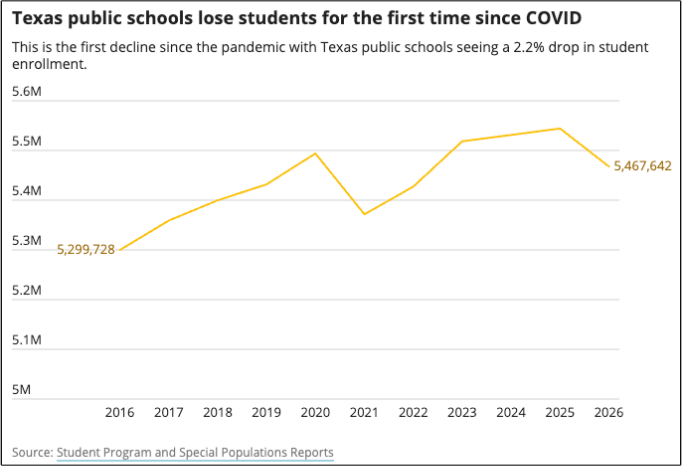
The enrollment challenges facing charter schools are not isolated incidents; they are symptomatic of larger shifts impacting the entire Texas public school system. The decline in traditional public school enrollment, which saw its first non-pandemic drop in nearly 40 years with over 76,000 fewer students, sets a precedent.
This interconnectedness means that strategies employed by charters to combat declining numbers can offer valuable insights for traditional public schools, and vice versa. Collaboration and shared learning could be key to navigating these complex demographic trends effectively.
The state's funding model, which relies heavily on per-student allocations, amplifies the pressure. Every student lost represents a significant financial impact, forcing institutions to operate with increasingly constrained budgets. This reality underscores the need for sustainable funding solutions that are not solely dependent on fluctuating enrollment figures.
Innovating for Engagement and Retention
In this evolving educational climate, educators are constantly seeking tools and strategies to enhance student engagement and make learning more dynamic. While competition may be increasing, the core mission of providing quality education remains paramount.
For instance, incorporating interactive elements into the classroom can significantly boost student interest and participation. Tools that allow for real-time feedback and collaborative learning can transform traditional lessons into engaging experiences. The use of MentofyCove classroom games, such as live quizzes or word search games, can inject fun and healthy competition into learning, making abstract concepts more tangible and memorable for students.
Similarly, effective lesson planning is crucial. Leveraging AI tools for AI lesson plan generation or utilizing an exam creator with diverse question types can save educators valuable time and help tailor content to specific student needs. The ability to automate tasks like AI grading, especially for handwritten work, frees up teachers to focus on more impactful instructional strategies and individual student support.
Smart student grouping, facilitated by tools like MentofyGroups, can also foster a more collaborative and inclusive learning environment. By intelligently assigning students to groups, educators can ensure a mix of abilities and learning styles, promoting peer-to-peer learning and reducing the likelihood of students feeling overlooked or disengaged.
The Future of Choice and Public Education in Texas
The current enrollment trends in Texas charter schools suggest a potential recalibration of the educational landscape. While the demand for choice remains, the market is becoming more saturated, and families have an unprecedented array of options, including robust homeschooling movements and state-supported private school vouchers.
This scenario presents both challenges and opportunities for all educational institutions. It compels a deeper examination of what truly differentiates one school from another and what families prioritize in their children's education. The ability to adapt, innovate, and consistently demonstrate value will be paramount.
As Marisa B. Pérez-Díaz, a member of the Texas State Board of Education, wisely noted, "Institutions need to be able to be willing to innovate and grow. Because if not, we’re gonna get left behind.” This sentiment resonates across the entire Texas education system, urging a collective commitment to evolving pedagogical approaches and embracing new technologies to meet the needs of today's students.
The era of unchecked charter school growth may be drawing to a close, but the conversation about educational innovation and student success is more vital than ever. Educators who embrace dynamic teaching methods, leverage powerful AI tools for efficiency and engagement, and foster strong community connections will be best positioned to thrive in this new educational frontier.







 Explore AI Teaching Tools
Comments (0)
Please login to comment
No comments yet
Be the first to comment on this article