
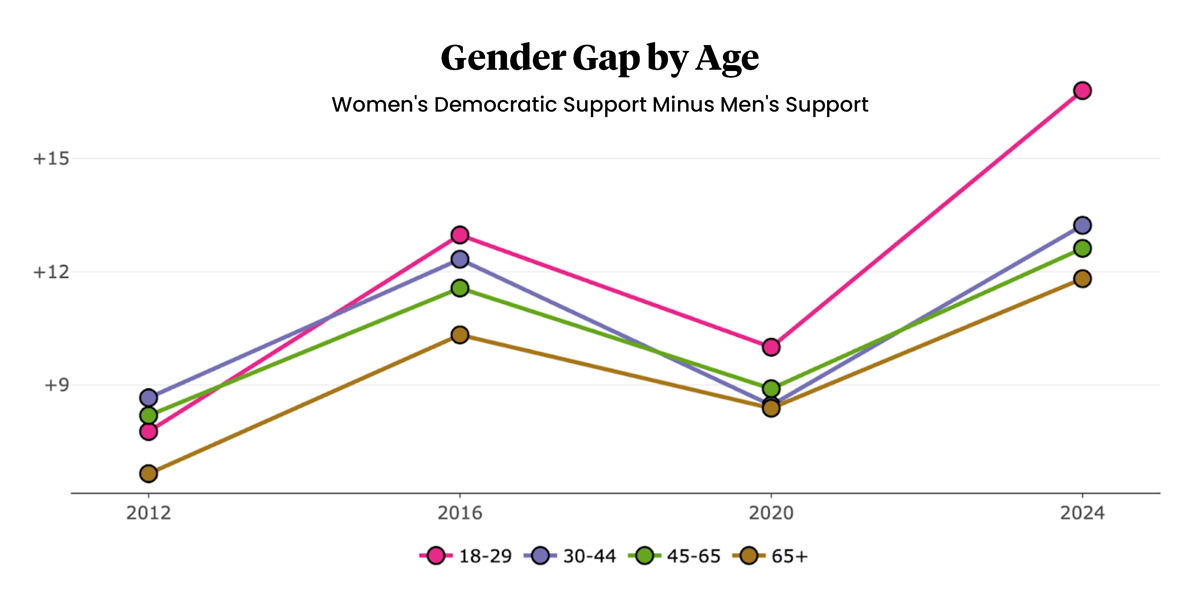
The 2024 election cycle revealed a stark and widening political gender gap among young Americans, a trend that is increasingly manifesting within the walls of our K–12 schools. This growing divergence is not just about differing political party affiliations; it reflects deeply ingrained shifts in how young men and women perceive societal issues, their place within them, and the very meaning of gender itself. Educators are now tasked with navigating a classroom environment where these political and social divides can impact student interactions, discussions, and overall school climate.
Gen Z's Political Polarization Mirrors Societal Divides
The 2024 presidential election saw an unprecedented gulf in political support between young men and women. While gender-based voting patterns have existed for decades, the 18–29 demographic exhibited the widest gap ever recorded, with women overwhelmingly favoring the Democratic ticket and men showing significantly less support. This polarization isn't confined to election day; it's a palpable force shaping the social and intellectual landscape of high schools across the nation.
This widening chasm suggests that the political discourse surrounding gender is not merely an abstract concept for Gen Z but a lived reality influencing their worldview. As young people form their identities, they are simultaneously absorbing and internalizing the prevailing political narratives, leading to distinct perspectives on issues ranging from social justice to economic opportunity.
"What's been notable about this younger generation is that the gender divide is already shaping up now, as opposed to when they age into the more typical partisan patterns we've seen over recent years."
The implications for educators are profound. Understanding the roots of this divide is crucial for fostering constructive dialogue and ensuring that all students feel seen and heard, regardless of their political leanings or gender identity. This requires a nuanced approach that moves beyond simple partisan labels to address the underlying concerns and experiences of young people.
How Early Socialization Shapes Political Views
The seeds of political belief are often sown much earlier than many realize. Research indicates that children begin to form political affiliations and perspectives at a surprisingly young age, coinciding with their development of personal and gender identities. This overlap means that societal messages about what it means to be a boy or a girl can become intertwined with their nascent political outlook.
For many young women, the political landscape has been shaped by a heightened awareness of issues like reproductive rights, safety, and future opportunities. These concerns are often experienced in deeply personal ways, fueling a sense of advocacy and a leaning towards more progressive viewpoints. This personal connection to political issues has been a significant driver of their engagement.
Conversely, some young men express a feeling of being overlooked or misunderstood by the dominant political discourse. They may perceive a lack of focus on their concerns or feel alienated by a political climate that they believe doesn't adequately represent their experiences. This can lead to a sense of disaffection and a search for alternative political narratives.
The Influence of Prominent Political Figures
The public persona and policies of prominent political figures, such as Donald Trump, play a significant role in shaping young people's political perceptions. His brash style and focus on certain cultural issues have resonated with some young men, while repelling many young women who may see his rhetoric and policies as detrimental to their rights and safety.
The omnipresence of figures like Trump in media and online spaces ensures that his influence extends beyond political rallies and into the daily lives of students. This constant exposure can amplify his impact, solidifying opinions and contributing to the formation of distinct political camps within the student body.
A 2022 AP-NORC survey revealed that within a representative panel of children aged 13–17, girls were vastly more negative than boys in their assessments of Trump and the GOP, while also much warmer toward the Democratic Party.
Educators can leverage this understanding by facilitating discussions that critically examine the impact of political personalities and media representation on public opinion. Teaching students to analyze rhetoric and identify biases is a vital skill in navigating today's complex information environment.
Navigating Gendered Political Discontent in the Classroom
The increasing political polarization along gender lines presents unique challenges for educators. Discussions about current events or social issues can quickly become charged, with students bringing their deeply held, gendered political perspectives into the classroom.
Teachers are reporting that students often enter discussions with pre-aligned ideas, making open-minded exploration of complex topics more difficult. This can manifest as clear disagreements, but also as fundamentally different interpretations of reality based on their gendered political outlooks.
To address this, educators can employ strategies that encourage empathy and active listening. Tools like MentofyCove classroom games can be adapted to foster collaborative learning and reduce the adversarial nature of political discussions, allowing students to engage with differing viewpoints in a less confrontational setting.
Fostering Inclusive Dialogue and Understanding
Creating a classroom environment where all students feel safe to express their views, without fear of judgment or reprisal, is paramount. This involves establishing clear ground rules for respectful discourse and actively mediating conversations to ensure they remain productive.
When discussing sensitive topics, educators can utilize Mentofy AI teaching tools for lesson planning to develop balanced materials that present multiple perspectives. This approach can help students understand the complexity of issues and the validity of different viewpoints, even if they don't agree with them.
Furthermore, incorporating diverse voices and historical narratives into the curriculum can broaden students' understanding of societal issues and the evolution of gender roles. This can help contextualize current political debates and foster a more nuanced perspective.
The Role of Education in Bridging the Divide
The widening political gender gap among young people underscores the critical role of education in shaping informed and engaged citizens. Schools are not just places of academic learning; they are crucial environments where students develop their social and political consciousness.
Educators have an opportunity to proactively address these divides by fostering critical thinking skills and promoting a deeper understanding of civic engagement. This can involve integrating civics education more robustly into the curriculum and providing students with the tools to analyze information and form their own informed opinions.
The challenge for educators is to create spaces where these differences can be explored constructively, rather than allowing them to become sources of division and animosity. This requires a commitment to open dialogue, intellectual curiosity, and a recognition of the diverse experiences that shape young people's perspectives.
Empowering Educators with Relevant Tools
Navigating these complex social and political dynamics can be demanding for educators. Fortunately, a growing array of resources and tools are available to support teachers in their efforts to engage students effectively.
Platforms like Mentofy offer a suite of Mentofy AI teaching tools designed to enhance classroom engagement and support differentiated instruction. Features such as AI grading and exam creator tools can help streamline administrative tasks, freeing up educators to focus on pedagogical strategies that address the unique needs of their students.
Moreover, tools like MentofyBoards can be used to create dynamic and interactive classroom displays that promote student participation and foster a sense of community. These tools, combined with a thoughtful pedagogical approach, can empower educators to address the political and social divides present in their classrooms.
- Promote Critical Media Literacy: Teach students how to analyze news sources, identify bias, and understand the persuasive techniques used in political messaging.
- Facilitate Respectful Debate: Establish clear guidelines for classroom discussions, emphasizing active listening and constructive disagreement.
- Integrate Diverse Perspectives: Ensure curriculum materials represent a wide range of voices and experiences, reflecting the complexity of societal issues.
- Utilize Interactive Learning Tools: Leverage platforms like MentofyCove classroom games and MentofyBoards to make learning engaging and collaborative.
- Encourage Empathy and Understanding: Create opportunities for students to explore different viewpoints and understand the lived experiences of others.
The political gender divide among young people is a significant societal trend with tangible implications for the educational landscape. By understanding its roots and employing effective pedagogical strategies, educators can foster environments that encourage critical thinking, open dialogue, and mutual respect, ultimately helping to bridge these divides and prepare students for active and informed citizenship.



 Explore AI Teaching Tools
Comments (0)
Please login to comment
No comments yet
Be the first to comment on this article