
Engineering the Future: Innovative Systems for a Sustainable World
Embark on a transformative learning journey with Mentofy, where we explore the cutting-edge of engineering and its profound impact on our planet.Discover how forward-thinking university programs are empowering students to develop critical systems and research solutions that address the most pressing global challenges, from clean energy to resilient infrastructure.
This article delves into the innovative approaches and hands-on experiences that prepare aspiring engineers to make a tangible difference.
Pioneering Research in Clean Energy Systems
The global imperative for sustainable energy solutions has never been more urgent.Universities are at the forefront of this critical transition, fostering environments where dedicated professors and bright students collaborate on groundbreaking research.
At the heart of this effort lies a commitment to developing advanced energy systems that can power our future responsibly.
This involves a holistic approach, considering not just technological feasibility but also environmental stewardship and long-term societal benefits.
The Role of Microgrid Innovation
Microgrids are emerging as a vital component of modern energy infrastructure, offering enhanced reliability and greater integration of renewable sources.Research in this area focuses on optimizing the design, control, and operation of these localized energy networks.
By working with industry partners, university research labs are actively solving real-world challenges, such as integrating micro wind turbines to meet campus energy needs.
This practical application of theoretical knowledge provides students with invaluable experience in developing and implementing sophisticated energy systems.
Advancing Carbon Capture and Hydrogen Technologies
Beyond microgrids, significant research efforts are dedicated to tackling climate change through innovative technologies.Centers of excellence are emerging as global leaders in clean energy research, focusing on critical areas like carbon capture and utilization (CCU) and hydrogen systems.
These initiatives are crucial for decarbonizing industrial sectors that cannot solely rely on intermittent renewable sources.
The development of waste-to-energy solutions also plays a pivotal role in creating a circular economy and reducing environmental impact.
Building Resilient and Secure Power Systems
The demand for electricity continues to rise, placing immense strain on aging power grids.Universities are actively engaged in research aimed at enhancing the security and reliability of these essential systems.
This involves leveraging advanced tools and methodologies to understand and predict system behavior, ensuring that power remains accessible and stable for communities worldwide.
Securing Smart Grid Infrastructure
The evolution of power grids into "smart grids" presents new opportunities and challenges.Researchers are employing artificial intelligence and ambient intelligence to gain deeper insights into how grid failures propagate and how systems can be made more robust against disruptions.
This proactive approach is essential for maintaining energy security in an increasingly interconnected world.
The Strategic Importance of Microgrids for Energy Transition
Microgrids are not just about localized power; they are strategic enablers of the broader energy transition.Studies indicate that microgrids can significantly improve the integration of renewable energy sources, reduce transmission losses, and decrease reliance on fossil fuels in remote areas.
Furthermore, their ability to provide local flexibility services is crucial for stabilizing the overall grid, especially as renewable energy penetration increases.
Empowering Students Through Hands-On Research
A cornerstone of effective engineering education is the integration of students into meaningful research projects.University programs are designed to immerse students in real-world challenges, allowing them to move beyond theoretical concepts and engage with practical applications.
This experiential learning is critical for developing well-rounded engineers who are prepared for the complexities of the professional world.
Graduate Research in Action
Graduate students play a vital role in advancing research frontiers.Master of Engineering (MEng) students often focus on the development, testing, and implementation phases, collaborating closely with industry stakeholders.
Master of Applied Science (MASc) students delve into research that refines microgrid designs, evaluates control strategies, and develops sophisticated analytical and computational tools.
Doctoral (PhD) candidates lead ambitious research initiatives, pushing the boundaries of microgrid technology and its applications.
Interdisciplinary Contributions to Systems Engineering
The beauty of modern engineering lies in its interdisciplinary nature.Students from various engineering disciplines contribute uniquely to the development of complex systems.
- Process and Industrial Systems Engineering students enhance system optimization, design robust control architectures, and improve operational efficiency.
- Energy Systems Engineering students provide the foundational knowledge for energy generation and storage within microgrids.
- Electronic Systems Engineering students contribute through advancements in sensing, communication, automation, power electronics, grid stability, and cybersecurity.
- Software Systems Engineering students are instrumental in developing the crucial software, data tools, and AI platforms that underpin microgrid functionality.
- Environmental Systems Engineering students ensure that microgrid designs are not only efficient but also environmentally responsible, aligning with sustainability goals.
Practical Experience with Advanced Technologies
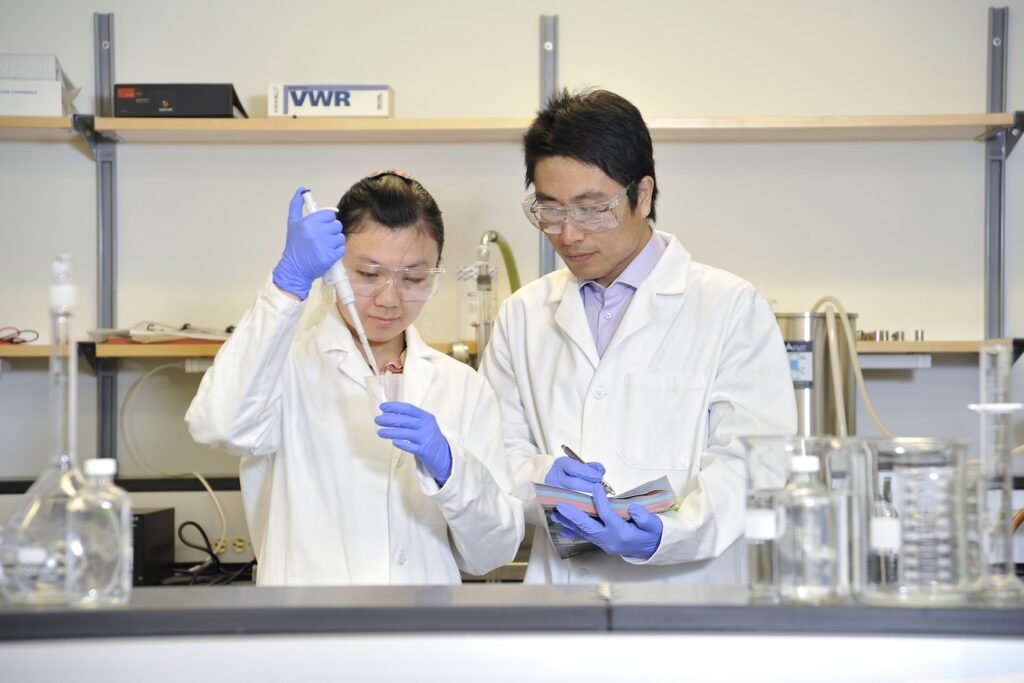
Students involved in clean energy research, for instance, gain invaluable hands-on experience with pilot units for carbon capture and hydrogen production.These systems provide a supervised, industry-relevant environment where students can operate real processes.
They engage in tasks such as solvent preparation, catalyst synthesis, system operation, troubleshooting, and data analysis, utilizing the same sophisticated analytical tools and control systems found in industrial settings.
Training in process modeling and simulation software, like Aspen Plus and ProMax, further equips them to understand how small-scale experimental results translate to larger, more complex systems.
Conclusion
The pursuit of engineering excellence at leading universities is driven by a commitment to addressing critical global needs.Through innovative research in clean energy, resilient power systems, and advanced engineering disciplines, these institutions are shaping a generation of students equipped to tackle the challenges of tomorrow.
The emphasis on hands-on experience, interdisciplinary collaboration, and practical application ensures that graduates are not only knowledgeable but also capable of driving meaningful change.
For students seeking a path to a rewarding and impactful career, these university programs offer a compelling opportunity to contribute to a more sustainable and secure future.







 Explore AI Teaching Tools
Comments (0)
Please login to comment
No comments yet
Be the first to comment on this article