
California Indian Nations College: Charting a Path to Independence and Empowering Native Students
For Native American students, the journey through higher education can be a path fraught with unique challenges.
While the desire to learn and grow is universal, systemic barriers and a lack of culturally relevant educational spaces have historically led to lower college completion rates for Indigenous populations.
However, a beacon of hope is emerging in California.
The California Indian Nations College (CINC), a vital institution dedicated to serving Native students, is on the cusp of a significant transformation: achieving independent accreditation and establishing itself as the state's sole, fully accredited tribal college.
This pivotal shift promises to unlock new opportunities for students, but it hinges on securing crucial financial support to build a sustainable future and a dedicated campus.
Join us as we explore the inspiring mission of CINC, the hurdles it faces, and the profound impact its success could have on countless lives.
The Vision: An Independent, Culturally Grounded Higher Education
For the past six years, CINC has operated as an affiliate, first with UC Riverside and more recently in partnership with College of the Desert.
This arrangement has allowed students to earn accredited degrees, but the ultimate goal has always been full autonomy.
The recent preliminary approval for accreditation marks a monumental step forward, empowering CINC to independently offer classes, award transferable credits, and manage financial aid distribution.
This independence is not merely an administrative change; it represents a profound commitment to providing an educational experience that is deeply rooted in Native American culture and values.
Experts recognize that such institutions are vital for fostering a sense of belonging and academic success among Native American students, who often express a deep-seated distrust of the mainstream U.S. education system, a sentiment stemming from historical injustices like the forced assimilation through boarding schools.
The vision for CINC extends beyond simply offering degrees.
It aims to be a sanctuary of learning where Indigenous students can reclaim their narratives, explore their heritage, and gain the knowledge and skills necessary to thrive in the modern world.
This culturally responsive approach is crucial for addressing the "void" that many Native individuals feel regarding their identity and place in society.
By offering an empowering education that teaches the "truth about who we are," CINC seeks to foster pride, resilience, and a strong sense of self-worth among its students.
The Journey So Far: Milestones and Partnerships
CINC's journey began in the fall of 2018, initially as an extension of UC Riverside for a single semester.
Since 2019, its degrees have been conferred through a collaborative agreement with College of the Desert.
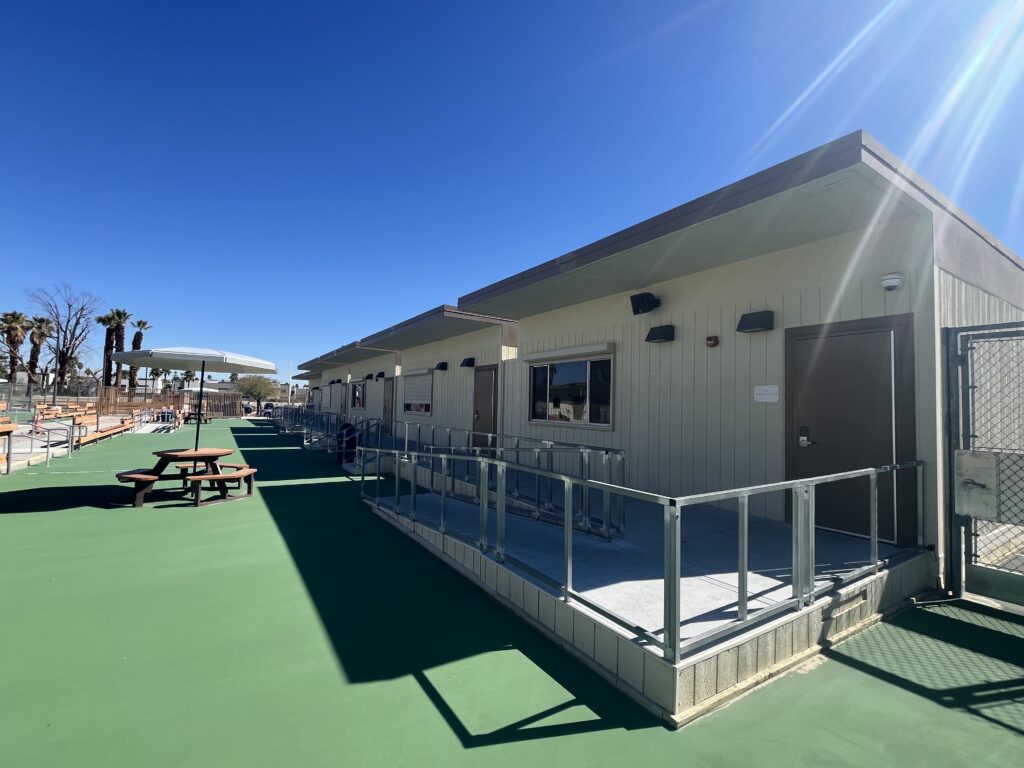
This partnership has been instrumental in providing CINC with essential resources, including classroom space at College of the Desert's temporary Palm Springs campus, which currently consists of modular units.
Within these humble yet dedicated spaces, one can find tangible symbols of the college's mission: Native crafts like dream catchers, information on transferring to four-year institutions, and even a makeshift basic needs center stocked with essential dry goods, highlighting the holistic support provided to students.
The current enrollment at CINC hovers around 150 students, with ambitious plans for significant growth.
The preliminary accreditation status allows students to enroll solely at CINC starting next semester and still receive an accredited degree, a testament to the college's progress.
This development is a critical step towards realizing the dream of a fully independent tribal college.
The Financial Imperative: Securing a Sustainable Future
While CINC's academic and accreditation progress is commendable, its long-term viability hinges on securing substantial financial resources.
The college is actively seeking a significant infusion of state funding, requesting $60 million in the upcoming budget.
This request is divided into two critical components: $50 million earmarked for the construction of its own dedicated campus and an additional $10 million annually to cover operational costs.
This funding is not merely for expansion; it is essential for the college's survival and its ability to offer the culturally relevant education that Native students desperately need and deserve.
The current financial situation is precarious.
CINC is operating on reserves that are projected to last for approximately another year.
The college has received $5 million in one-time state funding in 2022 to support its accreditation application process.
Additionally, the Twenty-Nine Palms Band of Mission Indians provided $9 million in initial seed funding, most of which has now been expended.
The State's Role: A Crucial Funding Conversation
The state of California, with the largest Native population in the nation, has a profound responsibility and opportunity to support institutions like CINC.
Assemblymember David Alvarez, chair of the state Assembly's budget subcommittee on education, has expressed support for CINC and indicated an openness to discussing funding.
However, the current fiscal climate presents challenges, with California's public universities facing budget cuts, making the allocation of new funds a complex undertaking.
The absence of CINC funding in Governor Gavin Newsom's proposed budget underscores the urgency of these conversations.
The potential for state funding is critical.
While CINC can now apply for federal funding due to its candidacy status, the landscape of federal support for tribal colleges has become increasingly uncertain.
Recent policy shifts have created an environment where securing federal grants and contracts is more challenging, further emphasizing the importance of state-level financial commitment.
CINC officials believe that the requested state funding is a reasonable investment given the immense need and the transformative impact such an institution can have.
The Impact: Empowering Native Students and Communities
The establishment of a fully accredited, independent tribal college in California holds immense significance for Native American students.
Research consistently shows that American Indian and Alaska Native individuals have the lowest college-going rates compared to other ethnic groups in the state.
However, studies also indicate that students who attend tribal colleges and universities are significantly more likely to earn their bachelor's degrees, demonstrating the effectiveness of these culturally tailored educational environments.
CINC's curriculum is designed to be both academically rigorous and culturally sensitive.
It incorporates Native American culture into all aspects of learning, including a mandatory Native American breadth requirement where students can choose from courses such as Native American literature, performing arts, and languages.
This approach ensures that students not only gain knowledge but also deepen their understanding and appreciation of their heritage.
A Culturally Relevant Learning Environment
Beyond the classroom, CINC fosters a strong sense of community and belonging.
The college offers in-person events, including cultural workshops like basket weaving and "talking circles," an Indigenous practice akin to group therapy.
These spaces provide invaluable opportunities for students to share experiences, process emotions, and find support from peers who understand their unique challenges, such as intergenerational trauma, substance use, depression, and poverty.
As one graduate shared, these talking circles offer a vital space to process emotions and avoid carrying grief alone.
The impact of this culturally relevant education is profound.
For students like Mayra Grajeda Nelson, who earned two associate degrees from CINC, the college provided an empowering experience that helped her reconnect with her identity and pursue a career as a health educator.
Similarly, Kristina Glass, a Cherokee Nation descendant, found a sense of belonging at CINC that was absent during her time at a non-tribal university, highlighting the deep connection and emotional resonance that Native blessings and cultural practices evoke.
Expanding Horizons: Future Programs and Campus Development
With adequate funding, CINC has ambitious plans to expand its academic offerings and physical presence.
The college aims to hire additional full-time faculty and introduce new associate degree programs in fields such as business, engineering, and food sovereignty.
The ultimate dream, however, is the development of its own permanent campus.
A dedicated campus would not only provide much-needed space for classes and administrative functions but would also serve as a central hub for students to connect, build community, and engage in more in-person events and vocational training.
While the search for potential campus sites is ongoing, the commitment to remaining in Riverside County is strong.
The development of a physical campus is seen as crucial for fostering a more immersive and collaborative learning experience, enabling students to truly come together and build a strong, supportive educational community.
The college is actively exploring various funding avenues, including potential support from other tribes, but views state funding as the most viable and impactful option for achieving its long-term goals.
Conclusion: A Historic Opportunity for Education and Empowerment
The California Indian Nations College stands at a critical juncture, poised to become a landmark institution for Native American higher education in the state.
Its journey towards independent accreditation and its unwavering commitment to providing a culturally relevant and empowering educational experience are inspiring.
However, the realization of this vision is inextricably linked to securing the necessary financial support from the state.
The requested $60 million is not merely an investment in a college; it is an investment in the future of Native American students, in the preservation of Indigenous culture, and in the creation of a more equitable and inclusive educational landscape for all.
As CINC continues its pursuit of funding, its story serves as a powerful reminder of the transformative potential of education when it is grounded in cultural understanding and community support.
The success of CINC would be a historic achievement, poised to change lives for generations to come.





 Explore AI Teaching Tools
Comments (0)
Please login to comment
No comments yet
Be the first to comment on this article