
Artemis II Astronauts: Unpacking the Science and Engineering Behind Their Space Mission Studies
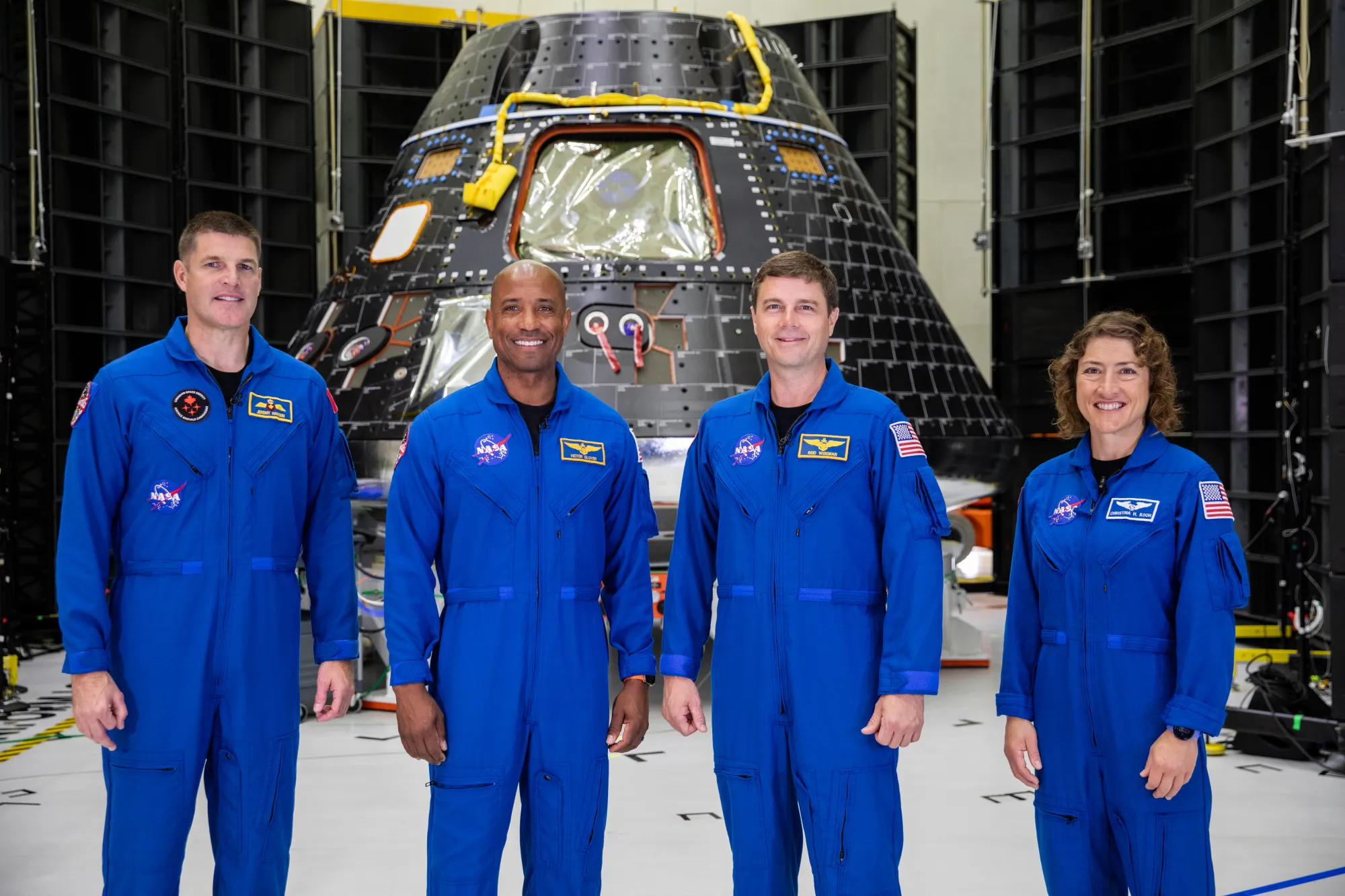
Embark on a journey beyond Earth's orbit with the Artemis II mission, a monumental step in humanity's return to lunar exploration.This groundbreaking mission, the first crewed voyage beyond low Earth orbit since the Apollo era, is not just about reaching the Moon; it's a testament to years of dedicated study and rigorous training.
At Mentofy, we delve into the academic foundations and specialized knowledge that have prepared these four exceptional individuals for their historic voyage, showcasing the vital role of science, engineering, and advanced learning in pushing the boundaries of space exploration.
The Artemis II Mission: A Leap Forward in Space Exploration
The Artemis II mission represents a significant milestone, building upon the success of Artemis I's uncrewed orbital flight.This 10-day expedition is designed to test the Orion spacecraft's critical systems with a human crew aboard, paving the way for future lunar landings and deeper space endeavors.
The mission's trajectory involves a close-to-Earth systems checkout before embarking on the journey to the Moon, a complex maneuver requiring precise calculations and an in-depth understanding of orbital mechanics and spacecraft engineering.
The anticipation for this mission highlights the enduring human fascination with space and the continuous pursuit of scientific discovery.
Mission Objectives and Preparations
While the primary goal is a crewed lunar flyby, Artemis II serves as a crucial validation phase.The astronauts will meticulously evaluate the Orion spacecraft's life support, navigation, and communication systems under real spaceflight conditions.
This hands-on testing is paramount for ensuring the safety and success of subsequent Artemis missions, which aim to establish a sustainable human presence on the Moon.
The mission's launch, though subject to adjustments based on rigorous pre-flight checks, underscores NASA's commitment to meticulous planning and execution in all its space endeavors.
Academic Foundations of the Artemis II Crew: A Deep Dive
The journey to becoming an astronaut is paved with a strong academic background, particularly in STEM fields.The Artemis II crew members embody this principle, bringing a diverse yet complementary set of educational achievements and professional experiences.
Their studies have equipped them with the critical thinking, problem-solving skills, and technical expertise necessary to navigate the complexities of spaceflight.
Reid Wiseman: Engineering Excellence and Systems Mastery
Commander Reid Wiseman's academic path is rooted in a robust engineering education.His Bachelor of Science in Computer and Systems Engineering from Rensselaer Polytechnic Institute, a venerable institution known for its engineering prowess, provided him with a foundational understanding of complex systems.
This was further enhanced by a Master of Science in Systems Engineering from Johns Hopkins University, a field critical for designing, integrating, and managing complex systems throughout their life cycles.
His Certificate of Space Systems from the US Naval Postgraduate School honed his expertise specifically for the demands of space exploration.
Wiseman's extensive experience, including his time on the International Space Station and as Chief of the Astronaut Office, demonstrates the practical application of his rigorous academic training.
Victor J.
Glover: General Engineering and Advanced Flight Dynamics Pilot Victor J.
Glover's academic journey showcases a broad engineering foundation coupled with specialized knowledge in flight and operational science.
His Bachelor of Science in General Engineering from California Polytechnic State University provided a versatile introduction to engineering principles.
He then pursued advanced studies at Air University, earning a Master of Science in Flight Test Engineering, a discipline vital for understanding and evaluating aircraft and spacecraft performance.
His second Master of Science from the Naval Postgraduate School in Systems Engineering further solidified his expertise in complex system design and integration.
Glover's education at Air University, the U.S.
Air Force's premier institution for professional military education, also equipped him with a deep understanding of military operational art and science, invaluable for mission planning and execution.
His prior experience as pilot on a SpaceX mission to the ISS underscores the practical application of his extensive studies.
Christina Koch: Electrical Engineering, Physics, and Global Scientific Perspective
Mission Specialist Christina Koch brings a unique blend of electrical engineering and physics expertise, complemented by an international educational experience.Her dual Bachelor of Science degrees in Electrical Engineering and Physics from North Carolina State University provided a strong scientific and technical grounding.
Her Master of Science in Electrical Engineering from the University of Ghana is particularly noteworthy, offering a global perspective on scientific research and collaboration.
This international academic experience, combined with her extensive work in remote scientific field engineering in extreme environments like the Antarctic and Arctic, highlights her adaptability and broad scientific acumen.
Koch's record-breaking time on the ISS and participation in the first all-female spacewalks are testaments to her exceptional capabilities, honed through a diverse and rigorous educational background.
Jeremy Hansen: Space Science and Physics from a Canadian Perspective
Mission Specialist Jeremy Hansen, representing the Canadian Space Agency, brings a specialized focus on space science and physics.His Bachelor of Science in Space Science and Master of Science in Physics, both from the Royal Military College of Canada, provided him with a deep understanding of the principles governing space and the universe.
His background as a fighter pilot and his early involvement in aviation through the Air Cadets demonstrate a lifelong passion for flight and exploration.
Hansen's training, including simulated space environments through programs like NEEMO and his role as a CAPCOM at NASA Mission Control, showcases the practical application of his academic knowledge in real-world operational scenarios.
The Educational Pathway to Space: STEM and Beyond
The academic profiles of the Artemis II crew members clearly illustrate a common thread: a strong foundation in Science, Technology, Engineering, and Mathematics (STEM) fields.NASA's astronaut selection criteria consistently emphasize these disciplines, recognizing their essential role in the complex challenges of space exploration.
Core STEM Disciplines for Astronauts
Historically, astronauts have pursued degrees in fields such as:- Engineering: Aeronautical, Aerospace, Mechanical, Electrical, Computer, and Systems Engineering are fundamental for understanding spacecraft design, operation, and maintenance.
- Physical Sciences: Physics, Chemistry, and Astronomy provide the theoretical underpinnings for understanding the universe, celestial mechanics, and the effects of space on matter.
- Biological Sciences: Crucial for understanding human physiology in space, developing life support systems, and conducting scientific research in orbit.
- Mathematics: Essential for calculations in orbital mechanics, trajectory planning, data analysis, and all aspects of scientific and engineering problem-solving.
- Computer Science: Vital for developing and operating the complex software systems that control spacecraft, manage data, and facilitate communication.
Beyond the Bachelor's Degree: Advanced Studies and Specializations
While a bachelor's degree in a STEM field is a prerequisite, many astronauts pursue advanced degrees to deepen their expertise.Master's and doctoral degrees, as well as specialized certifications from institutions like test pilot schools, are highly valued.
These advanced studies often focus on specific areas relevant to spaceflight, such as:
- Aerospace Engineering: Focusing on the design, development, and testing of aircraft and spacecraft.
- Astronautics: The science and technology of spaceflight, including orbital mechanics and spacecraft design.
- Flight Test Engineering: The practice of testing the performance and safety of aircraft and spacecraft.
- Space Systems Engineering: The integration of various components and subsystems to create functional space systems.
- Medical Doctorates (MD) or Doctor of Osteopathic Medicine (DO): For astronauts who will focus on space medicine and human health in space.
Key Skills and Experiences for Space Missions
Beyond formal education, NASA and other space agencies look for a range of critical skills and experiences that complement academic qualifications.These are often developed through professional careers, military service, and specialized training.
Professional Experience and Pilot Qualifications
A minimum of two years of related professional experience after obtaining a degree is typically required.For pilots, accumulating at least 1,000 hours of pilot-in-command time in jet aircraft is a significant qualification.
This practical experience demonstrates an ability to handle high-pressure situations, make critical decisions, and operate complex machinery.
Leadership, Teamwork, and Communication
Space missions are inherently collaborative endeavors.Astronaut candidates must demonstrate strong leadership qualities, the ability to work effectively as part of a diverse team, and excellent communication skills.
These "soft skills" are as crucial as technical expertise for ensuring mission success and crew cohesion.
Physical and Psychological Resilience
Passing the rigorous NASA long-duration flight astronaut physical is non-negotiable.This includes comprehensive medical and psychological evaluations to ensure candidates can withstand the physical and mental demands of extended periods in space, including microgravity, radiation exposure, and isolation.
The Mentofy Advantage: Cultivating Future Space Explorers
At Mentofy, we believe that the path to the stars begins with accessible, high-quality education.Our platform offers a vast array of courses and learning resources designed to foster the critical thinking, scientific curiosity, and technical skills that are the bedrock of any aspiring astronaut's journey.
Whether you're exploring foundational principles in physics and engineering or delving into advanced concepts in computer science and mathematics, Mentofy provides the tools and knowledge to build a strong academic foundation.
Empowering Learning for a Spacefaring Future
We are committed to empowering learners worldwide with the educational opportunities needed to pursue their dreams, including those in the exciting field of space exploration.By offering comprehensive learning pathways and expert-led instruction, Mentofy aims to inspire the next generation of scientists, engineers, and astronauts who will shape the future of space missions, from lunar exploration with programs like Artemis to even more ambitious journeys beyond our solar system.
Conclusion
The Artemis II mission is more than just a flight to the Moon; it's a culmination of rigorous academic pursuits, specialized training, and unwavering dedication.The educational backgrounds of its crew—spanning engineering, physics, and space science—underscore the vital role of STEM education in pushing the frontiers of human exploration.
At Mentofy, we are inspired by these achievements and are dedicated to providing the educational resources that can help aspiring individuals build their own pathways to contributing to the future of science, engineering, and space missions.
The journey from Earth to the Moon and beyond is built on knowledge, and Mentofy is here to help you acquire it.






 Explore AI Teaching Tools
Comments (0)
Please login to comment
No comments yet
Be the first to comment on this article