
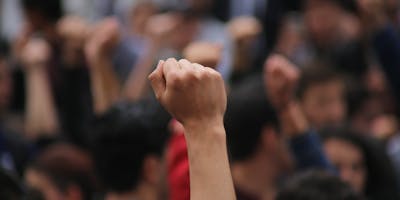
Empowering Students: Cultivating Collective Action and Organizing Skills for a Changing World
In today's rapidly evolving global landscape, students often express a desire for tangible power and practical skills that transcend traditional academic exercises.This yearning for agency, however, can sometimes manifest as disinterest in broader societal issues, leading educators to question how best to foster engagement and equip them for meaningful impact.
This article explores how educational platforms like Mentofy can empower students by shifting the focus from passive learning to active participation, emphasizing the critical importance of teaching them how to organize and collaborate for collective success.
We will delve into innovative pedagogical approaches that cultivate empathy, build community, and prepare students to navigate and shape the world around them.
1.
The Shifting Student Mindset: Beyond Apathy to Action Many educators observe a growing trend among students where a significant portion express a pragmatic focus on personal financial gain and individual advancement.
This can lead to a perceived apathy towards social and global issues, with some students stating that matters affecting others, particularly marginalized communities, are not their direct concern.
This individualism, while understandable in a competitive world, presents a challenge for fostering a sense of collective responsibility and civic engagement.
Studies indicate that this mindset is not necessarily a reflection of inherent selfishness but rather a response to societal pressures and a lack of perceived pathways to influence or benefit from broader societal changes.
They often feel that the structures of power and wealth are inaccessible to them, leading them to prioritize what they believe are the most direct routes to personal security and prosperity.
Understanding the Roots of Individualism
Research suggests that this focus on individual gain can stem from a variety of factors.
Students may feel overwhelmed by the complexity of global problems and believe that their individual efforts are insignificant.
Furthermore, historical narratives and media portrayals often emphasize individual success stories, inadvertently downplaying the power of collective action.
For students from working-class backgrounds, the immediate need for financial stability can overshadow broader social concerns.
They may see money and power as the primary tools for improving their lives and the lives of their families, especially when they perceive that these resources have historically been out of reach for people like them.
This is why it is crucial for educational systems to acknowledge and address these underlying concerns, providing them with the tools and understanding to see how collective action can also lead to personal and communal empowerment.
2.
Reimagining the Classroom: From Information Delivery to Action Hubs The traditional model of schooling, often likened to a factory assembly line, delivers information in discrete units and expects students to absorb it passively.
While this approach can impart knowledge, it often fails to cultivate the skills necessary for students to apply that knowledge effectively in the real world, particularly in areas requiring collaboration and advocacy.
The challenge for educators and learning platforms is to transform educational spaces into dynamic environments that foster critical thinking, empathy, and the practical ability to organize.
This requires a fundamental shift in pedagogical philosophy, moving towards methodologies that encourage students to actively engage with issues, build consensus, and work together towards shared goals.
This is where Mentofy can play a pivotal role, offering resources and frameworks that support this transformation.
The Imperative for Community Engagement
For students, especially those from marginalized communities, opportunities for meaningful engagement and collective action are often limited by external responsibilities such as part-time jobs, family care, or transportation challenges.
This reality underscores the necessity for educational institutions to actively create and facilitate these opportunities within school hours.
If students cannot organize or volunteer outside of school due to these numerous commitments, then the school environment itself becomes the primary, and perhaps only, viable space for them to develop these crucial skills.
Therefore, it is incumbent upon educational providers to design curricula and activities that integrate community engagement directly into the learning experience, ensuring that all students have the chance to participate and benefit.
3.
Organizing as a Pedagogical Framework: Project-Based Learning Reimagined Project-based learning (PBL) has proven to be an effective method for fostering deep understanding and skill development.
However, PBL can be further enhanced by focusing its application on the process of organizing itself.
Instead of merely completing a project, students can be tasked with identifying a social issue they care about and then learning the practical steps involved in rallying support for that cause.
This might include teaching them how to conduct effective canvassing, engage with individuals directly affected by the issue, or perform insightful interviews to gather firsthand accounts.
The ultimate goal would be for them to develop a comprehensive organizing plan for a cause that resonates with them.
The assessment would then focus on the success and rigor of their organizing process, rather than solely on the final product.
This approach allows them to address social issues in tangible, real-world ways, moving beyond simply reading about them.
Developing Actionable Organizing Plans
The development of an organizing plan involves several key stages.
First, students must learn to identify and clearly define a problem or cause.
This requires critical analysis and the ability to articulate the core issues.
Second, they need to understand their target audience and how to effectively communicate their message to different groups.
This involves developing persuasive communication skills, both written and verbal.
Third, they must learn about various organizing tactics, such as petitioning, public awareness campaigns, and community outreach.
They will also need to understand the importance of collaboration and delegation within a team.
Finally, they will learn how to set realistic goals and develop strategies for achieving them, including contingency planning.
This entire process, when integrated into the curriculum, provides students with invaluable life skills that extend far beyond the classroom.
4.
School-Wide Integration: Fostering a Culture of Resistance and Empathy To truly empower students, educational institutions must move beyond isolated initiatives and embed organizing principles into the very fabric of the school culture.
This could involve establishing an annual expectation for all students to engage in some form of organized action, coupled with reflective practices that explicitly ask them to articulate how their empathy has deepened through this process.
The vision here is for schools to transform into sites of resistance – intellectual hubs where revolutionary thinking and action are not only encouraged but actively facilitated during school hours.
Given the current realities, it is unrealistic to assume that students will have the time, energy, or resources to engage with complex social issues after the school day concludes.
Therefore, schools have a responsibility to create these opportunities within their walls.
The Role of Empathy in Collective Action
Empathy is the cornerstone of effective organizing.
When students are encouraged to understand and share the feelings of others, they are more likely to be motivated to act on their behalf.
By engaging in activities that require them to step into the shoes of those affected by social injustices, they develop a deeper appreciation for the human impact of these issues.
This emotional connection fuels their desire to create positive change.
Furthermore, the process of organizing itself often involves listening to diverse perspectives and understanding different lived experiences, which inherently cultivates empathy.
When students work together towards a common goal, they learn to appreciate the unique contributions of each member and develop a sense of shared humanity.
This is a powerful lesson that transcends academic subjects.
5.
Transforming Teacher Preparation: Equipping Educators for Action The effectiveness of any educational reform hinges on the preparedness of its educators.
Teacher preparation programs must evolve to equip future teachers not only with subject matter expertise but also with the practical skills and pedagogical knowledge to teach organizing and facilitate collective action.
This means moving beyond traditional content mastery to include training in community organizing methodologies, conflict resolution, and participatory leadership.
Without this crucial preparation, teachers may struggle to implement these new approaches effectively, and students may continue to view school as a mere stepping stone to survival rather than a platform for empowerment and change.
The future of education lies in preparing teachers to be facilitators of change, not just dispensers of information.
The Power of Collective Learning and Self-Love
While books can indeed free the mind by expanding understanding and critical thinking, they do not always liberate individuals from the systemic conditions that perpetuate inequality and hardship.
For many, the journey to self-acceptance and empowerment is a long one, often requiring deep introspection and a conscious effort to unlearn harmful narratives.
Learning to love oneself, as an example, can be a profound achievement, but it often takes years of dedicated effort and exposure to diverse perspectives that challenge self-doubt.
This is where the power of collective learning and shared experience becomes invaluable.
When students learn together, they can support each other's journeys, share their struggles, and celebrate their triumphs.
This shared experience can foster a sense of belonging and solidarity, which are essential for building resilience and driving meaningful change.
Mentofy aims to provide a platform where this collective learning can thrive.
6.
Building Bridges: Community Organizations as Educational Partners Integrating community-based organizations (CBOs) into the educational ecosystem offers a powerful avenue for students to learn organizing skills in authentic, real-world contexts.
These organizations, often deeply embedded within communities, possess invaluable expertise in grassroots activism, advocacy, and civic engagement.
By inviting CBO representatives into classrooms to lead workshops and facilitate discussions, schools can provide students with direct exposure to the practicalities of organizing.
This partnership can extend beyond the classroom through guided field trips, where students can witness firsthand the impact of organized efforts, participate in demonstrations, or engage in volunteer work that addresses pressing social needs.
This experiential learning is crucial for translating theoretical knowledge into practical competence.
The Synergy of In-School and Out-of-School Organizing
The most effective approach to fostering organizing skills involves a synergistic blend of in-school instruction and out-of-school engagement.
While classroom-based workshops can lay the theoretical groundwork and introduce fundamental concepts, the real learning often happens when students have the opportunity to apply these skills in the community.
However, the practical constraints faced by many students, particularly those from working-class families, can make consistent out-of-school participation challenging.
This is precisely why schools must proactively create structured opportunities for community engagement during school hours.
By dedicating time within the regular curriculum for these activities, educational institutions can ensure that all students, regardless of their external circumstances, have the chance to develop the vital skills of organizing, collaboration, and civic participation.
This commitment to accessible engagement is paramount for equitable learning.
Conclusion
The educational landscape is at a critical juncture, demanding a paradigm shift from passive knowledge acquisition to active empowerment.Students today are not simply seeking information; they are seeking the tools and confidence to shape their own futures and contribute meaningfully to society.
By embracing pedagogical approaches that prioritize organizing, collaboration, and community engagement, educational platforms like Mentofy can equip students with the essential skills they need to navigate a complex world.
This involves reimagining the classroom as a hub for action, integrating community partners, and transforming teacher preparation to foster a new generation of empowered, empathetic, and effective organizers.
When we teach them their power through collective action, we not only prepare them for personal success but also cultivate a more just and equitable future for all.
This is about more than just learning; it is about becoming agents of positive change.






 Explore AI Teaching Tools
Comments (0)
Please login to comment
No comments yet
Be the first to comment on this article