
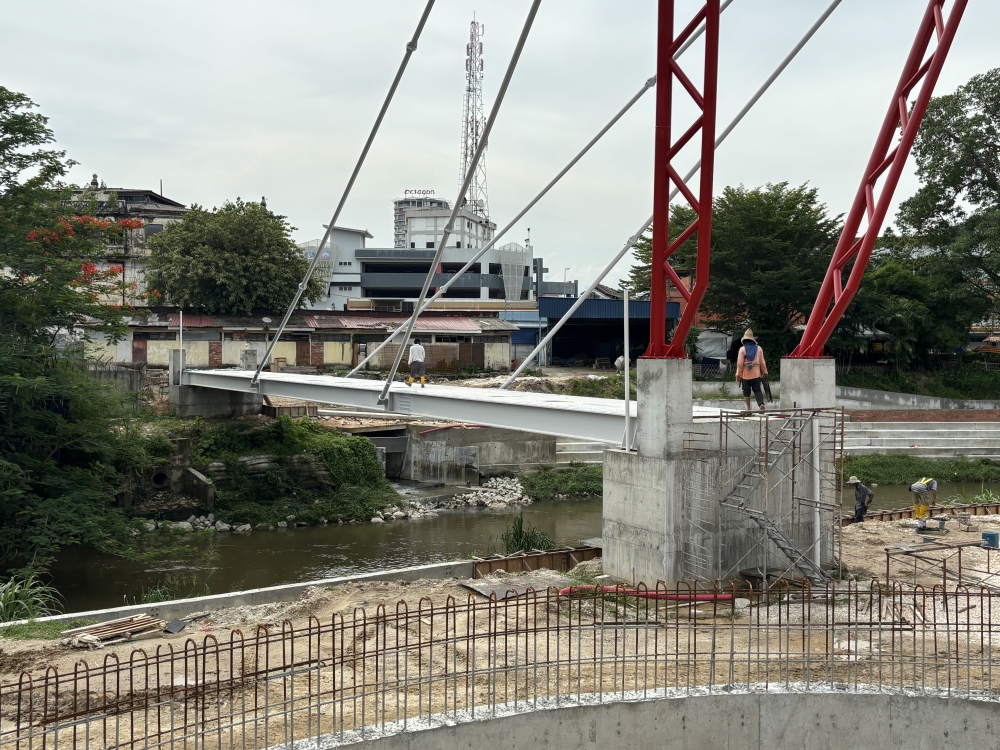
Ipoh's Riverfront Renaissance: A Bold New Bridge Promises Car-Free Exploration of Historic Charms
Ipoh, a city celebrated for its rich heritage and culinary delights, is on the cusp of a transformative shift in how visitors experience its iconic Old Town. A groundbreaking new pedestrian bridge and extensive riverfront development along the Sungai Kinta are poised to create a seamless, walkable connection between the city's historic core and its modern counterpart, aiming to redefine tourism by encouraging visitors to park once and immerse themselves in the city's attractions.
Bridging the Divide: Connecting Heritage and Convenience
The ambitious project, a cornerstone of Perak's tourism strategy, seeks to weave together the city's primary tourist clusters into an easily navigable network. This initiative directly addresses the growing challenge of traffic congestion and parking scarcity, particularly in the bustling Old Town area.
According to a key proponent of the development, the current model of visitors driving between individual attractions leads to wasted time, increased frustration, and a diminished overall holiday experience. The vision is to cultivate an environment where exploration is effortless, allowing the charm of Ipoh to unfold naturally on foot.
This new infrastructure is designed to maximize the utility of existing parking facilities, strategically located around both the Old and New Towns. By enhancing connectivity, the project aims to significantly reduce internal vehicle movement, creating a more pleasant and accessible urban landscape for everyone.
Easing the Parking Puzzle
The difficulty of finding parking, especially near popular spots like Concubine Lane, has long been a deterrent for visitors. This new development offers a practical solution, enabling tourists to leave their vehicles at designated parking hubs, such as the Urban Transformation Centre, and reach the heart of the Old Town within a matter of minutes via the new pedestrian bridge.
This approach mirrors successful models in other heritage cities, where a "park once, explore extensively" philosophy allows visitors to fully engage with the cultural and commercial offerings without the constant stress of relocating their car. The aim is to foster a more relaxed and immersive tourist experience.
Beyond Pavement: Cultivating True Walkability
The initiative transcends mere construction of walking paths; it is fundamentally about fostering an integrated "walkability" experience. This concept emphasizes the journey as much as the destination, ensuring that the routes themselves are engaging and enriching.
A crucial consideration in the design is the preservation of Ipoh's distinctive heritage character. The developers are mindful of integrating modern infrastructure in a way that complements, rather than clashes with, the existing architectural and aesthetic identity of the Old and New Towns.
The underlying principle is that holidaymakers do not walk simply for the sake of exercise. True walkability, in this context, is intrinsically linked to the richness of experiences available along the route. This includes vibrant points of interest, historical narratives, local culinary hotspots, artisanal crafts, and authentic cultural encounters.
Enriching the Stroll: Attractions Along the Way
The success of this project hinges on creating a compelling environment that encourages pedestrian activity. This means curating a diverse array of attractions that appeal to various interests and senses.
Imagine a walk punctuated by opportunities to capture stunning photographs at Instagram-worthy locations, to delve into the city's storied past through engaging historical markers, and to savor the authentic flavors of Ipoh from local food stalls. The inclusion of traditional product vendors and handicraft artisans further enhances the appeal.
Cultural performances and interactive experiences are also envisioned as integral components, transforming the act of walking into a dynamic exploration of Ipoh's living heritage. This multi-faceted approach aims to make every step a discovery.
A Collaborative Canvas: Inviting Private Sector Innovation
While the core infrastructure development, a significant RM5 million project, is funded by the Ministry of Tourism, Arts and Culture, the state government is actively seeking private sector partnerships to bring the revitalized areas to life. The focus is on leveraging private enterprise for the activation and ongoing management of these public spaces.
The government's role is primarily to establish the foundational infrastructure, with a clear preference for private entities to spearhead the operational and experiential aspects. This model aims to ensure that the areas are dynamic, well-maintained, and responsive to the needs of visitors and the local community.
Interested businesses and organizations are encouraged to submit proposals outlining their vision for managing the spaces. This could encompass a wide range of activities, including organizing events, ensuring the upkeep of facilities, and providing essential services like security and lighting. The goal is to foster a vibrant ecosystem where public investment meets private sector ingenuity.
Unlocking the Kinta Riverfront's Potential
Similar opportunities for private sector engagement are being extended to the Kinta Riverwalk area, situated opposite the Kinta Riverfront Hotel. This strategically located space, currently underutilized, is ripe for revitalization through a carefully planned program of activities and events.
The state government is keen to see proposals that inject life into this area, envisioning a diverse calendar of events. This could include street performers, live music sessions, cultural and religious festivals, dance performances, community gatherings, and the establishment of vibrant night markets and food stalls.
The philosophy driving this approach is straightforward: sustained activity generates foot traffic, and a consistent flow of people naturally attracts and supports businesses. The aim is to transform the riverfront into a dynamic hub of social and economic activity.
Testing the Waters: Events as Proof of Concept
The state government has already initiated pilot programs to gauge the potential of these areas. Successful festive events, including celebrations for Chinese New Year and Hari Raya, have provided valuable insights and demonstrated the capacity of these spaces to host large gatherings.
Further testing is planned, with another festival slated for June at the Kinta Riverwalk. These events serve as crucial "proof of concept" exercises, showcasing the viability of the area as a public gathering space and highlighting its potential for diverse programming.
The data and feedback gathered from these events will be instrumental in shaping future development and programming strategies, ensuring that the revitalized areas are not only aesthetically pleasing but also functionally vibrant and economically sustainable.
Future Horizons: Expanding the Riverfront Vision
The current pedestrian bridge and riverfront development represent the initial phase of a much larger, long-term vision for the Sungai Kinta corridor. The state government is actively exploring proposals for further enhancements, including the development of shaded, solar-powered walkways that will extend the connectivity along the river.
The concept of a solar-powered walkway is particularly innovative, offering a sustainable energy solution. The electricity generated could be utilized by local operators, fed back into the grid, or even support the installation of electric vehicle charging stations along the riverfront, a move that aligns with the growing demand for eco-friendly transportation options.
This forward-thinking approach presents a win-win scenario: the government provides enhanced, shaded public amenities to attract more visitors, while private sector partners can benefit from renewable energy generation and the associated economic advantages. It’s a model that prioritizes both environmental sustainability and economic viability.
Phased Development for Sustainable Growth
The existing project is nearing completion, with approximately 85 percent of the work already finished. This ensures a solid foundation before subsequent phases are initiated, minimizing disruption and allowing for a strategic rollout of further developments.
Looking ahead, another significant development is planned further along Sungai Kinta, with the potential to connect even more tourism clusters. This proposed RM7 million project, slated to receive support from the Housing and Local Government Ministry, will commence only after the current phase is fully concluded.
This staggered approach is crucial for managing environmental impact along the river, ensuring that the development proceeds in a responsible and sustainable manner. The long-term goal is to create an interconnected network of attractions that showcases the best of Ipoh, accessible and enjoyable for all.






 Explore AI Teaching Tools
Comments (0)
Please login to comment
No comments yet
Be the first to comment on this article