
A recent legislative session in Kansas saw a dramatic shift, with a law that has for two decades allowed undocumented high school graduates to pay in-state tuition at public institutions facing repeal. While a governor's veto ultimately preserved the policy for now, the move signals a growing political pressure and potential legal challenges that could fundamentally alter educational pathways for thousands of students. This precarious situation demands immediate attention from educators, administrators, and policymakers alike, as it directly impacts the future of a significant segment of our student population.
Kansas Leaders Revisit In-State Tuition for Undocumented Students
For 22 years, a Kansas law has provided a crucial lifeline for many undocumented high school graduates, enabling them to pursue higher education by paying a rate comparable to in-state students. This policy has been instrumental in allowing thousands of young Kansans, often brought to the U.S. as children, to earn degrees and contribute to the state's economy and society. The recent legislative push to overturn this law, however, highlights a deep division within the state's political landscape.
The GOP-dominated legislature's successful passage of a bill to repeal the in-state tuition law, only to be thwarted by a gubernatorial veto, underscores the contentious nature of this issue. This legislative battle is not occurring in a vacuum; it is part of a broader national conversation and legal scrutiny surrounding policies that benefit undocumented immigrants.
"The DOJ is watching Kansas closely and if we allow this to continue, we will be sued, and we will lose."
Kansas Attorney General Kris Kobach has been a vocal critic, warning that the state could face federal lawsuits if the law remains in place. His legal opinion suggests that such a statute might be vulnerable to legal challenges, echoing sentiments from other Republican legislators who view the policy as out of sync with federal law. This perspective frames the debate not just as a state-level policy decision, but as a potential point of contention with federal authorities.
The Shifting Landscape for DACA Recipients
The Deferred Action for Childhood Arrivals (DACA) program, established by executive order, has provided a temporary shield against deportation for eligible undocumented immigrants, including many who graduated from Kansas high schools. This program has been a critical component in allowing these students to pursue higher education and secure employment, often using their degrees in their chosen professions.
However, DACA itself is under increasing legal and administrative pressure. New applications are currently on hold due to ongoing federal court challenges, and the renewal process has faced significant delays. These uncertainties create immense anxiety for recipients, who must renew their status every two years and face the possibility of losing their protections.
The number of active DACA recipients in the nation is substantial, with Kansas having a significant portion of these individuals. The legal landscape surrounding DACA is complex and evolving, with recent court decisions adding layers of uncertainty about the program's long-term viability and the protections it offers.
- Renewals are critical: DACA status must be renewed every two years, and delays can lead to loss of protection.
- Legal challenges persist: Ongoing court cases are impacting the program's stability and future.
- Vetting processes are scrutinized: Federal agencies cite enhanced vetting as a reason for processing delays.
For educators, this means understanding that many of their students, even those who have grown up in Kansas and excelled academically, may be navigating profound personal and legal anxieties. Providing a stable and supportive learning environment becomes even more paramount in such times.
Stories of Resilience and Educational Pursuit
The impact of these policies is deeply personal, as illustrated by the experiences of students and families in Kansas. Many undocumented students view Kansas as their home, having spent the majority of their lives within its borders and graduating from its high schools. The in-state tuition law has been the key to unlocking their potential, making higher education an attainable goal.
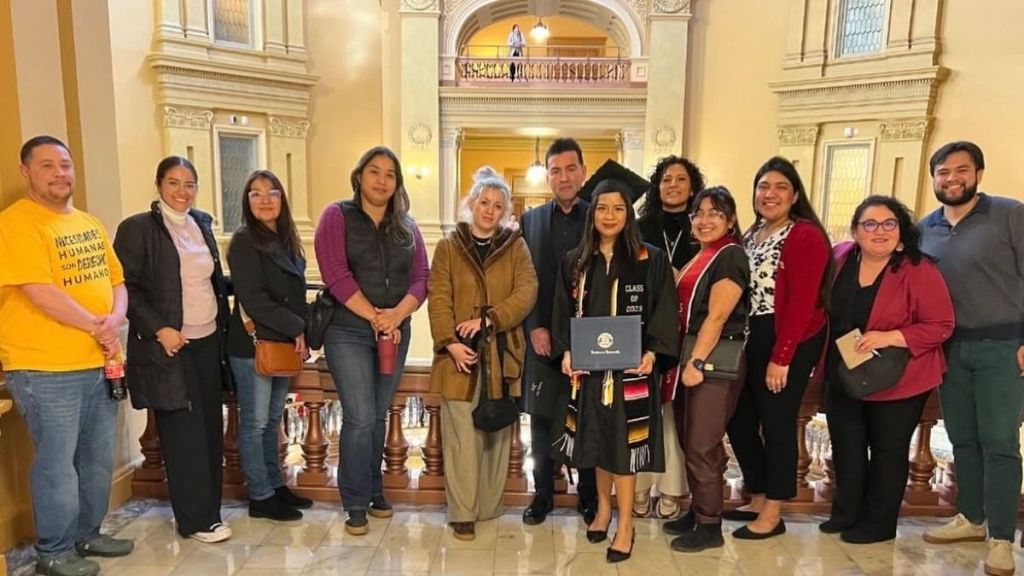
Maria, a graduate of Olathe East High School, shared her journey. She immigrated to the U.S. at age two and grew up in Olathe, with no memory of her native Mexico. The Kansas in-state law made it financially feasible for her to earn both an associate degree from Johnson County Community College and a bachelor's degree in business administration with a minor in psychology from the University of Kansas. Without this provision, she notes, graduating would have been impossible, even at a community college.
Karina Valtierra's experience highlights the profound impact of DACA's instability. Her DACA status lapsed for eight tense weeks, forcing her to step away from her job teaching young children. This period of uncertainty required her to make difficult preparations for her U.S.-born children, including discussing the possibility of her deportation. Her story underscores the emotional toll and the constant need for preparedness that many families face.
"We consider this our country, even though we don’t have a piece of paper that says this is our country. Now we have kids, and we’ve built a life in here."
These narratives are not isolated incidents; they represent a generation of students who have grown up in Kansas, contributed to their communities, and aspire to build futures within the state. Their educational journeys are intrinsically linked to the policies that govern their access to higher education.
Navigating the Legal and Political Terrain
The legal arguments against in-state tuition for undocumented students often center on federal law and the interpretation of immigration statutes. Attorney General Kobach's stance, for instance, emphasizes that states may not grant in-state tuition benefits to undocumented immigrants unless they extend the same benefits to out-of-state U.S. citizens. This interpretation has been a driving force behind legislative efforts to repeal the Kansas law.
Historically, the Kansas law was carefully crafted to require undocumented students to meet a higher burden of proof for residency than native-born citizens. Despite these provisions, the number of undocumented students enrolling under the in-state tuition law has remained relatively modest, peaking at 670 statewide in 2015 and 2017, and declining to 310 in 2024. This data suggests that fears of widespread exploitation of the law may be overstated.
The legal battles are not confined to Kansas. Several other states, including Nebraska, Texas, Kentucky, and Oklahoma, have settled lawsuits that have ended their in-state tuition programs for undocumented students. Lawsuits are also pending in other states. This trend suggests a concerted national effort to challenge such policies.
The Role of Educators in Supporting Students
In this complex environment, educators play a vital role. They are on the front lines, interacting with students daily and witnessing their academic achievements and personal struggles. Understanding the legal and political pressures impacting undocumented students is crucial for providing effective support.
Educators can:
- Stay Informed: Keep abreast of legal and policy changes that affect undocumented students and their families.
- Provide Accurate Information: Clarify the existing in-state tuition law and DACA program details for students and parents, dispelling misinformation.
- Foster a Supportive Environment: Create inclusive classrooms where all students feel safe, valued, and encouraged to pursue their academic goals.
- Connect Students with Resources: Guide students to relevant legal aid, advocacy groups, and support services.
- Utilize Engaging Teaching Tools: Employ interactive tools to maintain student engagement and foster a positive learning atmosphere. For instance, using MentofyCove classroom games can help build community and reduce stress.
The current climate can be discouraging for students, and some may not be aware that the in-state tuition law still exists or may be hesitant to pursue higher education due to heightened enforcement. Proactive outreach and clear communication from educational institutions are therefore essential. This includes leveraging resources like Mentofy AI teaching tools for effective lesson planning and student engagement.
Looking Ahead: Advocacy and Adaptation
Advocates for immigrant students are preparing for continued challenges. Organizations like New Frontiers are actively organizing pushback and seeking insights from states that have already faced legal battles. The fight for equitable access to education for all students, regardless of immigration status, is ongoing.
The future of in-state tuition for undocumented students in Kansas, and indeed across the nation, remains uncertain. The legal and political battles are likely to persist, requiring ongoing vigilance and advocacy from students, families, educators, and community leaders. As the landscape continues to evolve, the commitment to ensuring that all students have the opportunity to reach their full potential must remain a guiding principle for our educational systems.




 Explore AI Teaching Tools
Comments (0)
Please login to comment
No comments yet
Be the first to comment on this article