
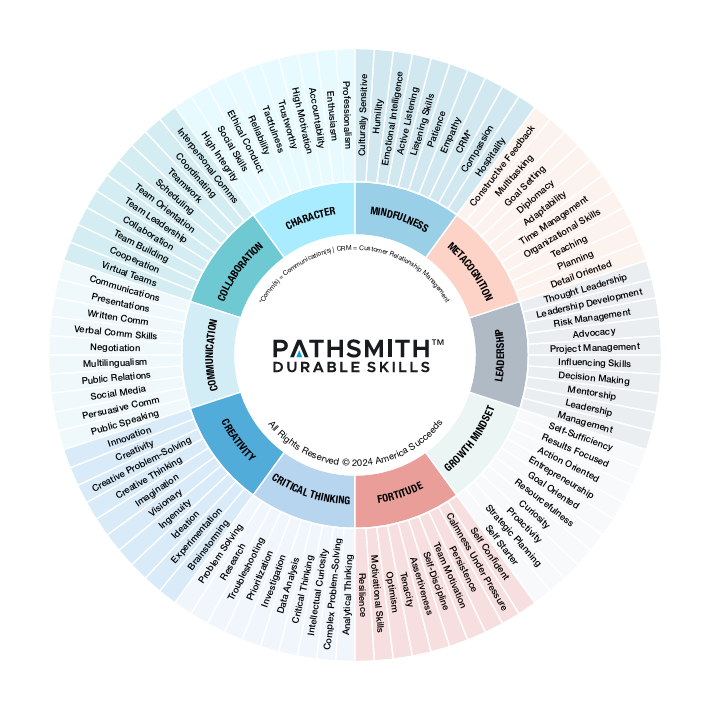
A seismic shift is underway in education, one that moves beyond traditional academic metrics to embrace the very essence of human capability. As artificial intelligence rapidly reshapes industries and the global workforce, the demand for individuals who can think critically, communicate effectively, and adapt with agility has never been more pronounced. This burgeoning focus on durable skills presents a profound challenge and an exciting opportunity for educators: how do we teach, measure, and validate these essential human competencies in a way that prepares students for a future where rote memorization is increasingly automated?
The Elusive Nature of "Soft" Skills Becomes Tangible
For years, terms like "critical thinking" and "communication" have been educational buzzwords, intuitively understood but notoriously difficult to define, teach, and assess. This ambiguity has relegated them to the realm of "soft skills," often perceived as secondary to core academic subjects. However, a growing consensus among educators, business leaders, and researchers is that these are not soft at all, but rather foundational "durable" skills that underpin success in all aspects of life.
Recognizing this imperative, a wave of initiatives is now dedicated to dissecting these complex abilities into granular, teachable components. The goal is to create frameworks that allow for systematic instruction and objective evaluation, much like we approach mathematics or literature. This endeavor is crucial for equipping students with the launchpad skills they need to navigate an unpredictable future.
"There’s no system of capturing (these skills) and measuring them, because, frankly, we haven't valued them as at the same level that we have academic skills. As the world is changing, so must we. We’re trying to make what is invisible visible…How do we flip the discussion about college applications and getting jobs, from how someone looks on paper to showing evidence of what they’re capable of?"
Deconstructing Communication: From Elevator Pitches to Empathetic Listening
The path to mastering communication is being meticulously mapped out. It’s no longer just about speaking clearly, but about understanding the nuances of audience, purpose, and delivery. Educational pioneers are breaking down communication into distinct subskills, allowing for targeted instruction and assessment.
Consider the concept of an "elevator pitch." This seemingly simple exercise encapsulates multiple communication competencies. Students must not only articulate their ideas concisely but also tailor their message for a specific, brief interaction. This involves understanding the core components of a compelling message and delivering it with confidence and clarity, paying attention to non-verbal cues.
These efforts are not merely theoretical. Schools are beginning to integrate these detailed skill progressions into their curriculum. For instance, educators can now focus on specific aspects of communication, such as:
- Understanding and adapting communication styles for different audiences.
- Developing the ability to listen actively and extract deeper meaning from conversations.
- Recognizing and navigating the emotional and ethical dynamics within interactions.
- Mastering various communication modes, including written, verbal, and even digital platforms.
This granular approach empowers teachers to design lessons that specifically target these areas, providing students with concrete steps toward improvement. It moves the conversation from a general understanding of "being a good communicator" to actionable strategies for achieving that goal. The ability to express the same idea in different ways, adapting to a listener's comprehension, is a prime example of a subskill that can be practiced and honed.
Cultivating Critical Thinkers: Beyond Memorization to Meaningful Analysis
Critical thinking, long considered a hallmark of higher education, is now being recognized as a fundamental skill for all students, starting from early grades. The challenge has been to define what constitutes critical thinking in a way that is both measurable and teachable. Researchers are now identifying the core components that enable individuals to analyze information, form reasoned judgments, and solve complex problems.
This involves a multifaceted approach that extends far beyond simply recalling facts. Students need to learn how to effectively seek out information, critically evaluate its credibility, and then synthesize it to construct well-supported arguments. The process is iterative, requiring a willingness to question assumptions and consider alternative perspectives.
Key components of critical thinking being emphasized include:
- The ability to identify and analyze information sources, discerning fact from opinion.
- Formulating logical arguments supported by evidence.
- Recognizing and avoiding common logical fallacies.
- Employing deductive and inductive reasoning to reach sound conclusions.
The development of these skills is particularly vital in an era saturated with information, where the ability to discern truth from misinformation is paramount. Tools that can assist in AI lesson plan creation can help educators build activities that specifically foster these analytical abilities, moving beyond simple recall to genuine comprehension and application.
"With the advent of AI, when everybody has the same AI, then the things that really differentiate you are these durable skills. It’s your critical thinking, collaboration, growth mindset."
The Role of Technology in Measuring and Developing Durable Skills
The increasing focus on durable skills has spurred innovation in educational technology. Platforms are emerging that not only help educators design lessons around these competencies but also provide tools for assessment and practice. These technologies are making the invisible visible, offering tangible ways to track student progress.
For instance, Mentofy AI teaching tools offer features like AI grading, which can help streamline the assessment of written responses, allowing educators to focus on the quality of critical thinking and communication demonstrated. The development of comprehensive lesson planning tools, including those that can generate diverse question types for exams, is also crucial for embedding these skills into the curriculum.
Furthermore, interactive platforms can transform how students engage with learning material, fostering collaboration and active participation. Tools like MentofyCove classroom games can be adapted to assess communication and critical thinking in dynamic, engaging ways. Imagine a trivia game where students must not only answer questions but also collaborate to strategize and justify their choices.
The advent of smart student grouping tools, such as MentofyGroups, can facilitate collaborative projects designed to hone communication and critical thinking. These tools can help educators create balanced groups and even provide icebreakers that encourage initial communication and idea-sharing, setting the stage for deeper collaborative work.
Even seemingly simple tools like MentofyBoards, with their interactive display widgets, can be leveraged. A poll widget could be used to gauge student understanding of a complex concept, prompting them to articulate their reasoning. A countdown timer could introduce a sense of urgency to problem-solving activities, encouraging quick, critical thinking under pressure.
Bridging the Gap: From Classroom to Career
The ultimate goal of developing these durable skills is to prepare students for success beyond the classroom, whether in higher education or the professional world. Businesses are increasingly articulating their need for employees who possess strong communication, collaboration, and critical thinking abilities, especially as AI automates more routine tasks.
Frameworks that break down these skills into observable behaviors and measurable indicators are vital for creating a common language between educators and employers. This allows students to demonstrate their capabilities in a way that is recognized and valued by the professional community.
The development of standardized assessments for these skills is still in its nascent stages, but the momentum is undeniable. Initiatives like Skills for the Future and Pathsmith are paving the way, creating detailed outlines that can inform the creation of robust evaluation tools. These efforts aim to provide concrete evidence of a student's mastery, moving beyond subjective assessments.
The journey to fully integrate and assess these durable skills is ongoing. However, the clear articulation of these competencies and the development of innovative tools to teach and measure them represent a significant step forward. By focusing on creating communicators and critical thinkers, education is preparing students not just for tests, but for life.
The future of education lies in embracing these durable skills as core academic competencies. As educators, our ability to define, teach, and measure these abilities will be the true test of our preparedness for the evolving demands of the 21st century. The good news is that resources and frameworks are rapidly emerging to support this crucial endeavor, and educators can begin to implement these insights today. You can get started with many of these tools and approaches for free.






 Explore AI Teaching Tools
Comments (0)
Please login to comment
No comments yet
Be the first to comment on this article