
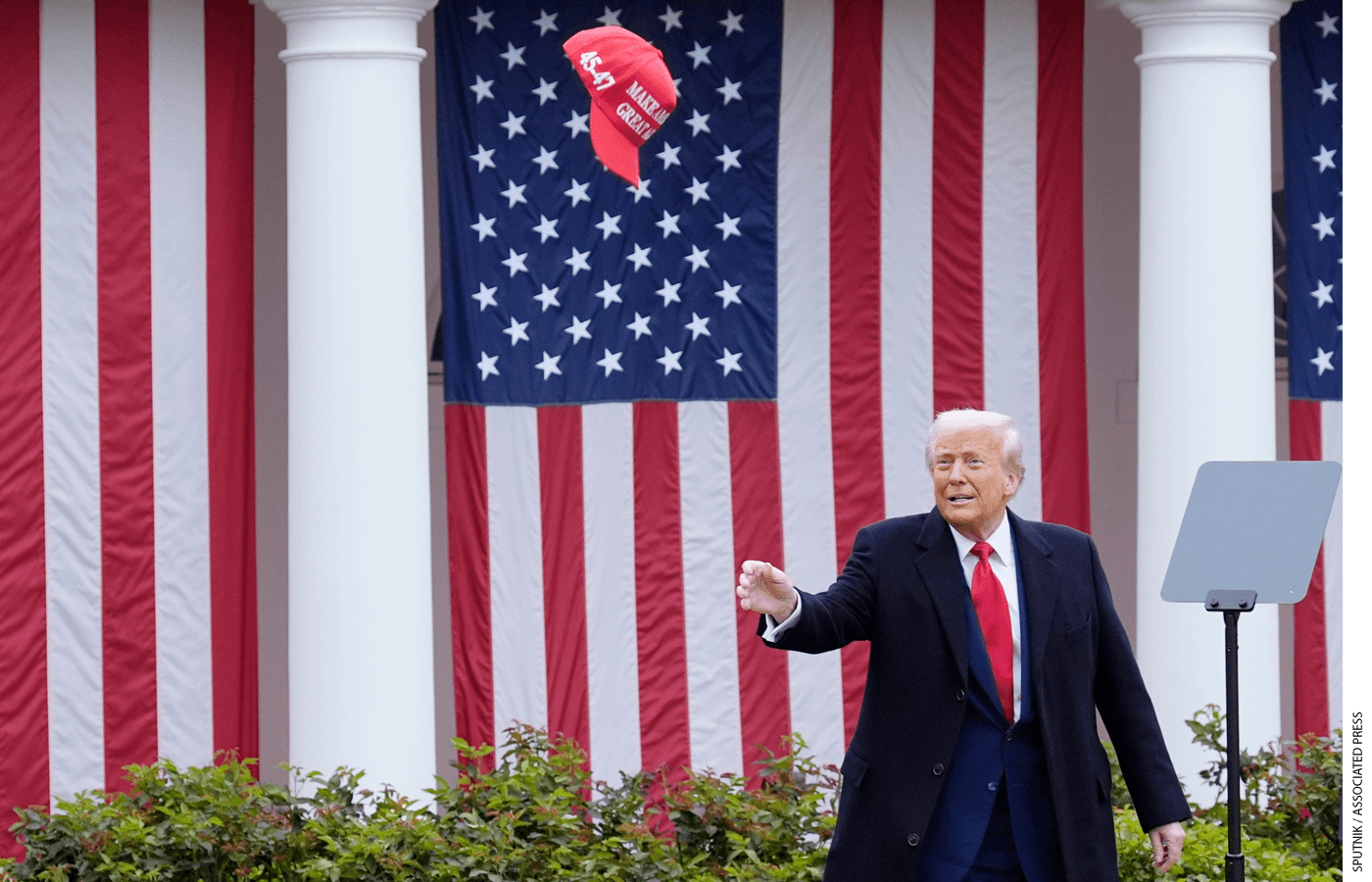
White House Visit: 8th Graders Get a Civics Lesson Unlike Any Other
Imagine stepping into the hallowed halls of the White House, not for a typical tour, but to hear directly from the President himself. For a group of 8th graders from Oakmont Middle School, this wasn't just a field trip; it was an immersion into a unique vision of American history and leadership, delivered with characteristic flair.
A Presidential Welcome and a Glimpse of History
The air buzzed with excitement as the young visitors, some sporting the iconic red hats, were welcomed by the President and the First Lady. It was a momentous occasion, coinciding with a significant anniversary – the White House itself was celebrating 250 years. The President didn't shy away from drawing parallels between past and present leaders, highlighting George Washington's foundational role in making America great, and asserting his own efforts to achieve that same status, not once, but twice.
He painted a picture of historical reverence, recounting tales of Washington's ingenuity and the respect shown to him. This historical context, he suggested, was a precursor to the present, where the White House, a symbol of national pride, was undergoing its own transformation. The President emphasized his personal involvement in these renovations, underscoring his belief that he possessed the unique expertise to ensure the building's grandeur.
The President's Vision for a "Beautiful" White House
The President spoke passionately about the ongoing work at the White House, framing it as a project to make the iconic structure even more impressive for future generations. He described enhancements designed to instill pride, mentioning elements like a vibrant blue swimming pool, a testament to his commitment to making things beautiful and modern.
He contrasted his approach with that of previous administrations, suggesting a stark difference in vision and execution. The President framed his actions as a direct benefit to the young people present, portraying himself as a tireless worker dedicated to their future. He even hinted at the possibility of continuing his service, suggesting that the hard work he's invested deserved further dedication.
Lessons from the Top: A Personal Anecdote
Shifting to a more personal narrative, the President reflected on his own 8th-grade experience, describing himself as an exceptional student who excelled in every aspect. He shared anecdotes of admiration from his peers and accolades from teachers, painting a picture of early success and widespread recognition.
This personal reflection served as a bridge to a broader lesson for the students. He suggested that their own principal, whom he described as highly complimentary, had also recognized his exceptional leadership. The President recounted a brief interaction where he corrected the principal's assessment, asserting his position as the best president for everyone's lifetime, a statement met with laughter and agreement.
A Detour from the Expected: Disney and Disagreements
The conversation then took an unexpected turn, with the President mentioning that the students had nearly visited Disney World instead of the White House. He used this as an opportunity to express his strong opinions about certain media figures and entertainment venues, suggesting that less desirable alternatives existed.
He voiced his disapproval of specific individuals and their perceived influence, contrasting their actions with his own. The President then pivoted to a discussion about a particular state governor, recounting a past political rivalry and characterizing the governor's actions in a critical light. This segment highlighted the President's tendency to weave personal and political narratives into his public discourse.
Defining MAGA and Embracing Strength
The President addressed the concept of "MAGA," asserting his ownership of the movement and its definition. He dismissed dissenting opinions, suggesting that only he truly understood its meaning. He then spoke about his foreign policy decisions, specifically referencing actions taken regarding Iran.
He presented these actions as bold and decisive, framing them as essential to national security and global stability. The President emphasized his role in preventing catastrophic outcomes, portraying himself as a protector who made difficult but necessary choices. He spoke of averting nuclear proliferation and safeguarding allies, painting a picture of a world significantly safer due to his interventions.
Celebrating America's 250th: A Unique Festivity
The upcoming 250th-anniversary celebration was presented as a grand affair, with the President promising events that would resonate with the young visitors. He highlighted activities such as car racing and a UFC championship, events he believed embodied patriotism and excitement.
He shared an anecdote from a prominent athlete who lauded his prowess, reinforcing the idea of his exceptional status. The President then engaged the students in a hypothetical scenario involving political figures in a competitive setting, sparking their imagination and illustrating his unique approach to public engagement.
Judicial Scrutiny and a Call for Strength
The President turned his attention to the judicial system, expressing strong dissatisfaction with certain judges. He criticized their perceived disloyalty and lack of deference, drawing a stark contrast with his expectations of respect and obedience.
He proposed unconventional scenarios for resolving disputes, suggesting a willingness to challenge established norms. The President then introduced the concept of "Trump crypto," linking it to tangible rewards and suggesting a new form of economic engagement. He implied that financial acumen could supersede traditional education, presenting a provocative perspective on learning and wealth.
Faith, Finance, and the Future of American Currency
The President then delved into the inscription "In God We Trust" on American currency. He suggested that he was the first to truly notice its significance and implied that its value could be enhanced by his own name. He offered a critical assessment of religious figures and their perceived effectiveness in addressing contemporary issues.
He contrasted past notions of divine justice with what he described as a more modern, less assertive approach. The President then introduced the idea of a gold statue in his likeness, suggesting its potential placement and the inspiration it could provide to future leaders. He framed this as a way to make the White House a landmark of unparalleled popularity and respect.
A Legacy of Victories and a Vision of Greatness
As the visit neared its end, the President summarized his achievements, highlighting his success in ending conflicts and fostering economic prosperity. He presented a personal victory in a golfing tournament, further solidifying his image as a champion.
He concluded by emphasizing his role as a winner and the desire of people to associate his name with success. The President's message was one of strength, accomplishment, and a unique vision for America's future, leaving the young visitors with a memorable and thought-provoking experience.



 Explore AI Teaching Tools
Comments (0)
Please login to comment
No comments yet
Be the first to comment on this article