
Higher Education's Trust Deficit: A Yale Report Ignites Debate on the Enduring Value of Liberal Arts
A recent, year-long examination by Yale University has thrust a critical question into the spotlight: what is the fundamental purpose of higher education in an era of declining public trust? The comprehensive report, released in April, delves into the reasons behind this erosion of confidence, identifying three key culprits: soaring tuition costs, opaque admissions processes, and the increasingly contentious campus climate surrounding free speech.
However, the report argues that these are symptoms of a deeper malaise—a widespread uncertainty about the very mission of colleges and universities. As the report succinctly puts it, "Trust is earned by doing what you say you’re going to do—and ideally, doing it well." This raises a fundamental question for students, families, and taxpayers alike: what exactly are these institutions promising, and are they delivering?
The Unsettled Equation: Cost vs. Career Readiness
For many, the primary expectation from higher education is preparation for a successful career, one that justifies the significant investment of time and money. Yet, the Yale report acknowledges a stark reality: "for many students, the economic return on higher education has become uncertain at best." This precarious return on investment, coupled with concerns about campus controversies and the broader political landscape, has undoubtedly contributed to a souring public perception of higher education.
Data supports this sentiment. A survey conducted last May revealed that a striking 76 percent of voters believe colleges and universities overcharge for degrees. More recently, a majority of voters—54 percent—expressed doubt that most college graduates are adequately prepared for the workforce, with only 36 percent holding a contrary view.
These voter concerns are deeply intertwined with the perceived job prospects and earning potential of graduates relative to their educational debt. The lost earnings from dedicating years to study instead of entering the workforce also factor heavily into this cost-benefit analysis.
Yale's Unique Position in the Economic Landscape
At first glance, the Yale report doesn't directly address the "career readiness" half of the cost equation. It doesn't focus on creating employment pipelines or aligning curricula with employer demands. This is, in part, because Yale operates from a position of relative economic security.
Data from the College Scorecard indicates that median annual earnings for Yale graduates hover around $112,971, more than double the median for graduates of other four-year institutions. Furthermore, Yale's Office of Career Strategy reports that over 95 percent of the class of 2025 secured employment or pursued graduate studies within six months of graduation, with 64 percent reporting starting salaries exceeding $70,000.
As the report itself notes, "an Ivy League education also opens doors to prestigious careers and opportunities." For Yale graduates, the economic outlook appears robust, suggesting they are likely to navigate the post-graduation landscape successfully.
Beyond the Paycheck: The Broader Value Proposition
However, the Yale report wisely cautions against reducing the value of higher education solely to future earnings. "Educational value cannot be reduced to a future paycheck," it asserts. The report champions the significant contributions graduates make to society through various fields, including public health, nonprofit administration, secondary education, the arts, local journalism, government service, and fundamental scientific research.
This broader perspective becomes even more crucial in light of rapid technological advancements reshaping the job market. Identifying specific skills that will remain lucrative and in demand long-term is becoming increasingly challenging, if not impossible.
The Liberal Arts as an Antidote to Uncertainty
The report posits that the evolving nature of the job market actually strengthens the argument for a broad, flexible, and time-tested educational model: the liberal arts. A liberal arts education, encompassing sciences, social sciences, arts, and humanities, is presented as a powerful tool for equipping students with foundational knowledge and critical skills essential for lifelong success.
This emphasis on high-order cognitive skills, particularly critical thinking, is a cornerstone of a robust education. Critical thinking extends beyond mere problem-solving; it involves the ability to identify problems, especially in situations where others might accept the status quo.
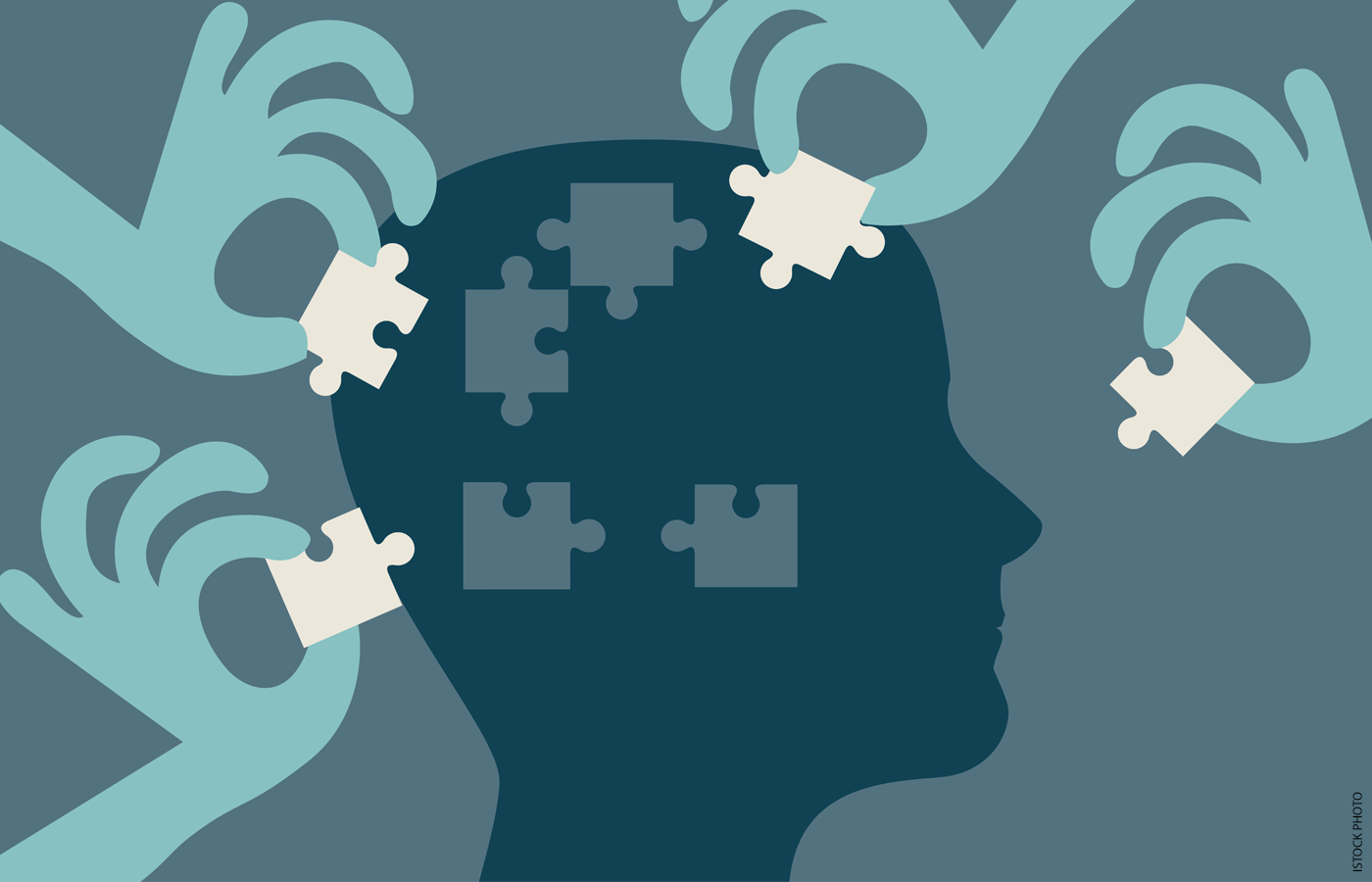
As scholars have noted, critical thinking is not a discrete skill that can be taught in isolation. Instead, "thinking itself is inextricably linked to the content of thought. A robust foundation of knowledge is not merely the raw material for thought, it is the scaffolding that makes higher-order thinking possible."
True critical thinking flourishes not in a vacuum, but through sustained study across a wide array of subjects. This is precisely the kind of broad-based, liberal arts education that Yale champions. It cultivates the ability to discern meaningful connections between disparate pieces of knowledge—to effectively "connect the dots."
Illustrating Critical Thinking: From Yogurt to Gene Editing
A compelling example of this "connecting the dots" phenomenon can be found in the realm of science. The revolutionary gene-editing technology known as CRISPR, which allows for precise modification of DNA, has profound implications for treating genetic diseases like sickle cell anemia and potentially cancer.
What is remarkable is that CRISPR is not a human invention; bacteria have utilized this mechanism for defense against viruses for millennia. The breakthrough came when scientists made a connection between this bacterial defense system and a seemingly unrelated observation in the food industry.
In the early 2000s, food scientists at a Danish yogurt company noticed their cultures were turning excessively sour. They discovered that the bacteria were employing CRISPR, significantly altering the taste of the dairy product. This seemingly minor observation, when linked with a deep understanding of DNA, RNA, bacterial defense mechanisms, and the chemical processes affecting yogurt, sparked a revolutionary insight.
This critical insight transformed the conception of the human body from mere "hardware" to be repaired, to "software" whose underlying code could be adjusted to combat disease. This leap required a profound understanding of subject-specific knowledge across biology, microbiology, and even food science.
The Imperative for Explanation and Defense
It is crucial to note that the development of critical thinking skills is not exclusive to institutions like Yale or confined solely to traditional liberal arts curricula. Deep study and practice in applied fields can foster these essential cognitive abilities just as effectively.
However, the breadth inherent in a liberal arts education provides an exceptional training ground for cultivating these high-order cognitive skills. It offers students a rich tapestry of "dots" from diverse subjects, enabling them to forge meaningful connections that will serve them throughout their careers and lives.
The connection between a liberal arts education and the development of critical thinking remains opaque to many Americans. The Yale report's acknowledgment of this value is a commendable first step, but institutions with the resources and standing of Yale bear a significant responsibility to articulate and defend the enduring importance of a traditional liberal arts education.
A more robust defense and clearer explanation of the liberal arts' value is not just an academic exercise; it is essential for rebuilding public trust in the very institutions that shape our future leaders and thinkers.





 Explore AI Teaching Tools
Comments (0)
Please login to comment
No comments yet
Be the first to comment on this article