
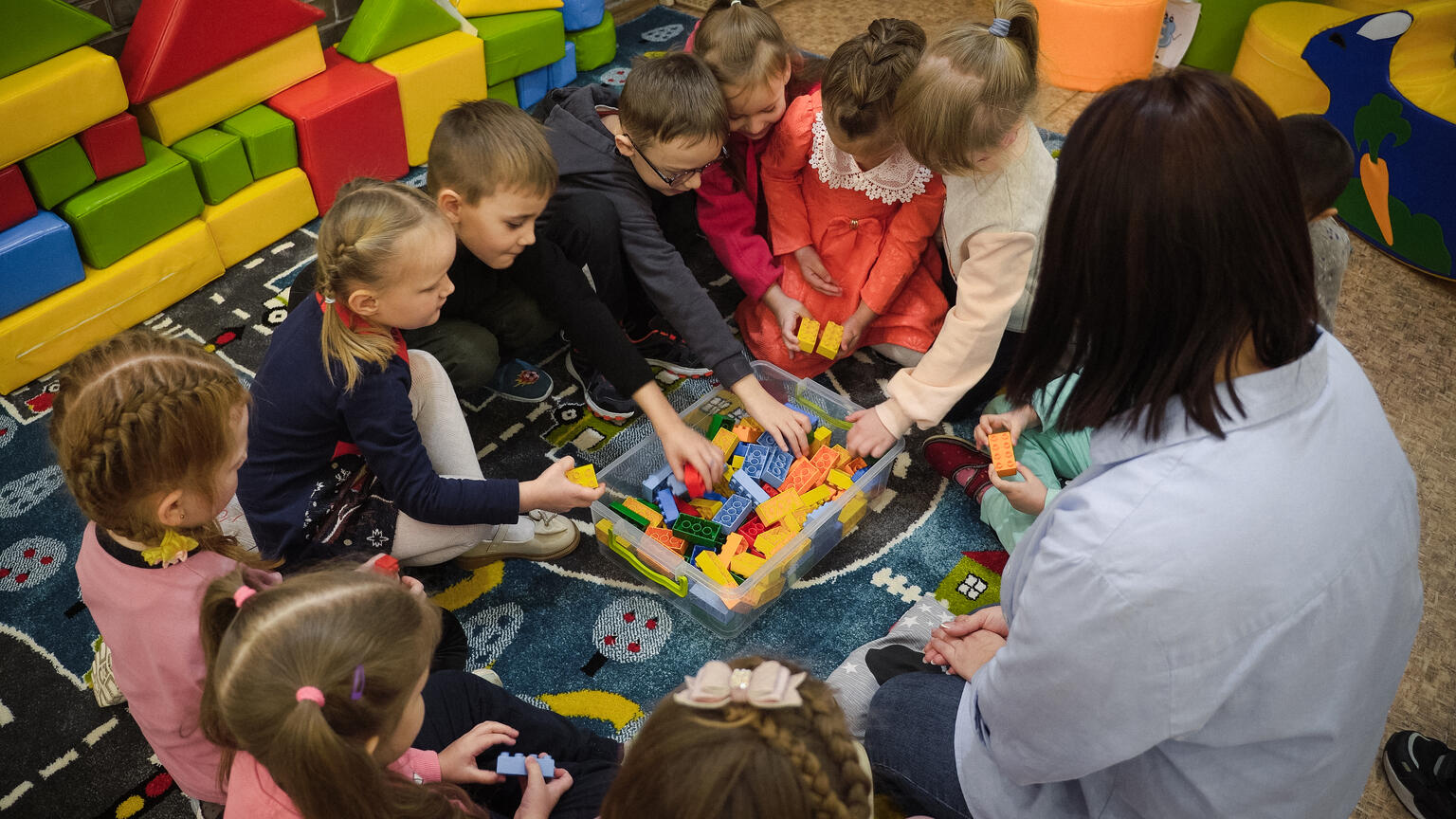
When education budgets tighten in crisis zones, early childhood education is often the first casualty, treated as a postponable luxury. This seemingly pragmatic cut, however, carries a profound and predictable cost: it sows the seeds of widening learning gaps and significantly hinders the long-term recovery of entire education systems. For educators and policymakers alike, understanding this foundational impact is critical for building resilient and equitable learning environments.
The Invisible Foundation: How Early Learning Gaps Emerge
The truth is, learning disparities often begin long before children set foot in a primary school classroom. Global data consistently reveal that unequal access to organized early childhood learning opportunities is a primary driver of later academic inequalities. In crisis-affected settings, this challenge is amplified by factors like displacement, chronic stress, and disrupted caregiving, all of which can impede early development.
When early childhood education programs are underfunded, a significant number of children enter grade 1 already behind their peers. This immediately alters classroom dynamics. Teachers must slow down their pace to accommodate varying levels of readiness, leading to an immediate widening of learning gaps. Consequently, the early primary grades become zones of remediation rather than advancement.
Only 41% of children in low- and middle-income countries reach minimum proficiency in reading by the end of primary school. While often attributed to primary education quality, weak school readiness and early learning gaps are closely linked, particularly in crisis-affected contexts.
From a systems perspective, this is a critical distinction. The learning gaps established before school entry create a detrimental feedback loop. Remediation efforts increase, repetition rates climb, teacher workloads become unsustainable, and existing inequalities are exacerbated. Once these dynamics take hold, they are exceedingly difficult and costly to reverse.
Short-Term Savings, Long-Term Burdens: The Financial Fallout
Despite overwhelming evidence, early childhood education in emergency settings is frequently financed through short-term, fragmented funding streams. It’s often viewed as an optional component, to be addressed only after enrollment numbers stabilize and primary schooling is back on track. This approach, while appearing fiscally responsible in the immediate moment, merely defers costs.
System-wide analyses of education recovery in the wake of conflict, displacement, and pandemics, like COVID-19, consistently demonstrate that education systems with weak early foundations recover more slowly and less equitably from shocks. This translates directly into increased per-pupil costs, strained teacher capacity, and the diversion of scarce resources away from crucial system strengthening initiatives.
These financial burdens are not distributed evenly. They disproportionately fall upon overworked teachers, under-resourced schools, and families least equipped to compensate for early learning deficits. The predictable trajectory is clear: inadequate early investment leads to a cascade of challenges that ultimately cost more to address later.
The Cycle of Underinvestment
The cycle of underinvestment in early childhood education creates a self-perpetuating problem. Weak school readiness necessitates costly remediation and leads to higher repetition rates. These increased costs, in turn, constrain future investment capacity, often leading back to further cuts in early childhood education itself.
This creates a significant hurdle for achieving broader educational goals. For instance, if teachers are constantly managing a wide range of foundational skills within their classrooms, the impact of professional development or curriculum reforms at the primary level can be significantly diminished. The foundational skills that children bring to school, or lack thereof, shape the entire learning landscape.
Early Childhood Education: The Unsung System Infrastructure
Viewing early childhood education as mere schooling misses its crucial role as fundamental system infrastructure. It provides vital routines for young children, strengthens caregiver engagement, and maintains essential links between families and education services, even during periods of severe disruption. When integrated with caregiver support, health, and child protection services, it fosters cross-sectoral coordination rather than operating in isolation.
By sustaining engagement with families and communities, early childhood education helps preserve the institutional connections that primary education systems rely upon for effective recovery. However, the long-term benefits are contingent on adequate resourcing, developmentally appropriate practices, and meaningful integration with primary education systems, not simply on an increase in enrollment numbers.
In crisis-affected contexts especially, early childhood education is not a luxury to be postponed. It is a foundational investment, without which recovery, equity, and learning quality remain out of reach.
The SDG 4.2 Imperative
Sustainable Development Goal (SDG) target 4.2 clearly articulates the global commitment to ensuring all children have access to quality early childhood development, care, and pre-primary education by 2030. Crucially, this target goes beyond mere participation, measuring whether children are developmentally on track at the start of primary school.
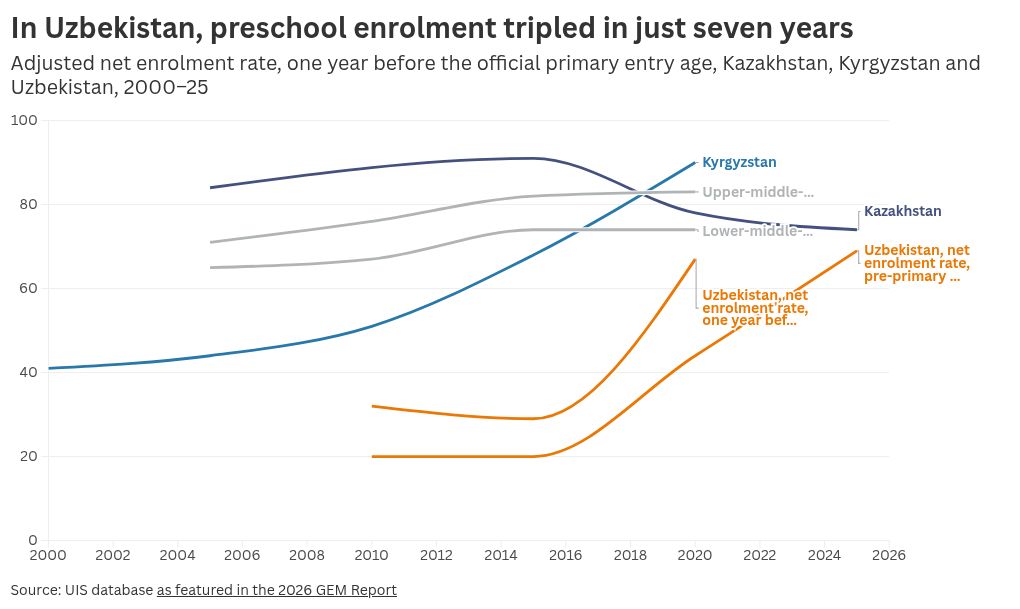
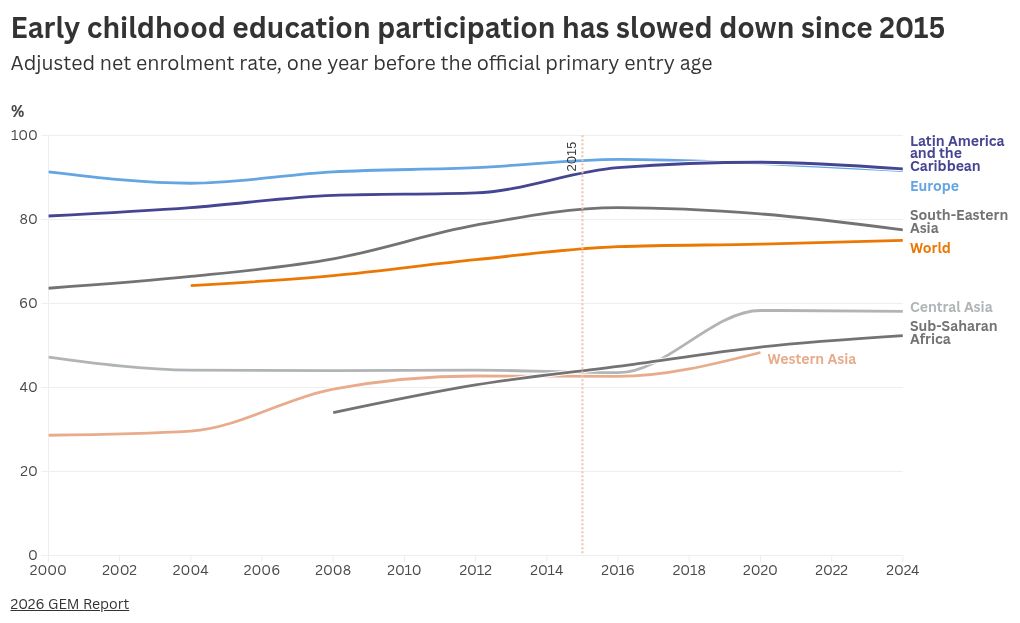
Progress reports on SDG 4.2 reveal a stark reality: pre-primary education participation remains far from universal, with the most significant gaps concentrated in low-income and crisis-affected regions. In many of these settings, fewer than half of children are enrolled in pre-primary education, and access is particularly limited for those affected by conflict, displacement, and poverty.
These participation gaps are symptomatic of wider inequalities in early childhood development. They directly shape children's learning trajectories long before they enter formal schooling, creating a bottleneck for achieving broader SDG 4 targets related to learning outcomes and overall education quality. When children lack foundational cognitive, language, and socio-emotional skills upon entering school, subsequent investments in curriculum, teacher training, and assessments are less likely to yield equitable gains.
Repositioning Early Childhood Education in Crisis Responses: A Call to Action
The evidence compellingly points to three essential shifts in how we approach early childhood education, particularly in crisis-affected settings. These shifts are not merely recommendations; they are imperatives for building resilient and equitable education systems for the future.
Firstly, early childhood education must be recognized and treated as a core component of any education response and recovery strategy. It should not be relegated to an optional add-on, funded solely through short-term humanitarian aid. This requires a fundamental reorientation of priorities and funding mechanisms.
Secondly, financing decisions must adopt a system-wide perspective. This means accounting for the long-term costs and benefits, acknowledging that early investment in quality early childhood education significantly reduces later expenditures on remediation, repetition, and learning recovery. The initial outlay is an investment, not just an expense.
Thirdly, early childhood education needs to be approached as integral system infrastructure. It should be embedded within broader educational planning, governance structures, and service delivery frameworks, rather than being managed in isolation. This integrated approach ensures its sustainability and effectiveness.
Actionable Insights for Educators and Policymakers
For governments and donors, these shifts translate into concrete actions:
- Align humanitarian and development financing to ensure sustained support for early childhood education across emergency, recovery, and long-term system strengthening phases.
- Prioritize funding for quality early childhood education programs that are developmentally appropriate and integrated with other essential child services.
- Invest in teacher training and professional development specifically for early childhood educators, equipping them with the skills to support young children in diverse and challenging contexts.
- Develop robust monitoring and evaluation frameworks that track not only participation but also developmental progress in early childhood education.
- Advocate for policy changes that formally recognize early childhood education as a critical foundation for all subsequent learning and system resilience.
Tools like Mentofy AI teaching tools can support educators by generating age-appropriate learning materials and activities, helping to bridge some of the gaps that arise from underfunded programs. Similarly, exploring platforms that offer MentofyCove classroom games can provide engaging ways for young children to develop foundational skills, even in resource-limited environments. For teachers looking to optimize their classroom management and engagement strategies, Mentofy AI lesson plan features can help tailor instruction to the diverse needs of young learners.
As the global community strives to meet the 2030 Agenda, the decisions made today regarding early childhood education will critically shape whether progress on SDG 4 accelerates or stalls. In crisis-affected contexts, investing in early childhood education is not a matter of choice; it is a fundamental prerequisite for achieving recovery, equity, and meaningful learning for all children.




 Explore AI Teaching Tools
Comments (0)
Please login to comment
No comments yet
Be the first to comment on this article