
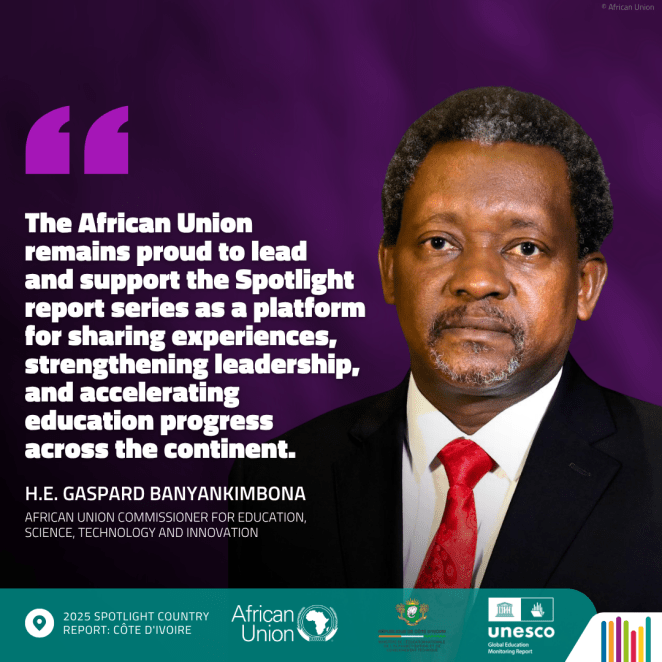
A groundbreaking report launched today in Abidjan places a crucial spotlight on school leadership, asserting that empowered principals are the linchpin for unlocking foundational literacy and numeracy gains across Côte d’Ivoire. This revelation carries significant weight for educators worldwide, underscoring the critical, often underestimated, role of school heads in shaping effective learning environments and driving student success.
Côte d’Ivoire Charts a Course for Educational Excellence Through Leadership
In a significant development for the nation's education sector, the Ministry of Education in Côte d’Ivoire is renewing its strategic focus on enhancing school leadership. This initiative, driven by a recent comprehensive report, aims to bolster learning outcomes for all Ivoirian children by empowering those at the helm of educational institutions.
The report, a collaborative effort between the Global Education Monitoring (GEM) Report and the Ministry of National Education, Literacy and Vocational Training of Côte d’Ivoire, celebrates the country's remarkable progress in expanding access to education. It simultaneously identifies school leadership as a pivotal area for further strengthening to ensure quality learning for every student.
This focus on leadership is not an isolated effort; it is part of a broader continental initiative. Côte d’Ivoire is one of five countries featured in the latest cycle of the Spotlight report series, alongside Cameroon, Kenya, Morocco, and Zimbabwe, all examining the critical role of leadership in foundational learning.
“The progress our country has made over the past decade is a testament to the commitment of our government, our teachers and our communities. Every child is born to learn, yet we know that access alone is not enough.”
From Access to Achievement: The Evolving Education Landscape
Côte d’Ivoire has made substantial strides in ensuring that children can access education. A recent GEM Report indicates that 93% of children are now enrolled in primary school, a significant achievement that has seen out-of-school rates halve over the past quarter-century.
This success is attributed to several factors, including a considerable government investment in tripling the number of public secondary schools, the implementation of free education policies, and the provision of bridging classes to reintegrate excluded students. These efforts have dramatically expanded opportunities for Ivoirian youth.
However, the conversation is shifting from mere access to the quality of learning itself. The nation is actively implementing reforms designed to improve foundational literacy and numeracy, recognizing that enrollment is only the first step towards meaningful educational attainment.
Reforms Aim to Embed Quality Learning from the Ground Up
The Spotlight country report on Côte d’Ivoire details ongoing reforms that are central to this quality enhancement drive. The Ten-Year Education and Training Plan (2021–2030) provides a clear vision for equitable and quality education, while the Competency-Based Curriculum places learners at the heart of the educational process.
A key component of these reforms is the scaling-up of structured pedagogy through the National Programme for the Improvement of Early Learning (PNAPAS). This program equips teachers with essential tools and evidence-based approaches to foster critical literacy and numeracy skills from an early age.
Evidence suggests these efforts are yielding positive results. A 2019 PASEC assessment highlighted that Ivorian teachers demonstrate strong performance compared to their peers in other francophone African countries. Furthermore, the Spotlight report’s survey of 60 primary schools found near-universal access to textbooks for students in grades 1 to 3, an accomplishment few African nations can match.
The Imperative for Empowered School Leadership
While progress in access and pedagogical reform is commendable, the new report issues a clear call to action: a comprehensive overhaul of school leadership is essential. This means rethinking how principals are selected, trained, and supported throughout their careers.
The report advocates for a transparent, merit-based selection process for school leaders. It also stresses the importance of investing in continuous professional development to equip principals with the skills needed to navigate the complexities of modern education.
Crucially, school leaders need to be freed from excessive teaching loads. This would allow them to dedicate more time and energy to their primary role: instructional leadership, school improvement planning, and fostering a positive school culture.
Key Recommendations for Strengthening School Leadership:
- Establish transparent and merit-based selection processes for school principals.
- Invest in ongoing, career-spanning professional development for school leaders.
- Reduce administrative and teaching burdens on principals to allow focus on leadership.
- Foster collaborative governance models involving school committees and local authorities.
- Implement performance contracts to encourage shared accountability among stakeholders.
Beyond the principal, the report champions a more collaborative model of governance. It emphasizes strengthening the roles of school committees and local education authorities, positioning them as genuine partners in the collective pursuit of improved learning outcomes.
Leveraging Technology to Support Educational Leadership and Learning
The principles of effective school leadership and enhanced learning resonate deeply with the mission of empowering educators. Tools that support instructional planning, assessment, and engagement can be invaluable allies for school leaders and teachers alike.
For instance, AI-powered platforms can assist in creating tailored learning materials and assessments. Tools for AI lesson planning and an exam creator can streamline curriculum development, allowing educators to focus more on pedagogical strategy and student support.
Furthermore, technologies that foster active student participation can transform the classroom experience. Engaging classroom games, such as live quizzes and word search games, can reinforce learning objectives in fun and interactive ways, boosting student motivation and comprehension.
A 2024 survey of 1,200 K–12 educators revealed that 78% believe that better school leadership directly correlates with improved student engagement and academic performance.
The report highlights two particularly promising practices in Côte d’Ivoire as strong foundations for future growth. Performance contracts, known as "contrats d’objectifs et de performance" (COPs), foster shared accountability among school leaders, teachers, parents, and communities. This collaborative approach ensures that everyone is invested in the school's success.
Structured pedagogy, as implemented through PNAPAS, provides teachers with the necessary evidence-based lesson plans and tools to effectively develop foundational literacy and numeracy skills. This systematic approach ensures consistency and quality in instruction.
The commitment to strengthening school leadership in Côte d’Ivoire is a powerful reminder that effective education is a multi-faceted endeavor. By investing in the people who lead our schools, we invest in the future success of every student.




 Explore AI Teaching Tools
Comments (0)
Please login to comment
No comments yet
Be the first to comment on this article