
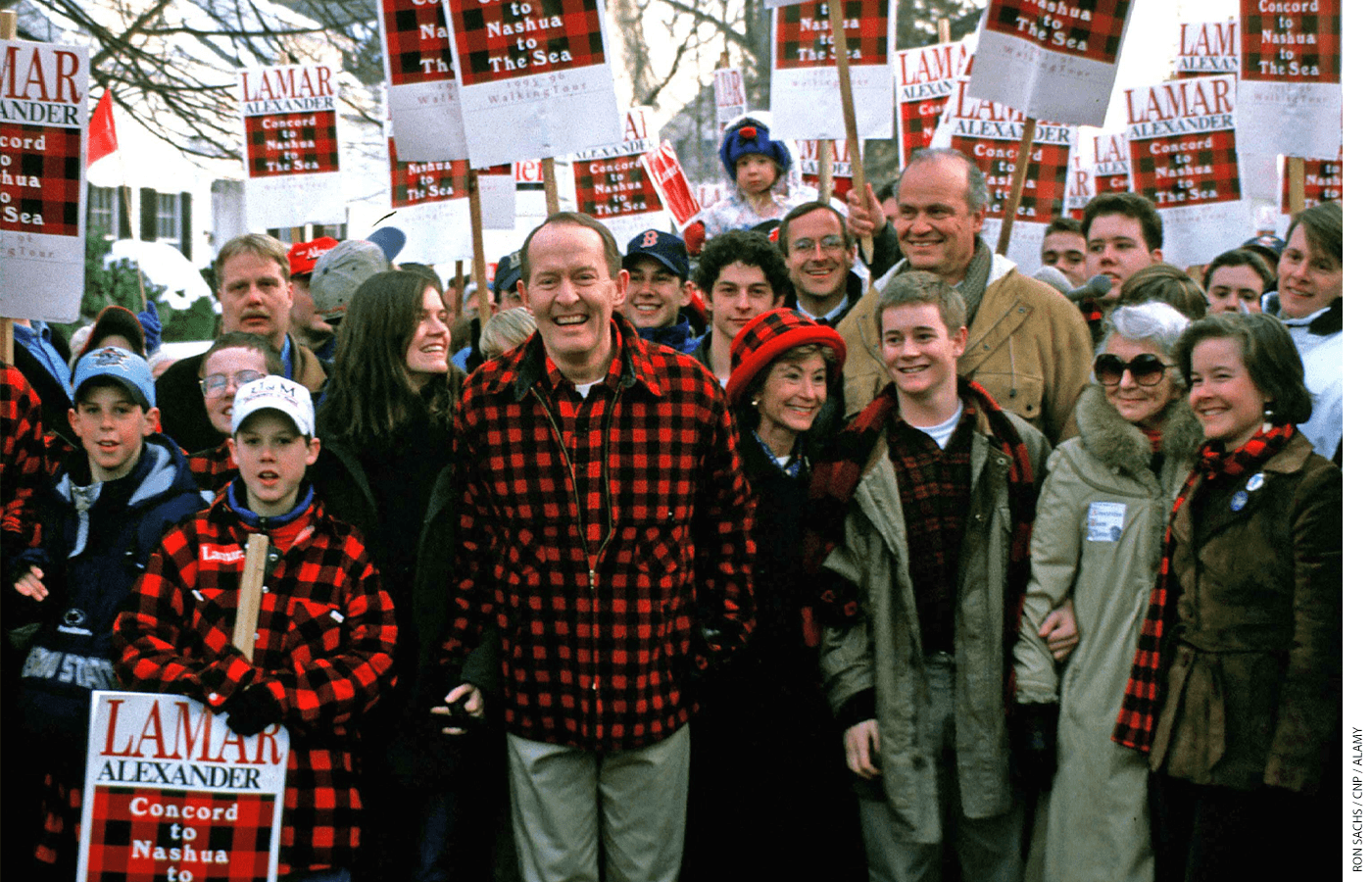
From Rural Roots to Capitol Hill: Lamar Alexander's Unconventional Path to Governing
In the often fiercely ideological arena of American politics, one figure stands out for his pragmatic, results-driven approach, particularly in the realm of education. Lamar Alexander, a former governor, U.S. Secretary of Education, and three-term senator, offers a compelling case study in how consensus-building and a deep understanding of public service can shape policy and leave a lasting legacy. His recently published memoir, "The Education of a Senator: From JFK to Trump," reveals a political philosophy rooted not in rigid doctrine, but in a profound belief in practical wisdom and the power of collaboration.
The Pragmatist's Playbook: Beyond Ideological Lines
Most political books are built around a grand theory – a framework of capitalism, Marxism, or some other established ideology that underpins the author's worldview and proposed solutions. Modern conservative thought, for instance, has largely coalesced around principles like limited government, free markets, and federalism.
Alexander's memoir, however, charts a different course. It is remarkably free of overt ideological pronouncements, a characteristic that served as both his greatest strength and, at times, an electoral hurdle. This approach, honed through years as a congressional aide, governor, education secretary, and senator, prioritized tangible outcomes over abstract principles.
His driving forces appear to be ambition, a love for his community, practical intelligence, and a deep sense of public duty – traits that echo a bygone era of American leadership. These qualities illuminate his successes as a state leader and explain the smooth, engaging narrative of his reflections. They also shed light on his persistent, yet ultimately unsuccessful, pursuit of the presidency, and the frustration that accompanied it.
A Boyhood Shaped by Service, Not Slogans
Born in 1940, Alexander's formative years predated the strong ideological currents that would later define the Republican party. Raised in a rural setting, he was instilled with a sense of service and a keen intellect. His mother's observation that "an exceptional IQ is not going to do you much good if you can't get along with other people" proved prescient.
Even as a young man, Alexander demonstrated a natural aptitude for leadership. His election as governor of Tennessee's Boys State in 1957 hinted at a future in public service. Yet, as his wife Honey often playfully questioned, the precise "why" behind his relentless pursuit of the next political office remained a recurring theme, a testament to his innate drive.
This drive propelled him through various roles, from White House aide to governor. His early career was marked by a pragmatic approach, eschewing rigid party lines in favor of finding common ground. This was particularly evident during his gubernatorial campaigns, where he grappled with articulating a clear vision, a challenge that would resurface in his presidential aspirations.
Governor Alexander: Building Bridges, Not Walls
Alexander's victory as governor of Tennessee in 1978 marked a turning point, showcasing his burgeoning civic virtue. Faced with a corrupt predecessor, he navigated the crisis not through unilateral action, but by forging alliances with Democratic leaders to ensure a lawful and procedurally sound transition of power.
This collaborative spirit became a hallmark of his governorship. His most significant achievements were born from partnerships with legislative, business, and local leaders. These included attracting foreign automakers to Tennessee, modernizing the state's infrastructure, and enacting crucial K–12 education reforms.
The "Homecoming '86" initiative, a program designed to reconnect communities with their history and former residents, exemplifies his ability to foster civic pride and engagement. These accomplishments, while not strictly conservative in their framing, were rooted in common sense and a desire to improve the lives of Tennesseans, offering them better schools and economic opportunities.
A Foundation for Educational Reform
Alexander's tenure as governor laid critical groundwork for the modern education reform movement. Decades before the widespread adoption of charter schools, vouchers, and accountability systems, he championed innovative approaches to education.
He advocated for programs supporting gifted high school students and was an early adopter of computers in classrooms. His pioneering efforts in teacher evaluation and performance-based pay predated national initiatives like "Race to the Top" by many years.
His work in education was further bolstered by his collaboration with Checker Finn, a Vanderbilt professor who served as his education policy advisor. This partnership underscored Alexander's commitment to informed policy-making and his ability to leverage expert knowledge.
Secretary of Education: A National Stage for Reform
As U.S. Secretary of Education under President George H. W. Bush, Alexander brought his state-level successes to the national stage. He played a pivotal role in introducing state-by-state results from the Nation's Report Card, providing crucial data for understanding educational disparities.
He also championed the "America 2000" agenda, a forward-thinking initiative that emphasized standards, assessments, accountability, and the development of new educational models. This agenda signaled a national commitment to improving educational outcomes across the country.
While his time as president of the University of Tennessee offered valuable insights into the complexities of higher education leadership, his memoir dedicates minimal space to this period, offering little beyond the inherent challenges of managing a university with a powerful faculty.
The Presidential Pursuit: Ideology as an Obstacle
Following Bill Clinton's victory in 1992, Alexander turned his sights toward the White House. Despite his extensive qualifications and evident potential, his presidential bids in 1996 and 2000 fell short.
The very traits that made him an effective governor – his understated demeanor, his knack for consensus, and his aversion to ideological rigidity – proved to be liabilities in the national primary landscape. He faced criticism for tax increases and was branded a "liberal Lamar," a label he vehemently rejected.
The characterization of him as a "moderate" was equally detested. Even former colleagues, like Pat Buchanan, recognized his dilemma, noting, "Your trouble is that you're not an ideologue." The sting of these electoral defeats appears to linger, evident in his critiques of subsequent presidents.
Alexander offers sharp assessments of Presidents Bush, Clinton, and Obama, often framing them with an implicit "I would have done better" undertone. He suggests that the first President Bush should have leveraged the post-Gulf War period to focus on domestic policy, particularly education, as a cornerstone of his agenda. Clinton's legacy, he argues, was "soiled" by personal scandals and a "complicated flop" of a healthcare reform effort.
He describes George W. Bush as someone who "born on third base," and criticizes his linguistic skills. Obama, in Alexander's view, was a detached senator, aloof in meetings and awkward in personal interactions.
Senator Alexander: Mastering the Art of Federal Legislation
Alexander's initial years in the U.S. Senate, beginning in 2002, presented their own set of challenges. His leadership roles within the Republican conference demanded a level of partisanship that felt unnatural to his collaborative style.
However, the latter part of his senatorial career, particularly his chairmanship of the Senate's Health, Education, Labor, and Pensions (HELP) Committee, marked a return to his strengths. This period is characterized by a more resonant narrative, filled with generous acknowledgments of colleagues and insightful firsthand accounts of pivotal legislative moments.
Readers are granted a front-row seat to Alexander's negotiations with fellow senators, his conversations with presidents, and his role in President Trump's first impeachment trial. This section of the book offers a valuable historical perspective, showcasing Alexander at his most effective.
The Architect of ESSA: A Legislative Triumph
While Alexander made his mark as a state executive, his tenure as a federal legislator, particularly in the 2010s, was arguably his most impactful. He embodied a blend of humility, accommodation, principle, curiosity, and toughness, all directed towards achieving concrete results.
He distinguished between "conservatives who think their job is finished when they make a speech and conservatives who want to govern." His leadership in passing the "21st Century Cures Act" in 2016 was significant, but his most profound legislative achievement was the reauthorization and reform of the No Child Left Behind Act (NCLB).
By the 2010s, NCLB, once a promising piece of legislation, had fallen out of favor with the public, educators, and Washington policymakers. Political gridlock and ineffective leadership had stalled meaningful reform.
Having been out of office when NCLB was enacted in 2002, Alexander approached its reauthorization with a fresh perspective. His prior experience as a governor and education secretary lent him considerable authority during policy discussions and negotiations. His persistent, yet collaborative, approach smoothed the legislative process, and his skillful management of President Obama was instrumental in securing the bill's passage, a feat Obama himself described as a "Christmas miracle."
The Every Student Succeeds Act (ESSA), the successor to NCLB, continues to be a subject of debate regarding its impact on student achievement. While overall learning outcomes have not dramatically improved, external factors likely play a significant role. Nevertheless, the necessity of replacing NCLB and rebalancing federal involvement in education was undeniable, and this shift would not have occurred without Lamar Alexander's unique abilities and unwavering commitment to ending an era of prescriptive federal education policy.
It is difficult to identify another American in recent memory who can rival Alexander's comprehensive record of service as a governor, cabinet member, and legislator. His courteous approach and non-ideological stance, which may have hindered his presidential aspirations, ultimately defined a career that stands as a model of statesmanship in American public life.






 Explore AI Teaching Tools
Comments (0)
Please login to comment
No comments yet
Be the first to comment on this article