
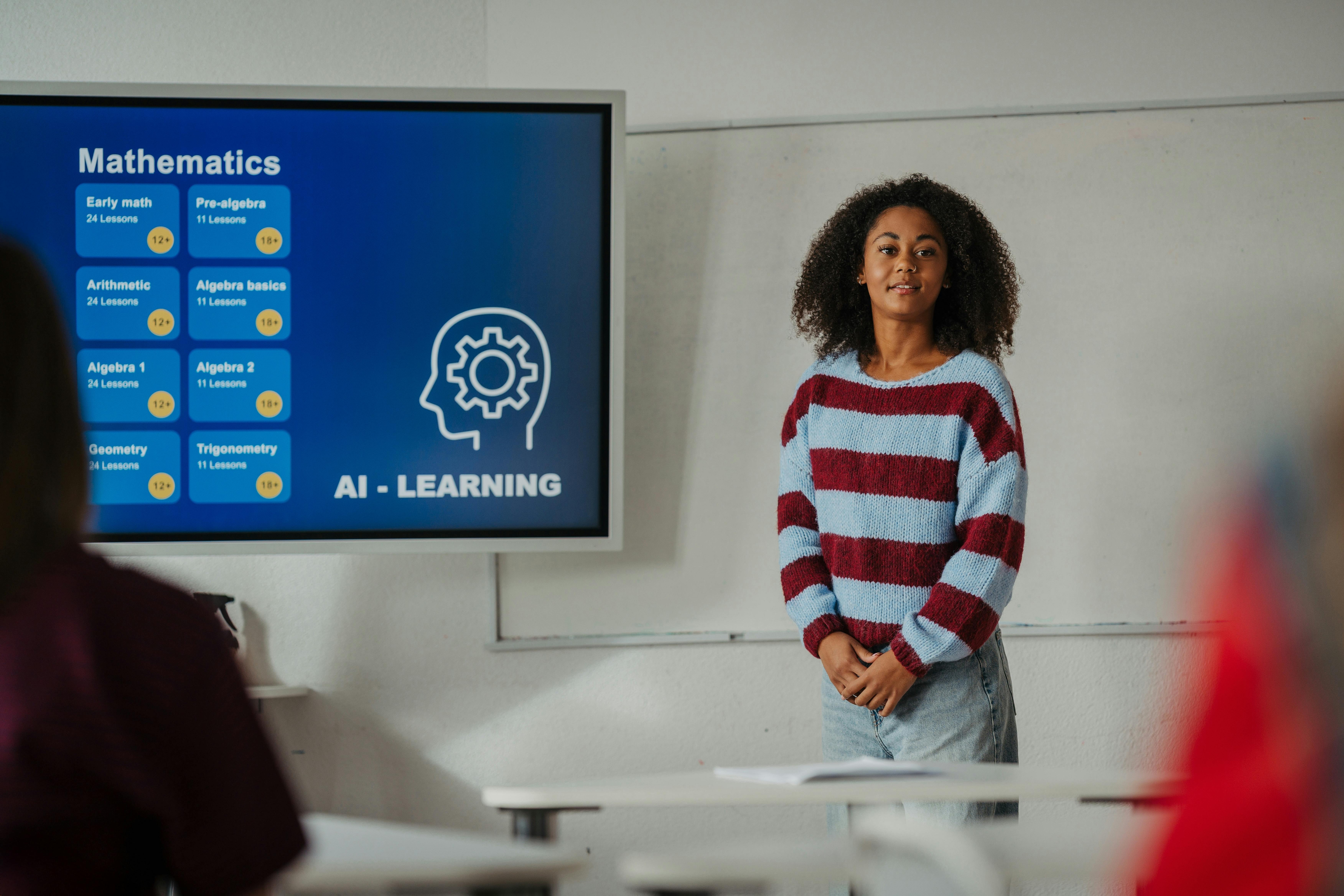
AI in the Classroom: Beyond the Hype, Teachers Seek Real Learning Value
A simple question from a fourth-grade teacher—"What can I actually use this for in math?"—perfectly encapsulates the current state of generative AI in education. While schools have been bombarded with both utopian promises and dire warnings about these powerful new tools, many educators are adopting a wait-and-see approach, prioritizing genuine pedagogical benefit over the latest technological trend.
The AI Arrival: A Disruption to Traditional Adoption Cycles
For years, the education sector has navigated technological integration through carefully planned phases of experimentation, professional development, and rigorous evaluation. Generative AI, however, has bypassed these established pathways, appearing in the hands of both teachers and students almost overnight.
This rapid influx often occurred before schools could establish clear policies or develop comprehensive instructional frameworks. Consequently, educators found themselves grappling with the implications of AI while still in the early stages of understanding its capabilities and limitations.
One high school computer science teacher from Georgia voiced a common concern, likening the situation to Arthur C. Clarke's observation that "any sufficiently advanced technology is indistinguishable from magic." This sentiment highlights the apprehension that AI might be perceived as an inscrutable force, rather than a tool to be understood and wielded effectively.
Similarly, a library media specialist from New York expressed the anxiety of falling behind. The relentless pace of technological advancement, she noted, creates a palpable fear of being unable to keep up with new tools and their profound impact on the learning landscape.
Where AI Shines: Boosting Teacher Productivity
When educators engage with generative AI, a consistent pattern emerges: its most immediate and impactful applications lie in enhancing productivity, rather than directly transforming student learning. This aligns with how professionals in any field approach a new, rapidly evolving technology.
An engineering and computer science teacher in New Jersey shared a common experience among his colleagues: "I use it routinely to lesson plan. I don’t really use the lessons, but we have to produce all this stuff for admin that no one reads… AI will just roll it off."
This sentiment is echoed by other teachers who have explored AI's potential to streamline administrative tasks. The ability to quickly draft newsletters, generate reports, or even outline lesson plans frees up valuable time, allowing teachers to focus on more impactful aspects of their role.
These examples underscore generative AI's strength in drafting, summarizing, and generating text. In environments where teachers juggle numerous responsibilities—grading, parent communication, administrative reporting, and curriculum development—a tool that can compress routine tasks can feel like a significant relief.
National survey data supports this observation, indicating that teachers are primarily adopting generative AI as a productivity enhancer. This pragmatic approach mirrors how educators, acting as expert users, evaluate new tools based on their ability to solve real problems and improve efficiency.
The Instructional Conundrum: Unclear Learning Benefits
The calculation changes dramatically when teachers consider integrating AI tools directly into student instruction. The crucial question then shifts from personal efficiency to tangible student learning outcomes: "What student learning problem does this tool solve?"
For many educators, this question remains largely unanswered, even after years of exposure to AI. While some are experimenting with AI in limited capacities, the broader instructional use case remains elusive.
A science teacher from Guam described a cautious approach: "Students write a first draft and then feed it into ChatGPT for a second draft… but I push them not to use it for research." This strategy leverages AI for revision but maintains boundaries around critical research skills.
Other educators are designing lessons where the AI itself becomes the subject of study. A high school special education teacher in New York shared her method of demystifying AI: "We purposely trained [a chatbot] wrong, so students could understand the data is only as good as how and who trains it."
These innovative approaches align with learning science research, which emphasizes the importance of technology supporting reflection and revision. By treating AI as an object of analysis rather than an authoritative source, teachers encourage students to engage in critical thinking and problem-solving.
In these instances, AI is not seen as a provider of knowledge, but rather as a complex system that students can learn to analyze and critique. The participants in these studies do not attribute AI as a source of unquestionable truth.
AI Literacy: A Practical Gateway to Understanding
Many teachers identify AI literacy as the most promising instructional avenue, recognizing its relevance to students' daily lives. As global organizations like UNESCO and the OECD increasingly advocate for AI literacy as a foundational skill, schools are encouraged to equip young people with the knowledge to understand how algorithmic systems generate information.
Students are already immersed in a world shaped by algorithms, from social media feeds to personalized recommendations. Generative AI introduces another layer to this complex digital ecosystem, making understanding its mechanics more critical than ever.
An elementary teacher from New York state focuses on helping students grasp how these systems produce information and where they might falter: "For me it starts with literacy — [teaching] students how to prompt, and then how to fact-check the information that’s generated to make sure there’s no bias in it."
A middle school teacher in New York uses relatable analogies to explain machine learning. "We used an exercise about making the best peanut butter and jelly sandwich," she explained. "The ingredients were the dataset, the procedure was the algorithm, and the output depended on how it was designed."
These lessons frame AI not as a mere productivity tool, but as a window into the intricate processes by which digital systems generate knowledge. This approach fosters a deeper understanding of the technology's underlying principles and potential pitfalls.
The Trust Deficit: Hallucinations, Bias, and Reliability Concerns
A recurring theme among educators is a deep-seated concern about the reliability of generative AI outputs. The phenomenon of AI "hallucinations"—generating entirely fabricated information—is a significant hurdle to its widespread adoption for instructional purposes.
An elementary library media specialist from New York expressed this worry: "You ask ChatGPT to write a paper on something and it makes something up totally imaginary." This unreliability makes it difficult for teachers to trust AI-generated content as a basis for learning.
A high school French teacher shared her experience: "I tried ChatGPT. I think it’s very useful if you know your content very well. If you don’t know your content, it’s hard to tell whether or not it's accurate." This highlights the need for expert oversight, which can be challenging in a classroom setting.
These concerns are further amplified by discussions around algorithmic bias. Educators are keenly aware that AI systems can perpetuate and even amplify existing societal biases, particularly in schools with diverse student populations.
A high school computer science teacher in New Jersey, working with a school serving a large number of African American, Latino, and Black newcomer families, articulated this: "When we talk about bias, we look at hiring data and incarceration data… and facial recognition systems where error rates vary depending on who the system is trying to recognize."
In such contexts, AI becomes less a tool for quick answers and more a critical case study in how technological systems shape and disseminate information, raising questions about fairness and equity.
The Pragmatic Stance: "Indifference" as Professional Judgment
The collective experiences of teachers reveal a nuanced perspective that often gets lost in the broader public discourse about AI in schools. Far from outright rejection, many educators are exhibiting a posture of "pragmatic indifference"—a thoughtful, measured approach that prioritizes core educational values.
This stance is best captured by sentiments like: "I use it for lesson planning… but I don’t really use the lessons," or "I push students not to use it for research." Teachers are readily adopting AI where it demonstrably saves time and reduces administrative burdens, while carefully maintaining boundaries around essential learning tasks.
This approach is not a sign of resistance to innovation but rather a manifestation of professional judgment. Schools are fundamentally designed to foster environments where students engage in complex cognitive work—deep reading, methodical writing, critical reasoning, and evidence evaluation.
When a new technology appears to diminish the need for students to undertake this essential work, teachers have a professional obligation to question its impact on learning. The question of whether a tool advances or undermines these foundational skills is paramount.
This brings us back to the initial query from the fourth-grade math teacher: "What can I use this for with fourth-grade math?" If the direct instructional benefits remain unclear, the conversation naturally shifts to what skills are truly essential and enduring, even in the face of rapidly evolving technology.







 Explore AI Teaching Tools
Comments (0)
Please login to comment
No comments yet
Be the first to comment on this article