
Beyond Textbooks: How Carol Davila University Forges Future-Ready Medical Professionals
The journey from memorizing anatomical charts to confidently performing life-saving procedures is a significant one. For aspiring doctors, dentists, and pharmacists, the transition from theoretical knowledge to practical application is paramount. Universities understand this, integrating hands-on training into their curricula, from clinical rotations for medical students to simulated drug compounding for pharmacy students. This is precisely the ethos at the heart of the University of Medicine and Pharmacy Carol Davila, where a deeply ingrained practice-focused approach is shaping the next generation of healthcare leaders.
Cultivating Competence Through Doing
At Carol Davila University, the philosophy is simple yet profound: learn by doing. This methodology is not merely an add-on; it's woven into the fabric of its six-year programs in medicine and dentistry, and its pharmacy curriculum. This immersive learning environment fosters a nuanced understanding of the complexities inherent in modern healthcare practice.
A Glimpse from the Pharmacy Frontlines
Baha Eddine Oudjhani, a second-year pharmacy student from Algeria, attests to the university's effectiveness. He describes the practical classes within the faculty's state-of-the-art laboratories as feeling like the initial steps into a career in the pharmaceutical industry. This sentiment is echoed by the valuable real-world experience gained during external pharmacy placements, providing a crucial bridge between academic learning and professional reality.
Founded in 1857, the University of Medicine and Pharmacy Carol Davila boasts a rich history complemented by modern facilities and cutting-edge laboratories. Its international prestige in medical education is a testament to its enduring commitment to excellence.
A Foundation Built on Practice and Distinction
The University of Medicine and Pharmacy Carol Davila’s faculties of Medicine, Dentistry, and Pharmacy have cultivated robust partnerships with 37 teaching hospitals. These collaborations are instrumental in providing students with invaluable exposure to experienced practitioners, embodying the university's guiding motto: "Initiation, Excellence, Evolution."
Bridging Theory and Practice
This synergistic approach not only fuels nationally and internationally recognized research but also cultivates patient-centered medical education. Professor Ines Dima's Toxicology module serves as a prime example of this philosophy in action. Catering to final-year students who have already honed their critical thinking skills, her teaching transcends rote memorization.
Professor Dima elaborates on her dynamic teaching style, which leans heavily on real-world events, natural phenomena, and observable aspects of daily life. She believes this method is a powerful vehicle for internalizing theoretical scientific information and developing essential social skills like communication and teamwork.
Nurturing Essential People Skills
Classes like Professor Dima's are crucial in developing one of healthcare's most vital attributes: interpersonal skills. The university's multilingual programs further enhance this crucial aspect of a student's development. Students can pursue medicine and dentistry in English or Romanian, while pharmacy is offered in Romanian or French.
These diverse linguistic environments create daily opportunities for students to learn alongside peers from a wide array of cultural and linguistic backgrounds. This exposure is invaluable preparation for navigating multicultural professional teams and providing care to diverse patient populations in their future careers.
Cultural Immersion and Academic Rigor
For Belgian dentistry student Chimène Mansour, the fusion of academic rigor and cultural immersion has been profoundly impactful. She notes that classes are consistently engaging, filled with lively discussions between instructors and students. Even when language barriers exist, Chimène has always felt her voice is heard.
She highlights the value of Romanian language classes as a significant supplement, enriching her cultural understanding and facilitating a warm adaptation to her host country. This blend of academic pursuit and cultural integration is a hallmark of the Carol Davila experience.
In 2025, Carol Davila University of Medicine and Pharmacy was recognized among the top 50% of institutions across 81 research topics, according to EduRank data. This places it among leading universities globally for its research output and impact.
Facilities Designed for Real-World Readiness
The university's infrastructure is a direct reflection of its commitment to practical, future-oriented training. Carol Davila has made substantial investments in its facilities, ensuring its medical students are exceptionally well-prepared for the demands of 21st-century healthcare.
The Cutting Edge of Medical Simulation
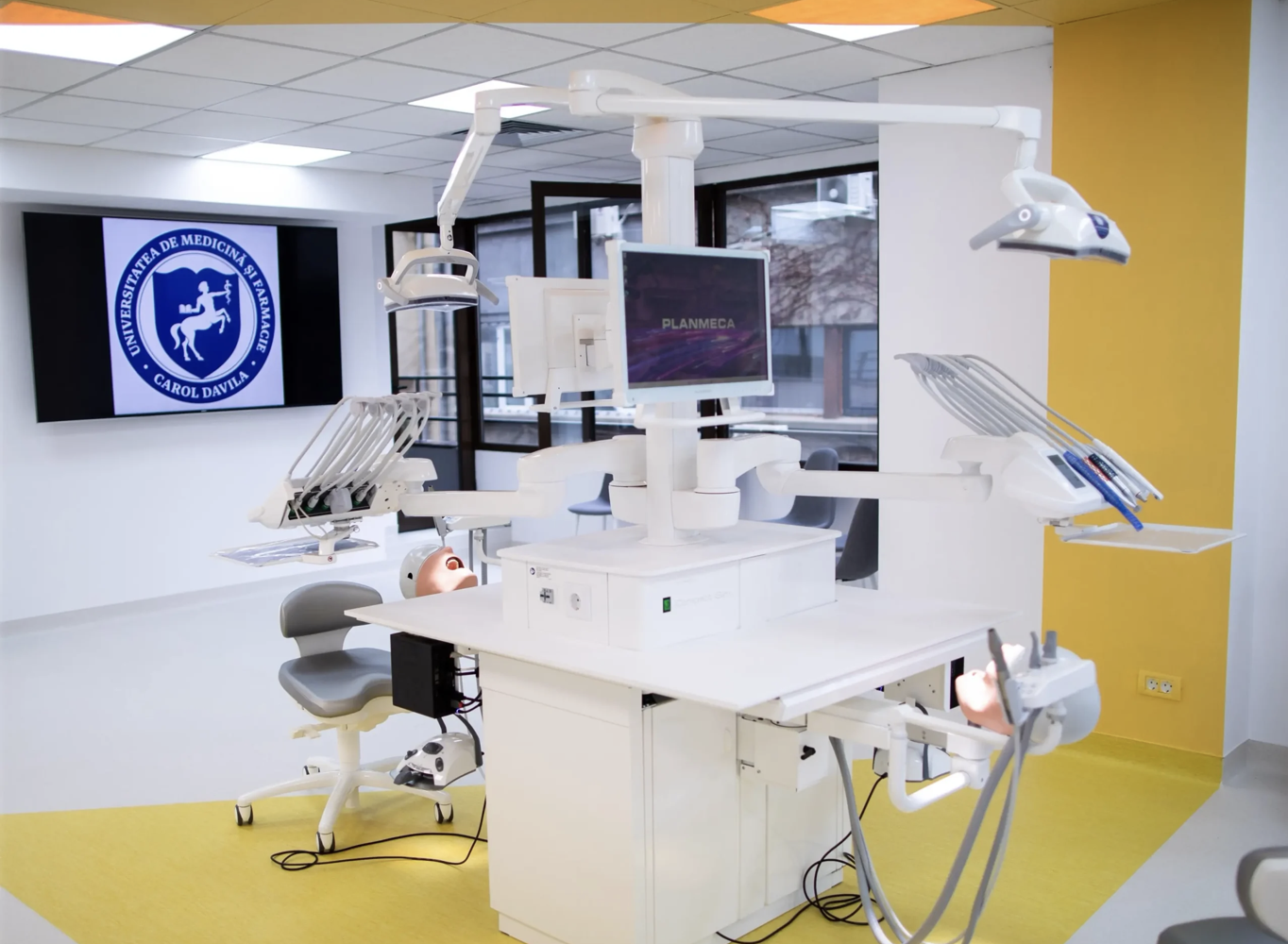
A prime example is the recently established Department of Medical Simulation. Here, students can practice complex medical maneuvers in a secure, controlled environment, eliminating any risk to actual patients. This allows for fearless exploration and mastery of techniques.
The 3D Printing Laboratory stands out as a particularly innovative resource, supporting the development of advanced medical equipment. By integrating sophisticated medical imaging with computer-aided design, this laboratory produces highly accurate anatomical models, precise surgical guides, and customized medical devices.
Replicating Realities for Confident Practice
These advanced simulators are capable of replicating a wide range of real pathologies, including intricate tumors and congenital anomalies. This allows students to safely test and refine procedures before encountering them in clinical settings. The outcome is a significant boost in capability and confidence, preparing students to handle real cases and potential complications from the outset of their careers.
Furthermore, participation in programs like Erasmus offers students the chance to complete semesters abroad in various European countries. This provides crucial exposure to different healthcare systems and approaches to patient care, broadening their perspectives and preparing them for international practice.
The Holistic Student Experience
From its multilingual programs to its state-of-the-art facilities, Carol Davila's focus on student development extends across all facets of campus life. The university has meticulously designed its spaces to encourage both academic focus and personal well-being.
A Vibrant Campus Community
Students have a choice of comfortable dormitory accommodations, and the campus offers extensive recreational facilities, including a sports hall, tennis courts, and a swimming pool. These amenities provide ample opportunities for students to connect with peers, stay active, and foster a strong sense of community.
Active student organizations, such as the Medical Students' Society of Bucharest and the Dental Medicine Students' League, regularly host events that enrich the student experience. These groups provide platforms for networking, professional development, and social engagement.
Growth Beyond Academics
Elizabeth Verna Burhala, a medicine student from Australia, emphasizes the transformative impact of volunteering alongside her studies. She credits these experiences with fostering significant growth in her problem-solving, public speaking, and organizational skills, far beyond what she initially imagined.
Through these engagements, she has had the opportunity to connect with medical professionals worldwide, gaining insights into their diverse areas of expertise. This comprehensive approach to education ensures that students not only gain medical knowledge but also develop into well-rounded, confident individuals.
The university proudly carries forward a legacy of excellence, tracing its roots back to Dr. Carol Davila, a pivotal figure in Romanian medicine. It has also been instrumental in nurturing prominent figures, including Nobel laureate George Emil Palade, a celebrated cell biologist whose name graces the university's main amphitheater.





 Explore AI Teaching Tools
Comments (0)
Please login to comment
No comments yet
Be the first to comment on this article