
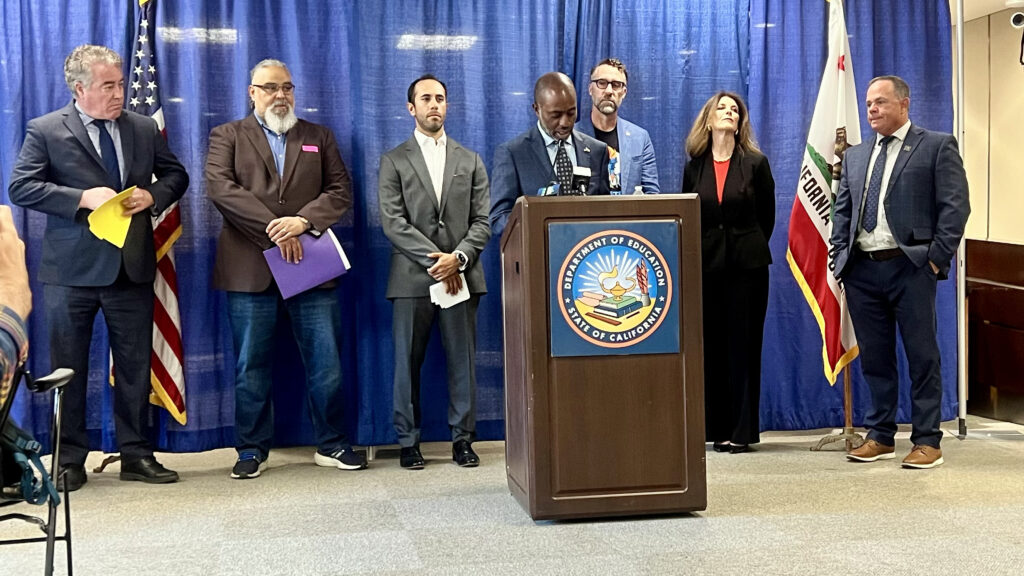
Transforming California Education: A New Vision for State Governance
The landscape of public education is constantly evolving, and with it, the structures that govern it.In California, a significant proposal is underway to reshape the very department responsible for overseeing the state's vast educational system.
This initiative, spearheaded by the governor, aims to streamline operations, clarify responsibilities, and ultimately enhance student outcomes.
For learners and educators alike, understanding these shifts is crucial for navigating the future of education.
This article delves into the proposed changes, exploring their potential impact and the underlying rationale, offering insights valuable to anyone invested in the state's educational future.
1.
Rethinking State Education Oversight: The Governor's Proposal A fundamental shift is being proposed in how the state of California manages its extensive educational apparatus.
The core of this proposal involves a significant realignment of authority, moving the operational control of the California Department of Education away from the independently elected State Superintendent of Public Instruction and placing it under the direct purview of the governor.
This ambitious plan seeks to address long-standing complexities and perceived inefficiencies within the current governance model.
The Rationale Behind the Realignment
For decades, studies and commissions have pointed to a "two-headed" system of educational governance in California.This structure, characterized by overlapping and sometimes fragmented responsibilities between the governor, the State Board of Education, and the State Superintendent, has been a subject of debate.
Research indicates that this complexity can hinder accountability and effective action.
The current proposal stems from a recognition that a more unified and clearly defined leadership structure could lead to more cohesive policy implementation and improved educational results for millions of students across the state.
The idea is to move away from a patchwork of disconnected programs toward a more integrated strategy that supports districts in accelerating student performance and closing achievement gaps.
Key Components of the Proposed Transfer
The proposed transfer of authority is slated to occur on January 1, 2027.This date is significant as it falls after the current terms of both Governor Gavin Newsom and State Superintendent Tony Thurmond conclude.
The plan envisions the creation of an Education Commissioner, appointed by the governor, who would serve as a cabinet-level secretary within the executive branch.
This commissioner would ideally possess extensive experience in managing large educational enterprises, a background that some argue has been less common among recent elected state superintendents who have often come from legislative careers.
The Department of Education, currently employing approximately 1,750 individuals, along with the operations of specialized state schools for deaf and blind students, would be integrated into the governor's executive branch.
This move aims to consolidate administrative functions and create a more direct line of accountability.
The State Board of Education, which the governor appoints, would retain its crucial role in setting educational policy, with much of its current staff expected to transition to become employees of the Department of Education.
The governor's trailer bill explicitly states the legislative intent to streamline and strengthen state governance of K-12 education under the State Board of Education.
2.
The Evolving Role of the State Superintendent While the operational management of the Department of Education would shift, the role of the State Superintendent of Public Instruction is also set to undergo a significant transformation.
The proposal aims to redefine this position, moving it away from direct administrative duties and towards a more strategic, advocacy-focused function.
A New Focus: Troubleshooter and Coordinator
Under the proposed changes, the future state superintendent's role would be largely redefined.The governor's vision suggests the superintendent would act as a troubleshooter for education, possessing a broad, "bird's-eye view" across all segments of the educational system.
This would involve fostering much-needed alignment and coordination of education policies, from early childhood through post-secondary education.
The intent is for candidates to run for this office with this redefined understanding, prepared to engage in a more strategic capacity.
Expanded Influence Through Board Membership
A key aspect of the redefined role involves an expansion of the superintendent's participation in key educational bodies.The state superintendent would continue to serve as a voting member on numerous policy-setting boards, including the California State University Board of Trustees, the University of California Board of Regents, the Commission on Teacher Credentialing, the California Collaborative for Educational Excellence, and as an ex officio member of CalSTRS.
Crucially, the proposal would add the state superintendent as a voting member of the State Board of Education, replacing one of the governor's appointees.
Additionally, the superintendent would become a voting member of the California Community Colleges Board of Governors.
These new positions would empower the superintendent to leverage their influence to identify and address bottlenecks and weak linkages within the state's educational systems, advocating for improvements from a more informed and integrated perspective.
A Leaner Staff, a Broader Mandate
The administrative staff supporting the State Superintendent would be significantly reduced.Under the proposal, the superintendent's staff would consist of approximately a dozen individuals, including a deputy superintendent and three associate superintendents appointed by the State Board, along with support personnel.
This leaner structure is intended to reflect the shift away from direct departmental management.
To undertake more extensive research or evaluation initiatives, the superintendent would need to seek additional funding from the Legislature.
This approach acknowledges that while the role would be less about managing a large bureaucracy, it would require dedicated resources to effectively fulfill its new mandate of analysis and advocacy.
3.
Navigating the Legislative Process and Stakeholder Reactions The journey of this proposal from academic recommendation to legislative consideration highlights the dynamic nature of educational policy reform.
The governor's office has actively engaged with various stakeholders to build support for this significant restructuring.
From Academia to Legislation: A Swift Transition
The genesis of this proposal can be traced back to a university-based research center's report, which recommended stripping the State Superintendent of Public Instruction of the responsibility for managing the California Department of Education and transferring that authority to the governor.This idea rapidly evolved into a prominent feature of Governor Newsom's budget trailer bill concerning TK-12 education.
The speed at which this concept has moved from academic discourse to legislative action underscores a perceived urgency to address the existing governance challenges.
The process involves extensive hearings and potential amendments before a final vote on the bill and the broader state budget.
Building Consensus and Addressing Concerns
Governor Newsom has invested considerable political capital in this governance reform, even though he will not personally benefit from its implementation due to the timing of the proposed transfer.His administration has actively solicited support from a wide array of Sacramento organizations, including those representing school administrators, school business officers, county offices of education, and various advocacy groups focused on children and families.
The California School Boards Association has publicly announced its support, viewing the proposal as a vital first step toward a more unified strategy for supporting school districts and improving student performance.
However, the proposal has not garnered universal acclaim.
Notably, major teacher unions, such as the California Federation of teachers and the California Teachers Association, have remained conspicuously silent.
The current State Superintendent, Tony Thurmond, has publicly criticized the plan, arguing that it will not directly contribute to improving student achievement.
Several candidates vying to succeed him have also expressed reservations, with the exception of former State Senator Josh Newman.
These differing perspectives highlight the complex political landscape surrounding educational governance reforms.
4.
The Future of Education Governance in California The proposed reforms represent a significant moment in the ongoing evolution of how education is governed in California.
The ultimate success of these changes will depend on careful implementation and ongoing adaptation.
Clarifying Lines of Authority for Enhanced Accountability
The core objective of this initiative is to create a more coherent and accountable system for the state's K-12 education.By consolidating administrative functions under the governor's executive branch and redefining the State Superintendent's role, the proposal aims to eliminate redundancies and foster clearer lines of responsibility.
This clarity is expected to lead to more efficient policy implementation and a greater ability to track progress and address challenges effectively.
The vision is to move towards a governance model that is better aligned with the goal of improving educational outcomes for all students.
The Mentofy Perspective: Empowering Learners Through Informed Systems
At Mentofy, we believe that understanding the structures that shape education is fundamental to empowering learners and educators.This proposed transformation in California's education governance, while complex, reflects a broader trend towards seeking more effective and responsive educational systems.
By centralizing certain administrative functions and redefining leadership roles, the state aims to create a more agile and accountable framework.
For our global community of learners, this serves as a valuable case study in how policy and governance can be reshaped to meet the evolving needs of education.
The emphasis on alignment, coordination, and a clearer vision from early childhood through post-secondary education resonates with Mentofy's commitment to providing comprehensive and impactful learning experiences.
As these changes unfold, they will undoubtedly shape the educational journey for millions, underscoring the importance of staying informed about the forces that drive educational progress.
Conclusion
The proposed overhaul of California's state education department represents a significant attempt to modernize and streamline the governance of public education.By shifting operational control to the governor's executive branch and redefining the role of the State Superintendent, the initiative seeks to address long-standing issues of fragmented authority and enhance accountability.
The transition, slated for January 1, 2027, will see the creation of an appointed Education Commissioner and a leaner, more strategically focused State Superintendent.
While stakeholder reactions are mixed, the proposal underscores a commitment to improving educational outcomes through structural reform.
For learners and educators, understanding these shifts is key to navigating the future of education in California and beyond, highlighting the continuous effort to build more effective and responsive learning environments.







 Explore AI Teaching Tools
Comments (0)
Please login to comment
No comments yet
Be the first to comment on this article