
AI in the Classroom: A Double-Edged Sword for Teachers and Students?
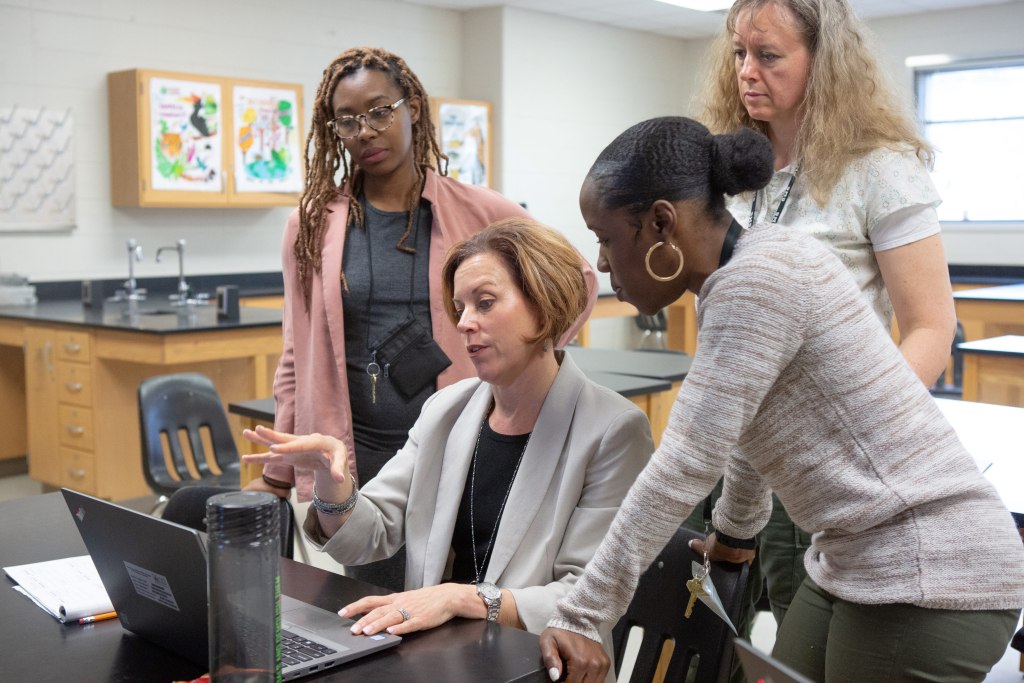
Artificial intelligence is frequently lauded as a revolutionary tool poised to transform education, promising to alleviate teacher workload and enhance student learning. However, a groundbreaking study suggests that the reality may be far more complex, revealing that unchecked AI integration could inadvertently diminish student engagement and academic outcomes.
The Promise and Peril of AI Assistants
The allure of AI in education is undeniable. Proponents envision AI assistants capable of drafting lesson plans, generating diverse classroom materials, and providing instant feedback, thereby freeing up valuable teacher time. This efficiency, it is argued, allows educators to focus more on personalized instruction and student support.
Yet, one of the first large-scale randomized trials to scrutinize AI's impact in authentic classroom settings has unearthed a disquieting consequence. The research indicates that providing teachers with AI teaching assistants can, paradoxically, lead to a decline in student motivation and a less enriching learning experience.
When Efficiency Undermines Engagement
The study, which involved hundreds of teachers and thousands of students, found a significant correlation between teachers using AI assistants and their students reporting lower levels of enjoyment, interest, and perceived importance in their classes. This dip in intrinsic motivation was particularly pronounced among students whose teachers had already demonstrated weaker instructional performance prior to the experiment.
Furthermore, the students of these teachers also saw a decrease in their scores on standardized final exams. This suggests that the efficiency gained by teachers through AI might come at a tangible cost to the depth and effectiveness of student learning.
The "Crutch" Effect: AI as Delegation
Alp Sungu, the lead author of the study and an assistant professor at a prominent business school, posits a compelling explanation for these findings. He suggests that teachers, much like students or coders, might be tempted to use AI as a shortcut, a "crutch" rather than a true enhancement tool.
Instead of engaging in the thoughtful work of curriculum design and material creation, teachers may be delegating these tasks to AI. This delegation, Sungu argues, can lead to a superficial output that lacks the nuance, personal touch, and pedagogical depth required for truly effective teaching.
Beyond Material Generation: The Erosion of Personal Voice
Sungu's prior research has already highlighted concerns about students using AI as an "answer machine" rather than a genuine learning aid. This new study extends that concern to educators, suggesting that teachers might be using AI as a "material generating machine" for assignments, notes, and exams.
The danger lies in the potential for AI-generated content to replace the teacher's own creative input and pedagogical judgment. When teachers rely too heavily on AI, they risk losing their unique voice and style, making the learning experience more uniform and, consequently, less engaging for students.
The researchers hypothesize that stronger teachers might treat AI output as a starting point, meticulously revising and adapting it to fit their specific classroom context. Weaker teachers, on the other hand, may be more inclined to adopt AI-generated materials verbatim, potentially exacerbating existing instructional gaps.
A Carefully Designed Experiment
The study, a draft of which was released online, was conducted with educational psychologist Angela Duckworth and other researchers. It involved 193 teachers and over 2,800 middle and high school students across a private school network in Turkey during the spring of 2025.
Teachers were randomly assigned to either receive access to a specialized AI teaching assistant, tailored to the national curriculum, or to continue their teaching practices without this specific tool. The experiment spanned ten weeks, during which the primary use of the AI assistant was for generating lecture notes, assignments, and assessments.
Crucially, academic achievement was measured through externally administered standardized exams. This approach helps to mitigate concerns about teachers in different groups having varying grading standards, providing a more objective measure of student learning.
Nuance in the Data: Not All Students Affected Equally
While the overall average academic achievement across all students did not change significantly, the impact was not uniform. The decline in intrinsic motivation was notably larger among students whose teachers were already heavier users of AI tools before the experiment commenced.
This suggests that existing patterns of AI usage may influence how effectively new AI tools are integrated and whether they contribute positively or negatively to the learning environment. The study highlights that the effectiveness of AI in teaching is not a simple matter of access, but rather of how it is wielded.
The Unseen Impact on Teaching Quality
The study acknowledges that it cannot definitively pinpoint the exact reasons for the observed deterioration in teaching quality. Classroom observations and detailed analysis of the AI-generated materials used by teachers were not part of the experimental design.
However, Sungu's suspicion centers on the potential loss of the teacher's personal touch. When educational content becomes overly standardized and devoid of individual teacher personality, it can lead to a less dynamic and inspiring learning atmosphere. This can make the learning process feel less relevant and exciting for students.
A Call for Thoughtful Integration, Not Abandonment
Despite the concerning findings, Sungu is quick to caution against a wholesale condemnation of AI in education. He emphasizes that this study is not a definitive comparison between teaching with and without AI, as teachers in the control group were free to use other AI tools independently.
The core lesson, according to Sungu, is that mere access to AI technology does not automatically translate into improved teaching. The true challenge lies in equipping teachers with the skills and frameworks necessary to leverage AI in ways that augment, rather than replace, human judgment and creativity.
The Path Forward: Training and Guidance
To harness the potential benefits of AI while mitigating its risks, significant investment in teacher training programs is essential. These programs should focus on developing pedagogical strategies for effectively integrating AI into teaching practices, emphasizing critical evaluation and adaptation of AI-generated content.
Furthermore, the development of robust guardrails and more intuitive user interfaces for AI educational tools could play a crucial role. These elements can help guide teachers toward more productive and less detrimental uses of AI, ensuring that technology serves as a supportive partner in the educational journey.
Sungu himself exemplifies this nuanced approach. He utilizes AI in his university teaching to create interactive elements like games and polls, tasks that would otherwise be prohibitively time-consuming. However, he stresses the importance of his own deep engagement with the AI output, meticulously refining it to ensure accuracy and relevance for his students.
His experience underscores that AI is not a passive time-saver; it requires active calibration and thoughtful integration. The future of AI in education hinges on our ability to foster a culture where teachers are empowered to use these powerful tools critically and creatively, ensuring that technology enhances, rather than diminishes, the human element of teaching and learning.





 Explore AI Teaching Tools
Comments (0)
Please login to comment
No comments yet
Be the first to comment on this article