
Oregon's education officials are proposing a radical overhaul of how the state approaches compulsory school attendance, a move that could fundamentally change the relationship between schools, students, and families. With a staggering one-third of its students chronically absent, Oregon is grappling with an attendance crisis that demands innovative solutions beyond traditional compliance. This proposed shift from punitive measures to a growth-oriented model signals a significant re-evaluation of what it means for a student to be present and engaged in their education.
Oregon Rethinks the Very Definition of School Attendance
For decades, compulsory attendance laws have been built on a framework of compliance, focusing on whether a student is physically present for a set number of days. This approach, however, often overlooks the complex reasons behind student absenteeism. The Oregon Department of Education's recent proposal to repeal 11 existing statutes and replace them with a new framework reflects a growing understanding that attendance is not just about showing up, but about fostering conditions where students *want* to be in school.
This proposed change aims to move away from static thresholds and enforcement mechanisms that can create tension with the goal of attendance as a growth-based measurement. The focus is shifting to understanding the "why" behind absences, viewing attendance as a performance growth indicator rather than a simple tick-box exercise.
From Compliance to Connection: A New Paradigm for Student Engagement
The current attendance laws in Oregon are described as "outdated" and "duplicative," often failing to capture the nuances of student experiences. The proposed new statutes would still include compulsory attendance requirements and exemptions, but they would also clearly outline the responsibilities of guardians and school districts. This aims to create a more collaborative approach to ensuring students receive the education they are entitled to.
Crucially, the proposal deliberately omits recommendations for punitive action against students or families for continued absences. This represents a significant departure from traditional models, emphasizing support and intervention over punishment. The goal is to create an environment where students feel supported and motivated to attend.
"Oregon’s current compulsory attendance statutes and rules are grounded in compliance-oriented definitions of attendance, static thresholds, and enforcement mechanisms. Maintaining compulsory attendance statutes rooted in compliance creates tension with this model, as they rely on fixed definitions of absence and enforcement responses that create conflict with attendance as a growth-based measurement."
This statement from the report highlights the core of the proposed shift: recognizing that a compliance-first model is inherently at odds with fostering genuine engagement and addressing the root causes of absenteeism. The state education department believes that by shifting the focus, they can build a more supportive system for students.
Reimagining Attendance Tracking: Beyond "Excused" and "Unexcused"
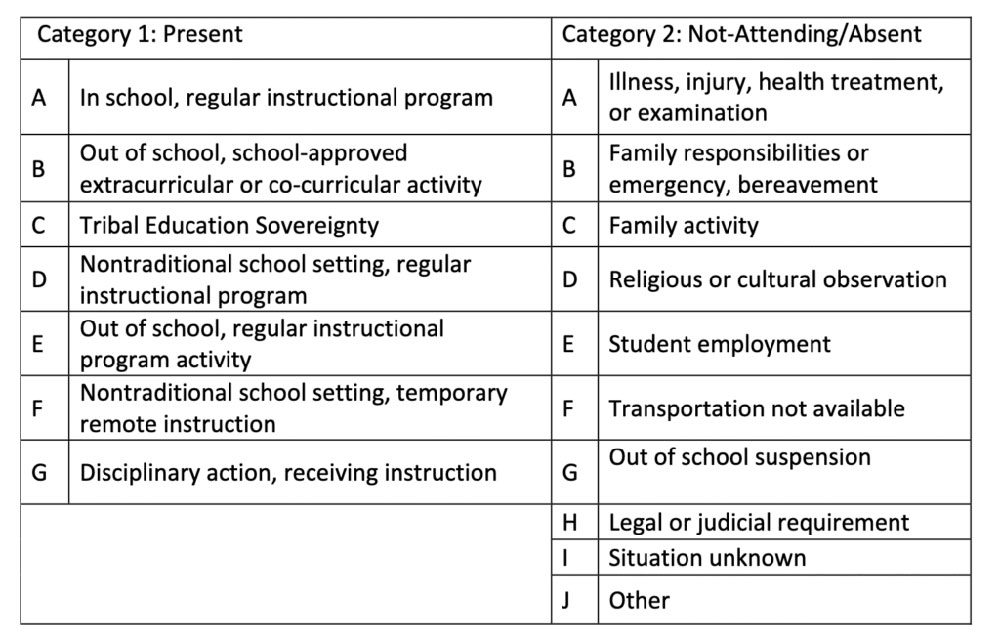
A significant challenge identified by education officials is the inconsistency in how school districts record student attendance and the reasons for absence. This makes it difficult to gather accurate data and implement effective interventions. The proposed solution involves introducing "common codes" to record student status, moving beyond the binary of "excused" or "unexcused."
Under the new system, a student could be marked as "present" even if they are participating in a debate tournament, a sports event, receiving temporary remote instruction, or attending a tribal education program. This acknowledges that learning can happen outside the traditional classroom walls and that these activities contribute to a student's overall educational experience.
New Codes for a Nuanced Reality
The proposed codes offer a more detailed picture of a student's engagement. Instead of simply marking a student as absent, the new system would allow for more granular tracking. For instance, a student might be marked "absent" due to illness, work obligations, transportation issues, or an unknown situation. This richer data can then inform targeted support strategies.
The education department argues that simply categorizing absences as "excused" or "unexcused" places a value judgment on them and can lead to a misconception about their impact. By centering the loss of instruction for *any* reason, the new codes aim to elevate the root causes of absence, enabling more appropriate and effective interventions.
Addressing Systemic Barriers: Support Over Sanctions
Candice Castillo, deputy director of academics at the state education department, emphasized that while compulsory policies have some utility, a broader system of support is essential. The goal is to create conditions that make students *want* to be in the classroom consistently. This involves understanding and addressing the myriad barriers that students and communities face, from economic hardship to mental health challenges.
This approach acknowledges that students who are chronically absent are often facing significant challenges that require more than just a stern reminder about attendance rules. The focus is on building a system that supports student needs holistically, fostering a positive school environment that encourages regular attendance.
"There’s all these barriers and these challenges that our students and communities are facing, and compulsory policies can be helpful to some extent, but there is a broader system that needs to be in place in order to really support students."
This quote underscores the department's belief that effective attendance strategies must be multifaceted, addressing the underlying issues that lead to disengagement. It's about creating a supportive ecosystem for every student.
The Question of Accountability: Finding the Right Balance
While the proposal emphasizes support, lawmakers are keen to understand the accountability mechanisms within the new framework. State Sen. Janeen Sollman raised concerns about Oregon sometimes getting in its own way by removing accountability. The challenge lies in balancing supportive measures with the need to ensure students are meeting educational expectations.
The department's response suggests that accountability will be embedded within a system of continuous improvement and support. Rather than focusing on punitive measures, the emphasis will be on using attendance data as a signal to identify students who need additional help and to evaluate the effectiveness of the educational system itself.
Rethinking the 10-Day Rule and Funding for Support
The proposal also recommends revisiting Oregon's 10-day rule, which automatically unenrolls students after 10 consecutive unexcused absences. While intended to prevent double-counting students, this rule can create barriers for students who eventually return, requiring them to re-enroll and potentially impacting school funding. Streamlining this process is seen as crucial for re-engaging students who have been absent.
Furthermore, the department is advocating for increased funding for initiatives like the "Every Day Matters" program and the development of a statewide data collection system. These resources are vital for better tracking attendance, providing technical assistance to districts, and implementing evidence-based strategies to improve student engagement.
The Broader Context: Instructional Time and Student Success
The discussion around attendance is also intertwined with the broader conversation about instructional time. Research consistently shows that school attendance is one of the most significant indicators of student success. The state's commitment to ensuring districts do not cut instructional time, coupled with efforts to improve attendance, aims to create a more robust educational experience for all students.
While longer instructional time offers benefits, the department stresses that it must be part of a cohesive and holistic approach. Creating the right conditions for students to learn and thrive, which includes consistent attendance and adequate instructional time, is paramount. This integrated approach recognizes that multiple factors contribute to a student's ability to succeed in school.
Actionable Insights for Educators: Fostering a Culture of Presence
For educators on the front lines, this proposed shift in Oregon's attendance policy offers a valuable opportunity to rethink their own strategies. While the state works on legislative changes, teachers can begin implementing practices that foster a stronger sense of belonging and engagement in the classroom. Embracing this new paradigm means moving beyond simply tracking who is present to actively cultivating an environment where students feel valued and motivated to participate.
Here are some key takeaways and actionable steps for educators:
- Understand the "Why": Instead of solely focusing on the number of days missed, try to understand the underlying reasons for student absences. Engage in conversations with students and families to identify potential barriers.
- Build Strong Relationships: A positive and supportive classroom environment is crucial. When students feel connected to their teachers and peers, they are more likely to want to attend school.
- Make Learning Engaging: Incorporate interactive activities and varied teaching methods to capture students' interest. Tools like MentofyCove classroom games can make learning fun and collaborative, boosting participation.
- Utilize Data for Support: Even with current systems, pay attention to patterns in attendance. Identify students who are showing signs of disengagement and reach out proactively.
- Leverage Technology for Engagement: Explore tools that can help personalize learning and make lessons more dynamic. Mentofy AI teaching tools can assist with lesson planning and creating engaging content that caters to diverse learning styles.
- Focus on Re-engagement: For students who have been absent, have a clear plan for welcoming them back and helping them catch up. This could involve personalized check-ins or targeted academic support.
- Collaborate with Families: View parents and guardians as partners in their child's education. Open communication and a shared understanding of attendance goals can be highly effective.
- Explore Smart Grouping: When planning activities, consider using tools like MentofyGroups for smart student grouping to foster collaboration and peer support, which can indirectly improve engagement.
The proposed changes in Oregon signal a forward-thinking approach to education, one that prioritizes student well-being and engagement over punitive compliance. By viewing attendance as a growth indicator and focusing on supportive interventions, the state aims to create a more effective and equitable education system for all its students.






 Explore AI Teaching Tools
Comments (0)
Please login to comment
No comments yet
Be the first to comment on this article