
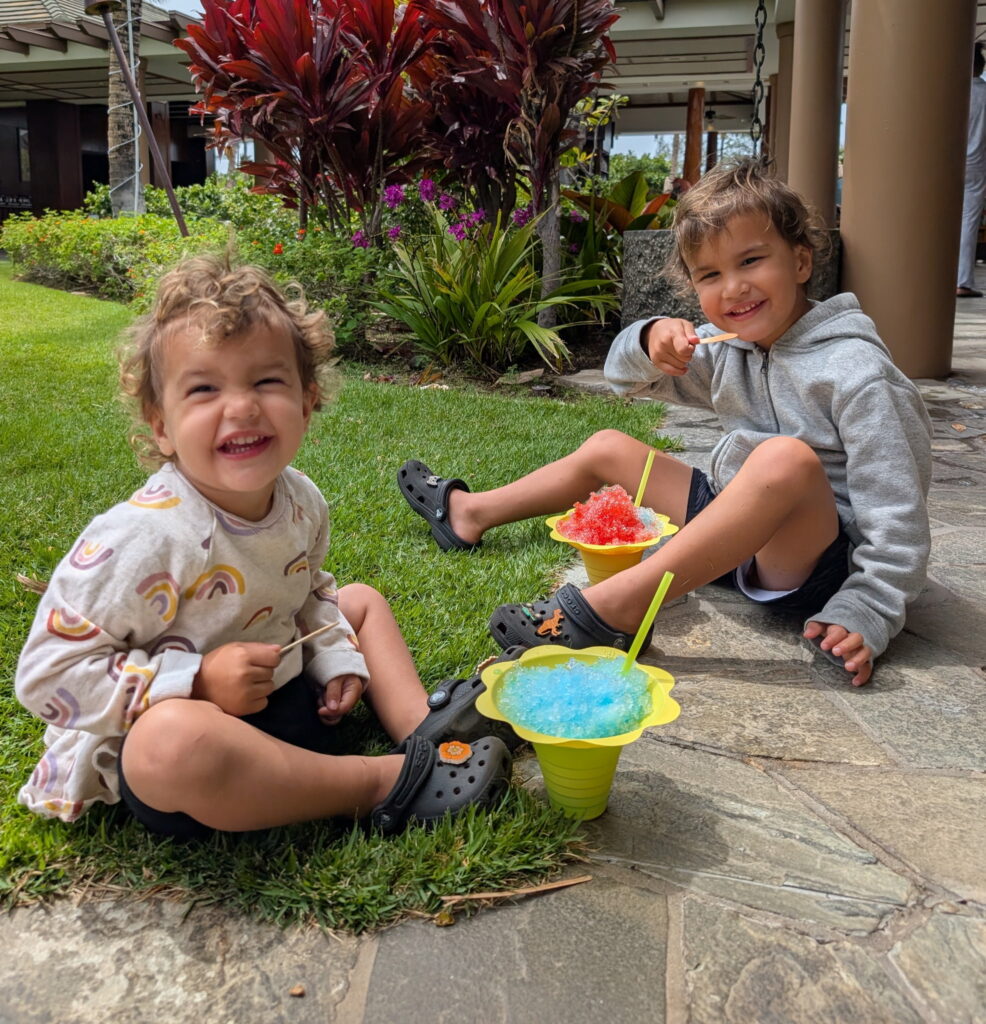
Hawaiʻi's ambitious goal of universal preschool by 2032 is facing a stark reality check: a significant funding crisis is threatening to shutter vital early learning programs and leave thousands of families without crucial support. This isn't just about childcare; it's about the foundational learning experiences that shape a child's future and the economic stability of countless households across the state.
Federal Funding Fades, State Support Falters
For many families in Hawaiʻi, the search for affordable, quality early learning options is a daunting challenge. Programs that have served as lifelines for children and parents are now on the brink of closure, a direct consequence of dwindling federal funding and a legislative session that saw many early learning initiatives stall.
The impact is immediate and devastating. Hannah Miller, a mother of two young children in Waikōloa, faces the prospect of her 4-year-old son being home without structured learning when his current program closes this fall. This program, run out of a local church, has provided not only educational enrichment but also a vital community for parents.
“We feel like we have nothing for him, so he’s just going to be home with us,” Miller shared, her voice heavy with concern. “We’re heartbroken.”
This sentiment is echoed across the state, as up to 17 early learning sites are at risk of shutting down due to the expiration of federal funding. The uncertainty leaves families scrambling for alternatives, often with few viable options.
Charter Preschools Struggle Under Funding Gaps
Hawaiʻi has seen the emergence of innovative models like tuition-free charter preschools, aiming to expand access. However, even these pioneering programs are grappling with significant financial shortfalls that threaten their sustainability.
Parkway Village Preschool, the state's first charter preschool, has been a beacon of hope for parents like Danielle Alefosio, whose daughter has flourished in its environment. Yet, the program, along with Hawaiʻi's other preschool-only charter, Waikīkī Community Preschool, operates with a substantial deficit.
These charter classrooms require approximately $275,000 to $285,000 annually to run effectively. While the state provides $171,000 per classroom, the remaining gap is a significant hurdle that even dedicated nonprofit partners struggle to bridge.
The Cost of Quality Early Learning
The disparity between the state's allocation and the actual cost of providing high-quality early education highlights a critical disconnect. Trisha Kajimura, vice president at Parents and Children Together, which partners with Parkway Village, notes a shortfall of around $100,000 per classroom annually.
Efforts to address this through legislation, such as House Bill 2399, which sought to increase state funding to $250,000 per classroom, failed to gain traction in the Senate. This inaction leaves charter preschools in a precarious position, potentially discouraging the expansion of this promising model.
Rural and Low-Income Communities Hit Hardest
The funding crisis extends beyond formal preschool settings, impacting vital family learning programs that serve infants, toddlers, and their caregivers, particularly in rural and low-income areas. These programs, often infused with Hawaiian language and culture, have historically relied on federal grants.
The potential elimination of federal funding streams, such as the Native Hawaiian Education program, poses an existential threat to these community-based initiatives. Shawn Kanaiaupuni, president and chief executive officer of Partners in Development Foundation, warns of devastating consequences if state lawmakers do not step in to fill the void.
Consequently, Partners in Development is slated to close 17 family learning sites this fall, impacting over 1,000 children and caregivers. This loss represents a significant blow to communities that depend on these free, accessible learning opportunities.
“How much can our families sustain?” Kanaiaupuni questioned, emphasizing the profound impact of these closures. “The impact is really devastating.”
The uncertainty surrounding federal grants, coupled with potential budget cuts in future federal proposals, underscores the urgent need for consistent state investment. U.S. Rep. Jill Tokuda stresses the importance of ensuring this funding remains available and reaches its intended recipients.
The Workforce Challenge: Building for the Future
Beyond classroom infrastructure and operational funding, Hawaiʻi faces another critical hurdle: a shortage of qualified early childhood educators. As the state aims to expand preschool access, the capacity to staff these new classrooms is a growing concern.
Legislation aimed at addressing this, such as a bill to fund an apprenticeship program for aspiring early educators, failed to pass. This program would have provided a pathway for individuals to gain experience and credentials while earning a salary, a crucial step in building a robust workforce pipeline.
Rep. Andrew Garrett, who championed the apprenticeship bill, believes investing in this workforce is paramount. "My desire here is to focus more on the workforce pipeline to make sure we have these early childhood education workers ready to fill these buildings as they get built out," he stated.
Finding a Champion for Early Learning
Despite the setbacks, advocates remain hopeful that Hawaiʻi can still achieve its universal preschool goal. The state has made progress in constructing new classrooms, but sustained investment is crucial to maintaining momentum.
The departure of key legislative champions, such as Lt. Gov. Sylvia Luke, who has been a vocal advocate for early learning, raises concerns about the future of the initiative. Without continued dedicated leadership, the progress made could stall.
Kerrie Urosevich, executive director of Early Childhood Action Strategy, emphasizes the need for a consistent champion. "I don’t think it has enough momentum on its own," she explained. "I think it’s going to require a champion."
The path forward requires a renewed commitment from state lawmakers to prioritize early learning. Investing in preschool and childcare is not merely an expenditure; it is a strategic investment in Hawaiʻi's children, families, and its economic future. The state must find sustainable funding solutions to ensure that every child has access to the foundational learning experiences they deserve.




 Explore AI Teaching Tools
Comments (0)
Please login to comment
No comments yet
Be the first to comment on this article