
Nebraska's recent legislative session concluded with a bill that, on its surface, promised to address a critical issue for students with disabilities. However, the final version of this bill, signed into law, has left many advocates feeling that a crucial opportunity was missed, shifting focus from protecting vulnerable kids to expanding school disciplinary powers. This pivot raises significant questions for educators about how policy decisions impact the daily realities of students and the support systems within schools.
A Bill Meant to Open Doors Closes Them for Many Students
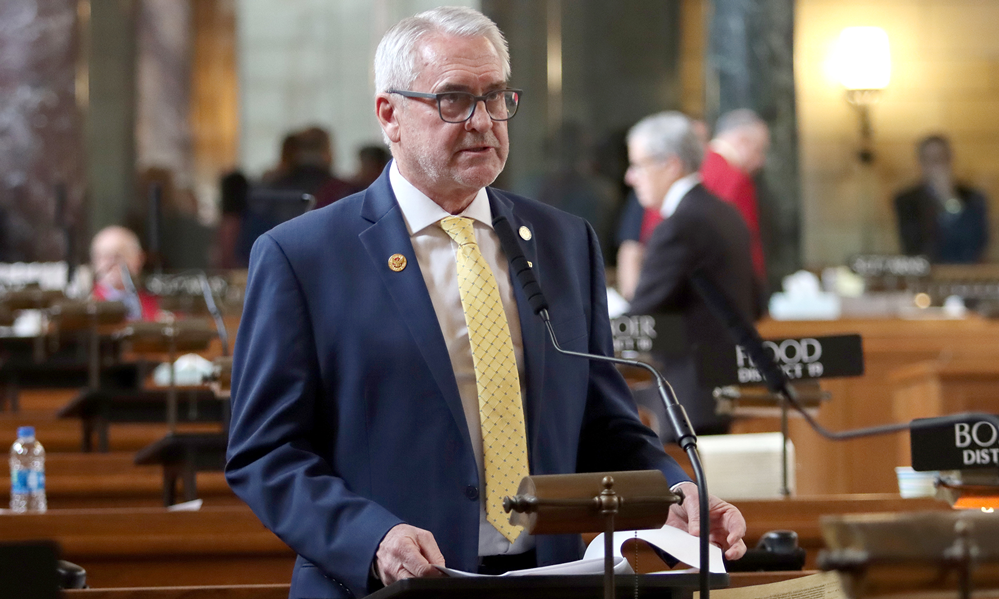
Senator Dave Murman initially championed a bill designed to curb the disproportionate rejection of transfer requests from students with disabilities in Nebraska. The motivation was deeply personal, stemming from observing how children with special needs were often denied the opportunity to attend schools outside their immediate district, a privilege readily afforded to their peers.
The stark reality, as highlighted by a 2025 investigation from The Flatwater Free Press and The 74, revealed that Nebraska districts denied 35% of option enrollment applications from students with Individualized Education Programs (IEPs). This stands in sharp contrast to the approximately 9% rejection rate for students without IEPs, a disparity particularly pronounced in Omaha's suburban districts.
"Our decisions are not based on a student’s disability, but on our ability to provide the services required by their IEP in a manner that meets both educational standards and legal obligations."
Despite the clear evidence of inequity, the legislative path for Murman's bill became fraught with opposition from school administrators and the state teachers union. Their primary concern centered on existing shortages of special education teachers, arguing that districts shouldn't be compelled to accept more students with complex needs when resources were already stretched thin. This presented a significant hurdle, as Murman recognized he lacked the votes to pass the bill in its original, more protective form.
The Legislative Pivot: From Inclusion to Suspension Powers
Facing political realities, Senator Murman significantly amended the bill. The focus shifted dramatically from guaranteeing transfer rights for students with disabilities to reinstating schools' authority to suspend young children, specifically those in pre-kindergarten through second grade, for violent behavior. This reversed a 2023 ban on such suspensions, a move that had been intended to protect the youngest learners.
The amended legislation did retain one provision that could offer a pathway for some students with disabilities: districts would be required to guarantee enrollment spots for siblings of students who had already successfully optioned into the district. While this offers a glimmer of hope for a select group, it falls far short of the broad protections envisioned in the bill's initial conception.
This legislative maneuver has drawn sharp criticism from disability advocates and Democratic lawmakers. Senator Danielle Conrad of Lincoln, for instance, accused Murman of "hijacking" a well-intentioned bill to advance the governor's agenda of loosening protections for young students facing disciplinary action. The sentiment among many is that a bill designed to foster greater equity for students with disabilities has been fundamentally altered to serve a different, and arguably less beneficial, purpose.
The Lingering Impact on Students and Families
The consequences of this legislative shift are felt most acutely by families like Angela Gleason's. Her son, Teddy, who has autism, has been denied transfers multiple times. While the new law might allow him to join his siblings in a suburban district, Gleason expressed profound disappointment that the opportunity isn't extended to all children with IEPs.
The experience of students like Teddy highlights the ongoing challenges within the special education system. Gleason recounted how her son struggled in a general education classroom, leading to frequent calls for early pick-ups, effectively informal suspensions that resulted in missed instructional time. This pattern of disruption can have a cascading negative effect on a child's academic progress and overall well-being.
Across the state, students enrolled in special education were suspended more than twice as often as their peers last school year, according to state data.
The data underscores a persistent issue: students with disabilities are suspended at significantly higher rates than their non-disabled peers. Organizations like The Arc of Nebraska, which advocates for individuals with intellectual and developmental disabilities, opposed Murman's bill precisely because of this disciplinary disparity, viewing the shift in legislative focus as counterproductive.
For families like the Shadas, the bill's passage comes too late to address their specific needs. Gary Shada, a veteran teacher in northeast Nebraska, faced rejection when he applied for his daughter Kylee, who has Down syndrome, to transfer into his district as an option student. His son, however, was approved. Now, with his retirement approaching and his son graduating, the prospect of transferring Kylee no longer holds the same urgency.
Navigating Special Education Shortages and Policy Gaps
School districts, particularly those facing staff shortages in special education, often cite their capacity to provide necessary services as a primary reason for denying option enrollment requests. Bellevue Public Schools, for example, is short several special education teachers and paraprofessionals. A district spokesperson stated that accepting more students with IEPs would strain already difficult caseloads, impacting both educators and students.
Similarly, Grand Island Public Schools, which denied all five option enrollment applications from students with IEPs last school year, cited a lack of capacity due to both special education staffing shortages and being near enrollment capacity with neighborhood students. These operational realities present a complex challenge for policymakers attempting to balance student rights with district capabilities.
The Nebraska Department of Education is currently exploring potential changes to option enrollment rules, influenced by both the original and amended versions of Murman's bill. However, the precise nature and impact of these potential rule changes remain uncertain, leaving a significant question mark over the future of equitable access for students with disabilities.
The Long Road to Educational Equity
Senator Murman himself acknowledges that the disproportionate rejection of students with disabilities constitutes "pure discrimination." Despite facing term limits and being unable to run for reelection, he hopes that the cause will be taken up by other lawmakers. His sentiment reflects a broader understanding that the work towards ensuring equitable opportunities for all students is far from complete.
The legislative journey of this bill serves as a potent reminder of the intricate interplay between policy, advocacy, and the practical realities faced by schools and families. While the path forward may be challenging, the ongoing dialogue and the dedication of advocates offer hope for continued progress in creating truly inclusive educational environments for every child.
The fight for educational equity is a marathon, not a sprint. As educators, understanding the nuances of policy decisions and their real-world impact is crucial for advocating for the needs of all students, especially those who require additional support to thrive. Tools and strategies that enhance inclusive practices, such as those found on Mentofy AI teaching tools, can empower educators to navigate these complexities and foster learning environments where every student feels valued and supported. It's about leveraging every available resource, from innovative technology to informed policy, to ensure that the promise of education is a reality for every kid, in every school across Nebraska and beyond.



 Explore AI Teaching Tools
Comments (0)
Please login to comment
No comments yet
Be the first to comment on this article