
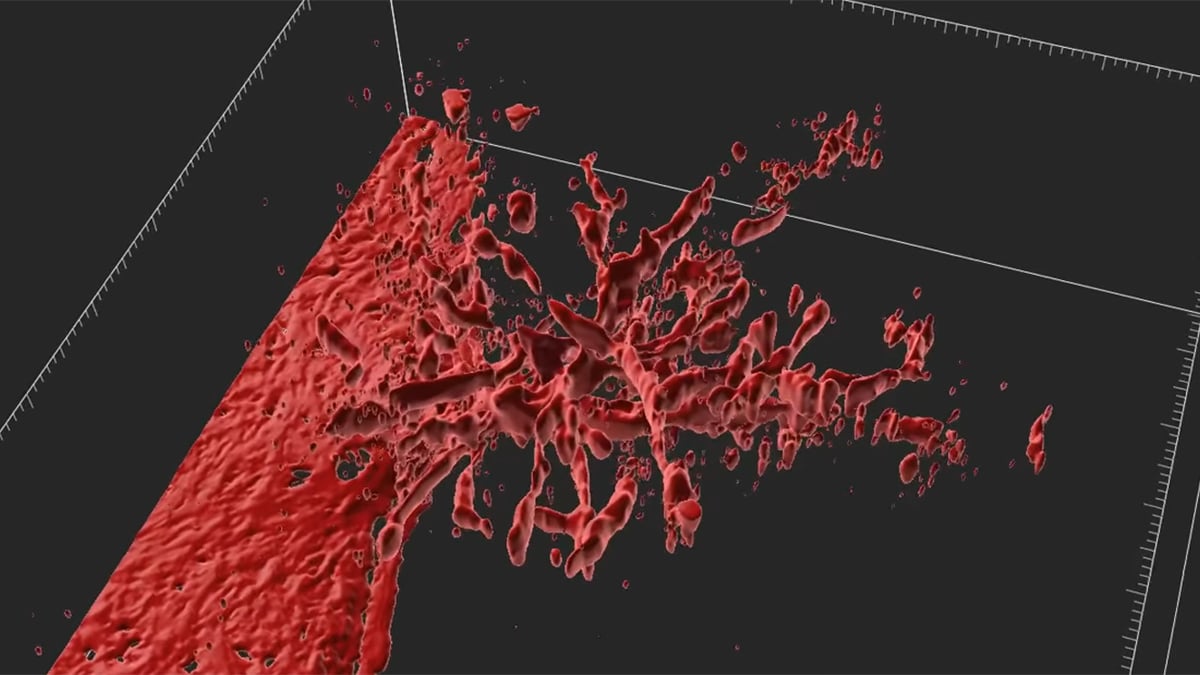
Scientists have discovered a groundbreaking method for growing artificial blood vessels with unprecedented precision, a development that could revolutionize regenerative medicine and our understanding of biological systems. This breakthrough, leveraging the subtle yet powerful force of magnets, offers educators a new lens through which to view the intricate mechanisms of life and the potential for future scientific advancements impacting everything from disease research to therapeutic interventions.
Magnets Guide the Scaffolding of New Life
For decades, replicating the complex network of blood vessels required for lab-grown organs has been a significant hurdle. The delicate architecture and precise branching patterns are crucial for nutrient and oxygen delivery, making their artificial construction a formidable challenge. Now, researchers are using magnetic fields to guide the growth of these vital structures.
This innovative technique involves embedding magnetic nanoparticles within a hydrogel matrix. When a magnetic field is applied, these nanoparticles align, creating microscopic channels that direct the cells to grow along specific pathways. This provides a physical blueprint for the developing vasculature.
"This is a significant step forward in our ability to create functional tissues. The precision we can now achieve is remarkable."
The implications for education are vast. Imagine teaching biology students about cellular guidance systems or the physics of magnetism with a real-world, cutting-edge application. This discovery offers a tangible example of how fundamental scientific principles can be applied to solve complex biological problems.
Precision Engineering at the Cellular Level
The traditional methods for creating artificial blood vessels often struggle with achieving the fine-grained control needed for complex, three-dimensional structures. This new magnetic approach allows for a much more precise manipulation of the cellular environment. It’s akin to having microscopic architects directing the construction of a city's road network, ensuring every street is perfectly placed.
Scientists find that by carefully controlling the strength and direction of the magnetic field, they can dictate the diameter, length, and even the branching angles of the nascent blood vessels. This level of control is essential for ensuring that the engineered tissues can effectively integrate with the host body.
The ability to grow these artificial blood vessels with such accuracy is not just an academic curiosity; it has direct implications for developing more effective treatments for a range of conditions. From creating better models for studying diseases like cancer, which relies heavily on blood supply, to engineering organs for transplantation, the potential is immense.
The Future of Regenerative Medicine Takes Shape
The ultimate goal is to grow fully functional organs in the lab. A critical component of any organ is its vascular system, responsible for supplying oxygen and nutrients and removing waste. Without a robust and precisely engineered network of blood vessels, lab-grown organs would fail to thrive.
This magnetic guidance system offers a promising pathway to achieving that goal. By mimicking the natural processes of vascular development, scientists can create artificial scaffolds that encourage cells to self-assemble into functional tissues. This could dramatically reduce the need for organ donors and improve outcomes for patients.
For educators, this presents an opportunity to discuss the ethical considerations and future possibilities of regenerative medicine. Topics like "designer organs" or the extension of human lifespan can be explored through the lens of this tangible scientific progress.
Actionable Insights for Educators
How can educators bring this complex science into the classroom? Here are a few ideas:
- Introduce the concept of biomimicry: Discuss how scientists are learning from nature to solve engineering challenges, using the blood vessel growth as a prime example.
- Explore magnetism in science: Connect this discovery to basic physics lessons, demonstrating how invisible forces can have profound physical effects. Consider using MentofyCove classroom games like a word search game focused on scientific terms related to magnetism and biology.
- Discuss the future of medicine: Engage students in conversations about organ transplantation, disease research, and the role of artificial tissues. This can be a powerful motivator for STEM learning.
- Utilize AI for lesson planning: Leverage tools like Mentofy AI teaching tools to generate engaging lesson plans, quizzes, or even interactive board content that explains these complex biological processes in age-appropriate ways.
The ability to grow artificial blood vessels with such precision is a testament to human ingenuity. It underscores the importance of fundamental research and its potential to yield transformative applications.
"The precise control offered by magnetic fields opens up new avenues for tissue engineering that were previously unimaginable."
This discovery is more than just a scientific paper; it’s a glimpse into a future where diseases are better understood, treatments are more effective, and the limits of human health are pushed further than ever before. As educators, we have the privilege of guiding the next generation to understand and build upon these incredible advancements.





 Explore AI Teaching Tools
Comments (0)
Please login to comment
No comments yet
Be the first to comment on this article