
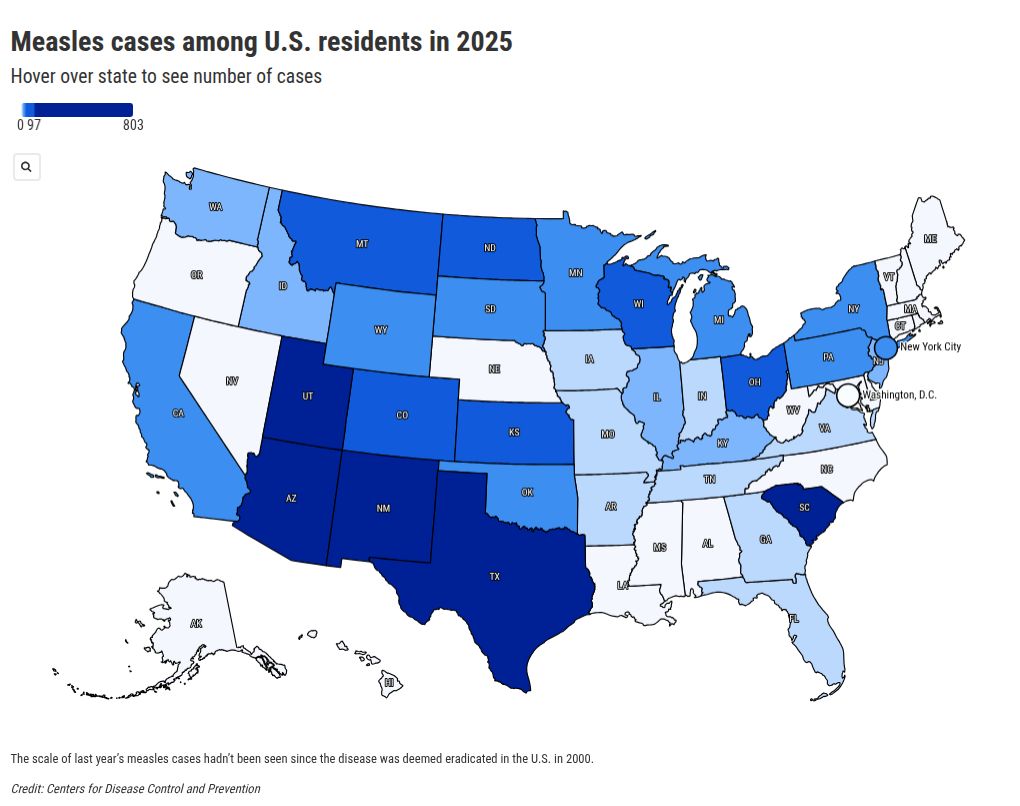
New research from Johns Hopkins University reveals a startling correlation: individuals who consume media from "fringe" right-wing outlets are more than twice as likely to exhibit skepticism towards essential vaccines like the MMR. This finding has profound implications for educators, highlighting the growing challenge of navigating misinformation and its impact on student and community health.
The Echo Chamber Effect: How Fringe Media Fuels Vaccine Hesitancy
A significant portion of vaccine-hesitant individuals actively seek health information from non-traditional, often unreliable sources. These can include social media influencers, alternative health practitioners, and newsletters from advocacy groups, some of which have been linked to the anti-vaccine movement. This reliance on less authoritative channels creates a fertile ground for misinformation to take root.
Conversely, those who strongly support vaccination tend to actively avoid these fringe media outlets. The research suggests that while everyone is online, vaccine-supportive individuals are more discerning about their information consumption, consciously steering clear of sources known for promoting dubious health narratives. This selective engagement is a key differentiator.
"My main takeaway isn’t so much where the hesitant people are online, but where the non-hesitant people are not online," stated Lauren Gardner, senior author of the paper and a Johns Hopkins professor. "What we saw is that everyone is really online, but people that are more likely to be supportive of vaccines are very selectively not using some of those new right, fringy media outlets."
This observational study, conducted during a period of heightened measles outbreaks, surveyed nearly 3,000 U.S. adults. It aimed to understand the broader landscape of vaccine hesitancy, moving beyond the singular decision to vaccinate and exploring the evolving attitudes and beliefs that shape these views. The research frames vaccine hesitancy not just as a choice, but as a phenomenon influenced by a complex web of information exposure.
Beyond Demographics: Media Habits as a Stronger Predictor
While political affiliation and other demographic factors have historically been considered primary drivers of attitudes, this research suggests a shift in influence. Vaccine-hesitant adults were more likely to identify with conservative or independent parties and movements like "Make America Healthy Again." However, when media consumption habits were factored in, these demographic correlations significantly weakened.
The study found that the type of media individuals consumed was a more powerful predictor of their vaccine attitudes than their demographic background. This underscores the critical role of information sources in shaping public health perceptions, suggesting that interventions focused on media literacy and source evaluation could be highly effective.
Interestingly, consumption of legacy conservative media, such as Fox News or the New York Post, did not show a strong association with vaccine hesitancy in this research. The link was particularly pronounced with outlets identified as "new right" or fringe, indicating a specific segment of the media landscape that warrants closer examination.
The Shifting Landscape of Public Health Information
The proliferation of the "Make America Healthy Again" movement, with its significant presence online and through non-traditional channels, highlights how narratives around health are increasingly shaped by social media and politically charged discourse. This movement has been adept at amplifying certain health-related messages and, in some cases, has been associated with figures promoting skepticism about established medical consensus.
The research team emphasized that their study, while demonstrating a strong association, is not causal. It doesn't definitively prove that consuming fringe media directly causes vaccine hesitancy. However, the correlation is strong enough to warrant further investigation into potential causal pathways and the mechanisms by which these media habits influence parental decisions about vaccination.
A 2025 UNESCO report highlighted the global challenge of combating misinformation, noting that "the digital age, while democratizing information, has also amplified the reach of falsehoods, posing a significant threat to public trust and well-being."
The implications for educators are substantial. In an era where public health is often politicized, casual news consumption can inadvertently shape beliefs about vaccines. This means that students, and by extension their families, may be influenced by information they encounter without consciously seeking it out, making the classroom a crucial space for fostering critical thinking skills.
Navigating Misinformation in the Classroom
Educators are on the front lines of this information war, tasked with creating learning environments that are both informative and resilient to misinformation. The Johns Hopkins research provides a compelling reason for integrating media literacy and critical source evaluation into the curriculum, especially when discussing health-related topics.
Understanding that certain media ecosystems foster vaccine skepticism can help educators tailor their approach to sensitive subjects. It’s not about censoring information but about equipping students with the tools to discern credible sources from unreliable ones. This involves teaching them to question the origin of information, identify potential biases, and cross-reference claims with authoritative sources.
For instance, when discussing health topics, educators can introduce students to reputable organizations like the CDC or WHO, explaining why their findings are considered trustworthy. They can also explore the concept of scientific consensus and how it differs from individual opinions or anecdotal evidence often found in fringe media.
Actionable Strategies for Educators
Here are some practical steps educators can take to address the challenges posed by misinformation and promote evidence-based understanding:
- Integrate Media Literacy Lessons: Dedicate class time to teaching students how to analyze news articles, social media posts, and other forms of media. Focus on identifying bias, fact-checking claims, and understanding the difference between opinion and evidence.
- Promote Critical Thinking Skills: Encourage students to ask questions, challenge assumptions, and seek multiple perspectives. Use activities that require them to evaluate information and form their own informed conclusions.
- Utilize Authoritative Health Resources: When discussing health topics, consistently refer to and cite credible sources. Explain to students why these sources are considered reliable, referencing their peer-review processes and scientific backing.
- Facilitate Open Discussions: Create a safe space for students to ask questions about health topics, including vaccines. Address concerns with factual information and empathy, avoiding dismissive language.
- Leverage Interactive Tools: Engage students with dynamic learning experiences that reinforce factual knowledge and critical thinking. Tools like MentofyCove classroom games can make learning about health concepts fun and memorable, while Mentofy AI teaching tools can help in generating lesson plans and assessments that focus on evidence-based reasoning.
The rise of AI also presents both opportunities and challenges. While AI can be a powerful tool for generating educational content and personalizing learning, its potential to generate sophisticated misinformation cannot be ignored. Educators must be vigilant in verifying AI-generated content and teaching students to do the same.
The Role of Technology in Combating Misinformation
Technology, while sometimes a conduit for misinformation, also offers powerful solutions. Platforms that facilitate interactive learning and provide access to verified information can be invaluable. Tools that allow for real-time assessment and engagement can help gauge student understanding and address misconceptions promptly.
For example, using Mentofy AI lesson plan generators can help educators quickly create engaging content that incorporates factual health information. Similarly, AI-powered assessment tools can help identify areas where students might be struggling with concepts due to exposure to misinformation, allowing for targeted intervention.
The ability to create interactive quizzes or employ live quiz sessions can be a dynamic way to reinforce accurate health knowledge. These tools can be adapted to cover a wide range of health topics, ensuring that students are exposed to evidence-based information in an engaging format.
Furthermore, tools like MentofyGroups for smart student grouping can facilitate differentiated instruction, allowing educators to provide extra support to students who may be more susceptible to misinformation or who need a deeper dive into complex health topics. The availability of resources that are Mentofy is free for teachers can significantly lower the barrier to entry for adopting these beneficial technologies.
The research from Johns Hopkins University serves as a critical reminder that the information landscape profoundly shapes public health attitudes. For educators, this means an increased responsibility to cultivate critical thinking, promote media literacy, and champion the use of credible sources. By equipping students with these skills, we can foster a more informed and resilient future generation, better prepared to navigate the complexities of health information in an increasingly digital world.





 Explore AI Teaching Tools
Comments (0)
Please login to comment
No comments yet
Be the first to comment on this article