
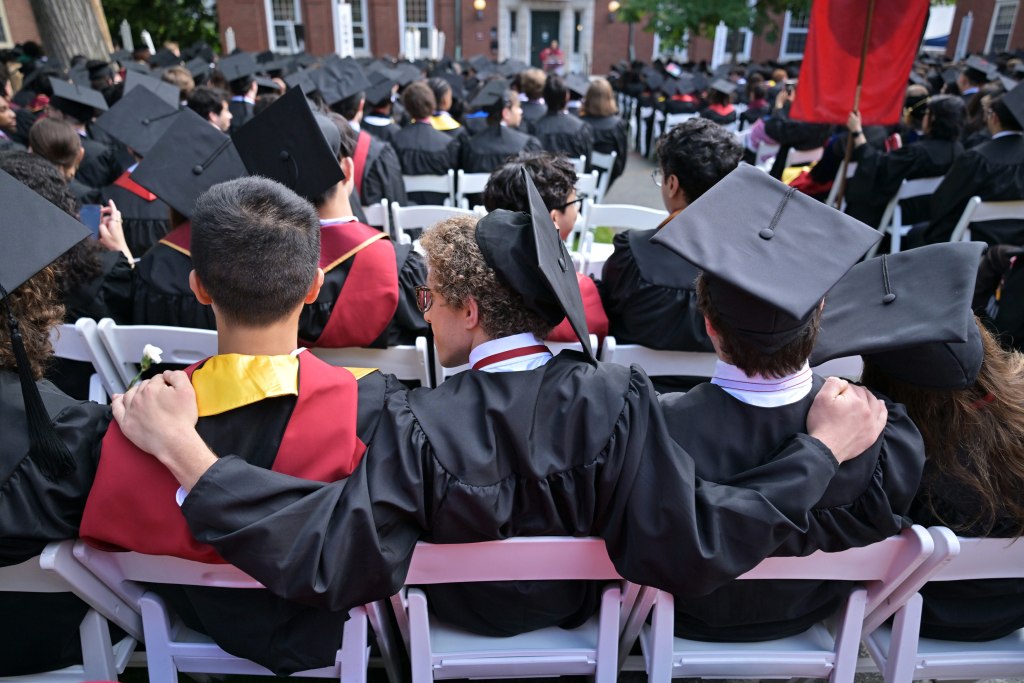
College Degrees on the Clock: The Rise of the Three-Year Bachelor's
In a world accustomed to instant gratification, from same-day delivery to lightning-fast internet, the traditional four-year college degree can feel like a relic. But a significant shift is underway, with some institutions and governing bodies actively streamlining the path to a bachelor's degree, potentially shaving a full year off the journey for countless students.
The Urgency for a Faster Degree
The allure of a quicker college experience is palpable, especially as students grapple with mounting costs and the desire to enter the workforce sooner. Many institutions, facing declining enrollment numbers, see the three-year degree as a strategic move to attract a new cohort of learners.
This isn't just a theoretical discussion; it's a burgeoning reality. Nearly 60 universities and colleges are either developing, considering, or have already launched bachelor's programs designed to be completed in three years. These are often branded as "applied" or "career-focused" degrees, emphasizing practical skills and direct pathways to employment.
One notable example is Ensign College in Utah, which has announced a comprehensive overhaul of its bachelor's programs. All of its degrees will transition to a three-year model, requiring 90 credits instead of the standard 120. This move signals a broader trend gaining traction across the higher education landscape.
State-Level Endorsements and Mandates
The momentum behind these accelerated degree programs is not confined to individual campuses. States are actively endorsing and, in some cases, mandating their adoption. North Dakota and Massachusetts have already given their approval to this innovative approach.
Indiana is among the states exploring similar avenues, with some public universities being required or strongly encouraged to offer these reduced-credit, three-year bachelor's degrees. This top-down support suggests a growing recognition of the economic and societal benefits of producing graduates more efficiently.
Beyond the Ideal: The Reality of Degree Delays
The push for three-year degrees is partly a response to a persistent issue: more than half of college students nationwide take longer than the conventional four years to earn their bachelor's, according to data from the U.S. Department of Education. This delay isn't always due to academic struggles.
Many factors contribute to these extended timelines. Students may face personal challenges, but institutional practices also play a significant role. Colleges can inadvertently slow progress by failing to offer sufficient course sections, being reluctant to accept transfer credits, or not recognizing prior work experience.
Even minor outstanding financial obligations can lead to transcripts being withheld, further impeding a student's academic trajectory. The cumulative effect is not only increased time and expense but also a postponed start to earning a full-time income, a critical concern for many young adults.
Students Taking the Reins
Recognizing these systemic delays, a growing number of students are proactively managing their educational paths. They are accumulating credits through dual enrollment and Advanced Placement courses during high school, and by strategically overloading their college schedules.
The summer academic term has also become a vital tool for these ambitious students. Over 7 million students are now taking classes during the summer months to accelerate their progress toward a degree. This demonstrates a clear demand for more flexible and efficient pathways to higher education.
The Crucial Question: Employer and Graduate School Acceptance
While the appeal of earning a bachelor's degree with fewer credits is undeniable for many students, a key question looms large: will employers, graduate schools, and professional licensing bodies embrace these accelerated credentials?
Early indicators offer a mixed but evolving picture. One institution offering reduced-credit, three-year degrees, Johnson & Wales University, reported positive employer feedback in a survey. This suggests that for career-focused programs, the emphasis on practical skills may resonate with the business community.
However, the landscape for graduate studies presents a more cautious outlook. A separate survey conducted by a consortium of colleges revealed that admissions officers at graduate programs were almost unanimously hesitant to accept applicants with bachelor's degrees earned with fewer than 120 credits. This stance highlights a traditional benchmark that many graduate programs rely upon.
There is a crucial caveat to this finding: these same graduate admissions officers indicated a willingness to re-evaluate their policies as more reduced-credit undergraduate degrees become established. This suggests that as the three-year bachelor's model gains wider acceptance and proves its rigor, graduate schools may indeed adapt their admissions criteria.
The Future of Accelerated Learning
The emergence of three-year bachelor's degrees represents a significant evolution in higher education, driven by student needs and institutional innovation. While challenges remain in ensuring broad acceptance across all post-graduate pathways, the trend toward efficiency and affordability is undeniable.
As more colleges explore and implement these accelerated programs, the conversation around the value and structure of a bachelor's degree will undoubtedly continue to evolve. The ultimate goal is to create pathways that are both rigorous and responsive to the demands of the modern world, enabling students to graduate and contribute to society more swiftly.





 Explore AI Teaching Tools
Comments (0)
Please login to comment
No comments yet
Be the first to comment on this article