
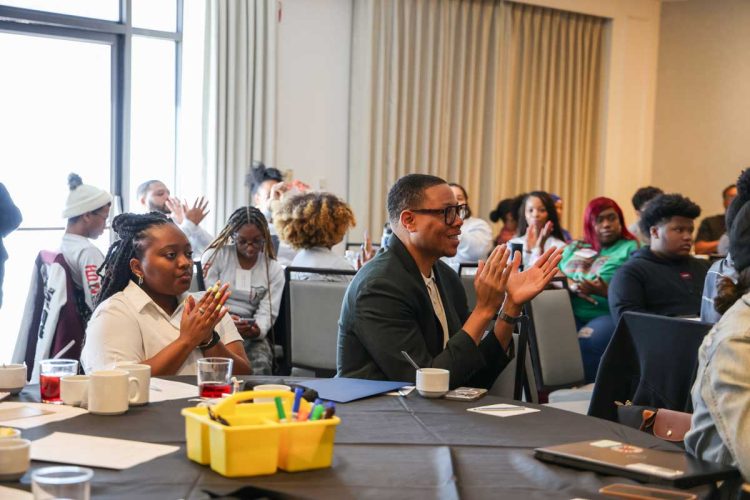
The future of education isn't being dictated by top-down mandates; it's being shaped in the vibrant hum of school cafeterias and the thoughtful silence of student-led discussions. A recent initiative within D.C. Public Schools (DCPS) demonstrates a profound shift: empowering students not just as recipients of education, but as active architects of their learning environments. This approach is not merely about listening to students; it's about fundamentally altering the power dynamics within schools to foster genuine change and elevate the educational experience for all.
When Students Lead the Conversation, Schools Transform
Imagine a staff meeting where the most insightful feedback comes not from seasoned educators, but from the very students they serve. This is the reality at Columbia Heights Education Campus (CHEC), a school within the expansive DCPS network. Here, students are no longer peripheral figures in decision-making; they are integral to shaping programs and policies that directly impact their daily lives.
At CHEC, a program called "Worldview Wednesday" provides students with dedicated time to explore academic and career interests. The true innovation, however, lies in how the school leverages student experiences with this program. Instead of solely relying on staff observations, CHEC actively incorporates student perspectives into their planning sessions, treating their insights with the same weight as any adult professional's.
"During school year 2024-2025, Principal Maria Tukeva and her staff had set the ambitious target to engage 20% of their learners in traditional adult decision-making spaces. They exceeded that aim, with 30% of their scholars participating over the course of the school year."
This deliberate inclusion fosters a powerful sense of ownership and belonging among students. According to a school climate survey, this student-centered approach led to a remarkable 7% increase in students' sense of belonging. This isn't just about improving a single program; it's about cultivating a school culture where every student feels valued and heard.
Districts as Catalysts for Scalable Innovation
While pockets of innovation often emerge organically within individual classrooms or schools, scaling these successful practices across an entire district presents a significant challenge. Districts typically grapple with limited resources, capacity constraints, and systemic barriers that can isolate promising ideas. However, DCPS is actively working to overcome these hurdles through strategic initiatives.
The DCPS Design Lab, in collaboration with the XQ Institute, plays a crucial role in this endeavor. This partnership focuses on codifying and diffusing successful school-level practices, transforming isolated successes into replicable models. This involves developing comprehensive resource libraries, creating detailed blueprints, and even establishing demonstration sites for other schools to visit and learn from.
The Design Lab staff provide essential capacity, working directly with schools to design, evaluate, and refine programs. Their efforts ensure that innovative ideas are not lost but are instead systematically supported and amplified, creating a ripple effect of positive change throughout the district. This infrastructure is vital for moving beyond anecdotal success stories to systemic improvement.
Student Voice Fuels Tangible Results
The impact of centering student voice is not merely theoretical; it translates into measurable improvements in student outcomes. At CHEC, the success of their student-led decision-making model has directly influenced district-wide guidance for crucial planning processes, including the development of annual comprehensive school plans. This signifies a genuine shift in how educational strategies are conceived and implemented.
Furthermore, DCPS has witnessed firsthand the power of student-generated solutions to address persistent challenges. At "Student Design Days," high schoolers have presented innovative strategies to combat chronic absenteeism. Some of these student-led ideas have been adopted by schools, leading to an impressive increase in in-seat attendance by as much as 20%.
"Some of our schools adopted these student-led ideas, resulting in an increase in-seat attendance by as much as 20%."
This demonstrates that students possess unique insights into the issues they face, and when given the platform and support, they can devise effective solutions. This approach not only tackles critical problems but also instills a sense of agency and empowerment in the students themselves.
Pioneering Models for Future Learning
Beyond program design and problem-solving, DCPS is fostering innovative models that redefine the student experience. At Paul Laurence Dunbar High School, the "City as Classroom" model engages every eligible senior in off-campus internships. This hands-on approach, connecting classroom learning with real-world application, has contributed to an 18% increase in students on track for promotion and graduation.
Recognizing the success of Dunbar's initiative, DCPS has taken steps to codify the processes for off-campus learning, making it more accessible for other schools to implement similar programs. This includes clarifying site approvals and attendance tracking, removing logistical barriers that might otherwise hinder replication.
Similarly, Cardozo Education Campus has implemented a structured career exploration program for all ninth graders, culminating in a "Declaration Day" where students choose their academic pathways. Since its launch, the pass rates for the first course in chosen Career and Technical Education (CTE) pathways have soared to an impressive 93%. Encouraged by these results, DCPS is actively expanding its support for exploratory CTE opportunities across the district.
Investing in the Infrastructure of Innovation
For educational innovation to move beyond isolated success stories and become a district-wide norm, significant investment in supporting infrastructure is paramount. This means creating dedicated roles and teams focused on codifying and disseminating best practices, ensuring that valuable lessons learned are systematically captured and shared across all campuses.
Crucially, it requires a fundamental shift in perspective: recognizing school-level innovators, including students and educators, as the true leaders of the future of learning. By treating local brilliance as the starting point for system-wide change, districts can unlock the full potential of their schools and the communities they serve. The future of education is not a distant aspiration; it is actively unfolding within our schools, driven by the passion and insights of our young people and dedicated staff.





 Explore AI Teaching Tools
Comments (0)
Please login to comment
No comments yet
Be the first to comment on this article