
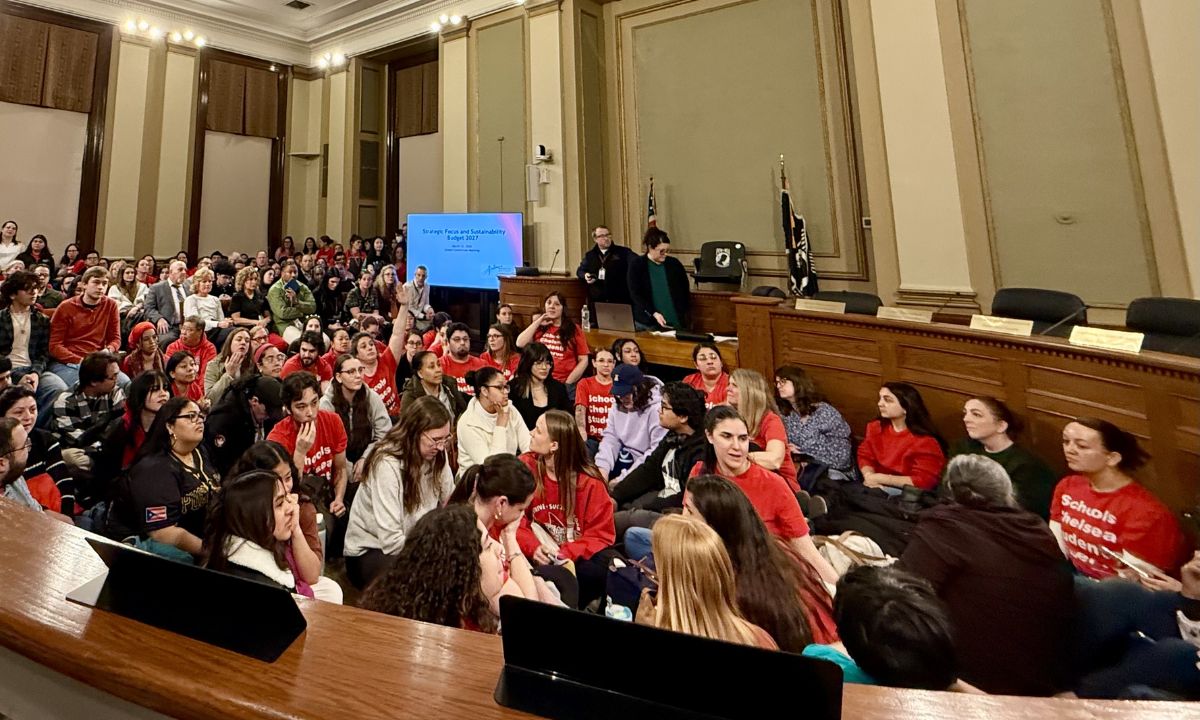
A stark reality is unfolding in school districts across the nation: the chilling effect of immigration enforcement is directly impacting student enrollment, creating significant budget deficits and forcing painful staffing cuts. This isn't a hypothetical scenario; it's a crisis unfolding in real-time, leaving educators scrambling to maintain essential student support systems and questioning the long-term sustainability of public education.
ICE Raids Leave Schools Reeling from Enrollment Drops
The specter of immigration enforcement has cast a long shadow over communities, prompting families to withdraw their children from schools out of fear. This exodus of students, even if temporary, has immediate and devastating financial consequences for school districts already struggling with post-pandemic budget constraints.
In Chelsea, Massachusetts, the ripple effect is palpable. A proposed plan to cut 70 positions, including vital roles like reading coaches, special education staff, and counselors, stems directly from an $8.6 million budget deficit. This shortfall is largely attributed to a loss of 350 students.
"We’re low hanging fruit for ICE because so many of our folks are undocumented. When they say, ‘We’re going to go target Boston,’ you find the vans actually hanging out in Chelsea."
Sarah Neville, a school board member in Chelsea, articulates the direct link between increased immigration enforcement and declining enrollment. While districts are legally prohibited from inquiring about a student's citizenship status, the fear generated by the presence of Immigration and Customs Enforcement (ICE) agents has led to increased absenteeism and families leaving the district, or even the country.
This phenomenon is not isolated to Massachusetts. Districts in Texas, including Houston and San Antonio, report similar enrollment declines attributed to immigration crackdowns. The loss of students translates directly into reduced state funding, exacerbating already tight budgets.
The Financial Fallout: Empty Desks, Empty Coffers
The financial implications of dwindling enrollment are profound. With federal COVID relief funds drying up, districts can no longer rely on emergency financial lifelines. This leaves them vulnerable to the volatility of student attendance and the direct impact of immigration enforcement on their bottom line.
Fixed costs such as payroll and vendor contracts remain, creating a significant imbalance when student-based funding decreases. This financial chaos forces difficult decisions, often at the expense of essential student services that many families depend on.
In many rural districts, the loss of even a handful of students can have a disproportionate impact on programming and staffing. Kevin Brown, executive director of the Texas Association of School Administrators, highlights that "every kid has a big impact on your bottom line."
Legislative Debates and the Future of Plyler v. Doe
The financial strain on districts has intensified a national debate about the cost of educating undocumented students. Conservative lawmakers are increasingly vocal about overturning the landmark 1982 Supreme Court ruling, Plyler v. Doe, which guarantees a right to public education regardless of citizenship status.
Arguments against Plyler v. Doe often center on the perceived financial burden on taxpayers. A 2024 report from a House judiciary subcommittee estimated the cost of educating non-citizen students at approximately $68 billion annually. However, proponents of the ruling emphasize the long-term economic and societal benefits of educating all children.
Democrats highlighted long-term benefits of providing students access to education, like $633 billion paid in state and local income taxes and contributions to the U.S. economy worth more than $2.7 trillion.
Conversely, opponents of overturning Plyler v. Doe warn of dire consequences. They argue that excluding undocumented students would not only deny them opportunities but could also lead to widespread truancy and an inability to enforce attendance laws, as any child could claim undocumented status to avoid school.
The potential overturning of Plyler v. Doe could have far-reaching implications, potentially impacting not only undocumented students but also creating a climate of fear that deters attendance for all students, regardless of their immigration status.
Districts Seek Relief Amidst Enforcement Campaigns
Districts are actively seeking solutions and relief from the ongoing challenges. In Massachusetts, some districts are petitioning the state legislature for one-time grants to address their budget shortfalls. These grants could provide a much-needed buffer while they navigate the complexities of declining enrollment.
In Minnesota, a national nonprofit has urged lawmakers to temporarily suspend a state law that mandates dropping students from rolls after 15 consecutive days of absence. This suspension would offer a reprieve for districts like Fridley Public Schools, which has lost students due to this rule and faced a significant financial hit.
Superintendent Brenda Lewis of Fridley Public Schools shared the distressing reality of students being unable to leave their homes for extended periods due to fear, leading to absences. The district has also experienced a chilling effect during immigration surges, with agents reportedly using device distribution processes as an opportunity for enforcement, further deterring students from attending school.
The "in-your-face presence" of immigration enforcement near schools is a significant factor driving fear and absenteeism. A less aggressive approach, as suggested by immigration policy experts, could lead to the return of many missing students.
Innovative Tools to Support Educators Navigating the Crisis
In the face of these challenges, educators are exploring innovative strategies and tools to support their students and manage their classrooms effectively. While the external pressures are immense, focusing on what can be controlled within the school environment is crucial.
Tools that enhance engagement and provide immediate feedback can be invaluable. For instance, MentofyCove classroom games offer interactive ways to review material and boost student participation, even when attendance fluctuates. Quick, engaging activities like a live quiz or a trivia game can help re-engage students who may have fallen behind.
Effective lesson planning is also paramount. Utilizing AI lesson plan generators can help teachers quickly create differentiated materials tailored to diverse learning needs, a critical factor when supporting English learners and students who have experienced trauma or disruption.
Furthermore, managing classroom dynamics and ensuring equitable participation is key. MentofyGroups, with its smart student grouping capabilities and AI icebreakers, can help foster a sense of community and support, even with fluctuating student numbers. The ability to import student rosters from platforms like Google Classroom streamlines administrative tasks, allowing teachers to focus more on instruction.
The use of MentofyBoards, with its 18 interactive display widgets, can help maintain a structured and engaging learning environment. Features like a countdown timer, scoreboard, and polls can keep students focused and motivated, regardless of external anxieties.
Even with the challenges of enrollment fluctuations, educators are finding ways to adapt. The resilience and dedication of teachers remain a constant, and leveraging technology can provide much-needed support in these trying times.
The Unseen Impact: Community and Long-Term Consequences
The impact of immigration enforcement extends beyond enrollment figures and budget lines; it erodes community trust and creates a climate of fear that affects all students. When families are afraid to send their children to school, the entire educational ecosystem suffers.
This fear can lead to increased chronic absenteeism, which was already a significant concern post-pandemic. The disruption to learning can have long-term academic and social-emotional consequences for students, potentially widening achievement gaps.
The legal battles and legislative debates surrounding Plyler v. Doe highlight a fundamental question: what kind of society do we want to build? Denying education to any child based on their or their parents' immigration status risks creating a permanent underclass and diminishing the collective potential of our nation.
Ultimately, the current situation underscores the interconnectedness of social policies and educational outcomes. Addressing the root causes of fear and displacement, while upholding the principle of universal education, is essential for the well-being of our students and the future of our communities. The empty desks in schools across the country are a stark reminder that the price of fear is paid by our children.





 Explore AI Teaching Tools
Comments (0)
Please login to comment
No comments yet
Be the first to comment on this article