
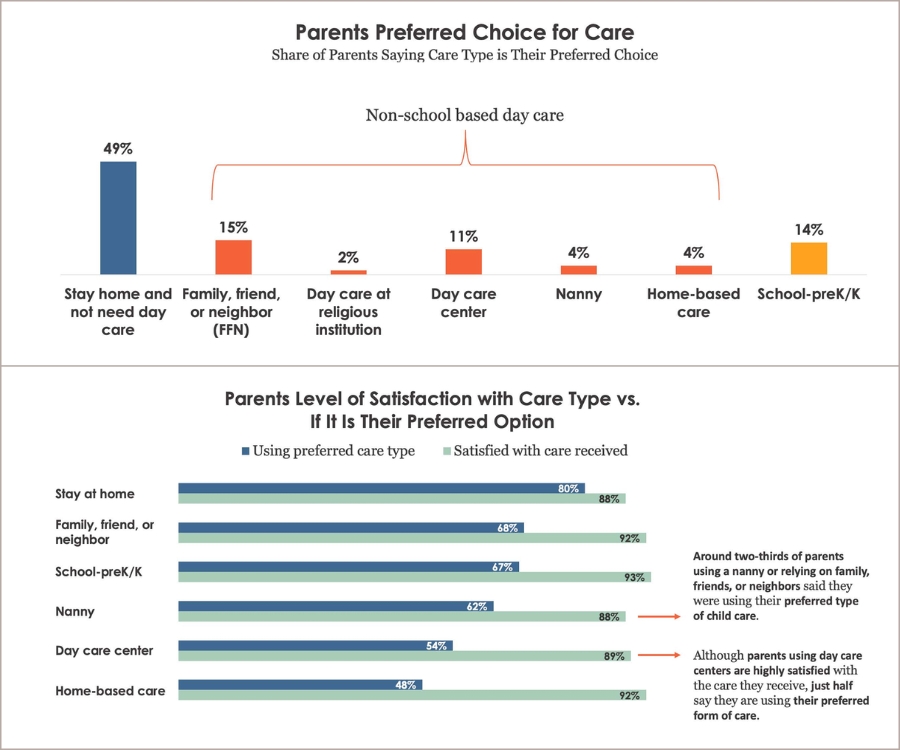
A startling statistic reveals that nearly half of parents with young children would prefer to provide childcare themselves, yet current policy often steers them towards formal, licensed settings. This significant "childcare preference gap" between what families say they want and what policy offers presents a critical challenge for educators and policymakers alike, demanding a fundamental reevaluation of how we support young children and their families.
The Persistent Divide: What Parents Say They Want vs. What Policy Delivers
Recent surveys paint a consistent picture: parents deeply value the ability to care for their children, either directly or through trusted family, friends, and neighbors. A December 2025 poll of 1,000 parents with children aged five and under found that approximately 50% preferred a parent staying home, with an additional 15% favoring care from a family member, friend, or neighbor (FFN). While satisfaction with existing care was generally high, only about half of those using formal home- or center-based care considered it their ideal arrangement.
This sentiment is echoed by a larger, May 2026 survey of nearly 5,500 parents with children under six. Nearly half of participants indicated a preference for self-care or care by the child's other parent, with FFN caregivers being the next most popular choice at 11%. Formal settings, while utilized, were the ideal for only 15% of these families.
"The largest U.S. survey of parents with children under the age of 6... When asked about their ideal childcare arrangement, 49% of nearly 5,500 parent participants said they’d prefer to care for their child themselves or for the child's other parent to provide the care."
These findings are not isolated. Earlier surveys from organizations like the Bipartisan Policy Center and American Compass have reported similar trends. While preferences can shift as children age, with a greater interest in formal programs like licensed childcare centers, the initial desire for parental or informal care remains a powerful force.
It's crucial to acknowledge that these surveys often explore "ideal" scenarios, setting aside the very real financial constraints families face. The opportunity to access free or low-cost licensed early care and education, such as universal pre-K, can understandably sway decisions. However, ignoring the stated preferences of parents, regardless of their financial situation, risks creating a system that doesn't truly serve their needs.
The Tangible Costs of Misalignment: Stress and Dissatisfaction
When childcare arrangements don't align with parental preferences and needs, the consequences can be significant. A survey by the nonprofit Child Trends revealed that 64% of families using non-parental childcare reported moderate to high "misalignment" with their current setup. This dissatisfaction stemmed from various factors, including budget constraints, differing quality standards, conflicting beliefs, and a mismatch with their ideal setting.
This misalignment isn't just a matter of inconvenience; it can lead to tangible harm. Studies suggest that parental discomfort with their childcare choices can contribute to increased stress and mental health challenges. This underscores the importance of policy that respects and accommodates family desires.
The current landscape of federal childcare policy, and many reform proposals from the past two decades, largely fails to reflect these parental preferences. While public opinion doesn't always dictate policy, the gap in childcare is particularly stark.
Unpacking the Policy Origins: A Focus on Employment, Not Family Well-being
To understand this persistent preference gap, we must examine the historical underpinnings of U.S. childcare policy. Historically, childcare assistance has been framed within the welfare system, primarily viewed as a tool to increase parental employment and earnings, thereby helping families escape poverty. This perspective is easier for policymakers to grasp, focusing on licensed programs that facilitate parents' work hours.
The Child Care and Development Fund (CCDF), a key federal program, exemplifies this. Most of its funding is directed towards licensed programs, and families with stay-at-home parents are ineligible for subsidies. Furthermore, the reauthorization of the CCDBG Act in 2014 made it more challenging for FFN providers to receive subsidies, further entrenching the focus on formal care.
Even recent legislative efforts, like the Build Back Better Act, did not fundamentally alter this orientation. The underlying premise often overlooks the intrinsic value of parental care and the complex emotional and developmental needs of young children, prioritizing economic outcomes over holistic family well-being.
Reframing the Goal: Trusting Parents and Embracing Flexibility
Closing the childcare preference gap requires a significant reframing of childcare policy goals. Policymakers must move beyond a singular focus on employment and embrace a broader vision that trusts parents and acknowledges the diverse ways families choose to care for their children. This involves becoming more comfortable with the complexities of informal care and recognizing that supporting families in their preferred care arrangements is a valid and essential policy objective.
America's approach to childcare is not the only model. Historically, the U.S. has experimented with "at-home infant care" programs, allowing eligible low-income parents to use subsidy dollars to pay themselves for care. While these efforts didn't gain widespread traction, they represent a past attempt to acknowledge parental care.
Other nations offer valuable insights. Nordic countries, for instance, have developed childcare systems that combine affordable licensed options with robust support for informal care. While the financial support may not enable parents to cease working entirely, it provides crucial flexibility for balancing work and family responsibilities.
"A recent report from the People’s Policy Project highlighted how Nordic nations have built a childcare system that couples affordable licensed options with support for informal care."
A Shifting Landscape: Emerging Policies and a New Vision
Encouragingly, a shift is beginning to emerge in the United States. Some policy initiatives are becoming more inclusive, acknowledging the validity of diverse care choices. New Mexico's universal childcare system, for example, allows FFN providers to register and receive monthly stipends per child, though it still excludes stay-at-home parents.
Politicians are also beginning to champion more flexible approaches. Rep. Ro Khanna has proposed structures to compensate FFN and stay-at-home parents alongside licensed programs. Similarly, Project 2029 has put forth a plan guaranteeing parents the right to choose their preferred childcare, offering either free licensed programs or a monthly stipend for those opting for parental or FFN care.
Advocacy groups and philanthropic leaders are also playing a vital role. Initiatives like WeVision EarlyEd, led by the Bainum Family Foundation, advocate for reimagining childcare policy to support dual pathways: high-quality licensed early childhood education and "trusted caregivers," which explicitly include parents and FFN providers.
Key Takeaways for Educators and Policymakers:
- Acknowledge Parental Preferences: Recognize that a significant portion of parents prefer to care for their children themselves or with the help of family, friends, or neighbors.
- Rethink Policy Goals: Shift the focus of childcare policy from solely employment support to a broader framework that prioritizes child development and family well-being.
- Support Diverse Care Settings: Explore policy options that provide financial and structural support for licensed childcare, FFN care, and parental care.
- Embrace Flexibility: Understand that families' needs and preferences evolve, and policy should offer adaptable solutions.
- Listen to Families: Actively seek and incorporate the voices and experiences of parents when designing and implementing childcare initiatives.
This evolution in thinking cannot come soon enough. All families deserve the autonomy to pursue childcare arrangements that best suit their circumstances and values. By aligning public policy more closely with family preferences, we can foster stronger families, support healthier child development, and ultimately build a more resilient society.
The journey towards truly family-centered childcare policy is ongoing, but the growing recognition of the childcare preference gap is a crucial step. For educators, this means advocating for policies that support the diverse needs of the families they serve and exploring tools that can enhance their own teaching practices. For instance, utilizing Mentofy AI teaching tools for lesson planning or generating varied assessment questions can free up valuable time to engage more deeply with parents and understand their unique family dynamics.
Furthermore, fostering a sense of community and shared learning among educators can be invaluable. Platforms that offer MentofyCove classroom games, like trivia or word search, can be engaging ways to reinforce learning, and the insights gained from observing student engagement in these activities can inform discussions about family needs. Similarly, tools for student grouping, such as those offered by MentofyGroups, can help educators create more dynamic and responsive classroom environments, reflecting the diverse needs of the children in their care.
Ultimately, the goal is to create a system where every child has access to nurturing and supportive care, and every parent feels empowered to make the best choices for their family. As policy continues to evolve, the ongoing dialogue between educators, policymakers, and families will be essential in bridging the childcare preference gap and building a brighter future for all children.






 Explore AI Teaching Tools
Comments (0)
Please login to comment
No comments yet
Be the first to comment on this article