
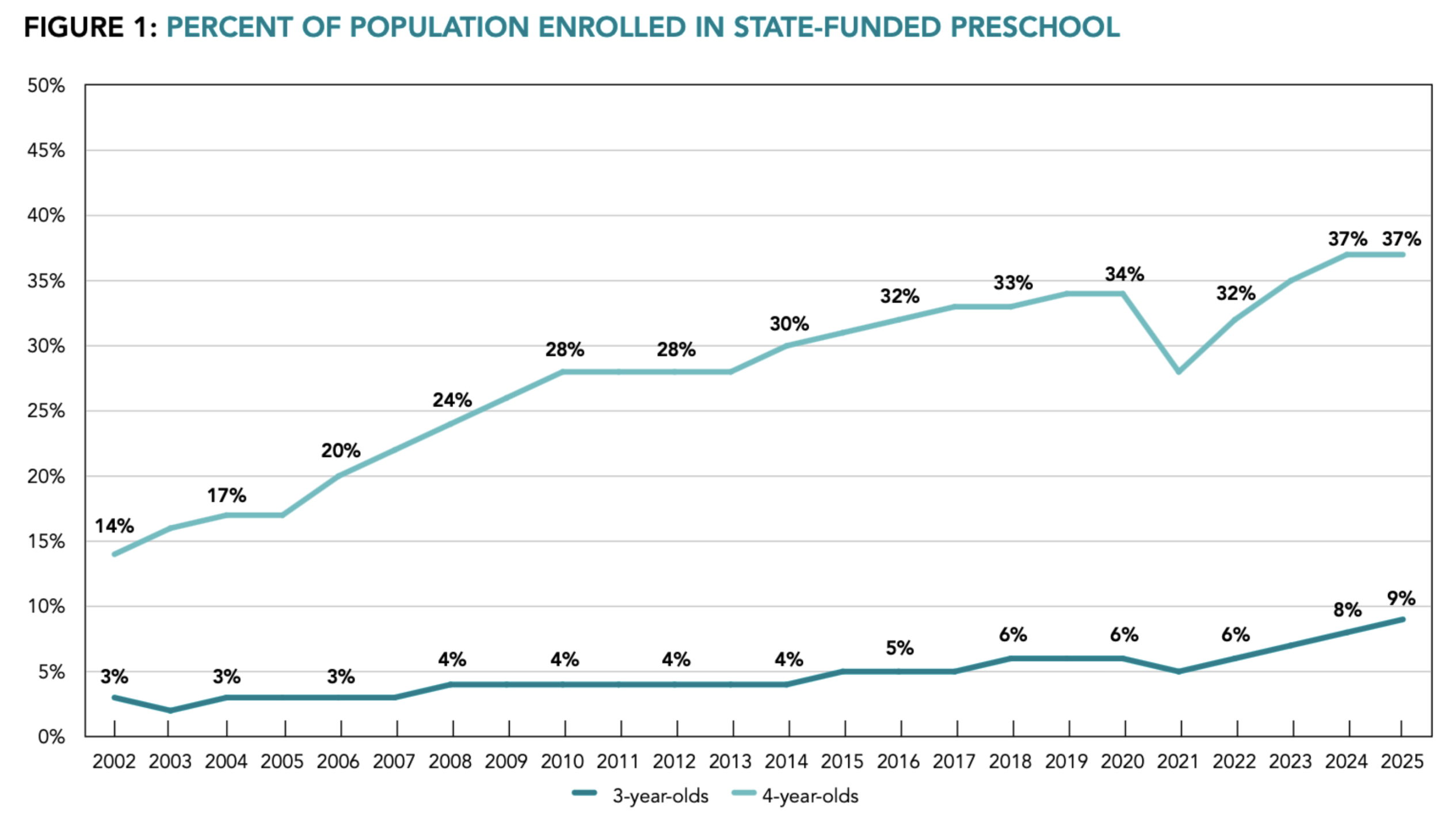
Record enrollment numbers in state-funded preschool programs signal a national commitment to early childhood education, yet a stark divide in program quality is emerging. For educators, this means navigating a landscape where opportunity is growing but the caliber of that opportunity varies dramatically by state, demanding a closer look at what constitutes truly effective early learning environments.
The Uneven Race Towards Universal, High-Quality Preschool
The National Institute for Early Education Research (NIEER) has revealed a significant milestone: state-funded preschools are serving more children than ever before. This surge in enrollment, particularly among 4-year-olds, represents a powerful investment in our youngest learners. However, the joy of increased access is tempered by a widening gap in the quality of these programs across different states.
Steve Barnett, director of NIEER, likens the situation to a race where some states are sprinting ahead, achieving ambitious goals, while others are lagging or even moving backward. This uneven progress means that while some children are entering kindergarten well-prepared, others may be missing out on the foundational experiences crucial for lifelong learning.
"That’s the story this year — that the race is highly uneven. Even as some states are racing toward the finish line, more states are moving in the wrong direction. A few states never entered the race. They’re not running."
In the 2024-25 school year, state-supported preschool programs nationally serve approximately 1.8 million children. This includes 37% of all 4-year-olds and a growing 9% of 3-year-olds. Federal, state, and local governments collectively invested $17.7 billion, with states contributing over $14 billion to these vital programs.
Georgia's Exemplary Leap Forward
Amidst this varied landscape, Georgia stands out as a beacon of progress. It has become the first state with a universal preschool program to meet all 10 of NIEER’s quality benchmarks. This achievement is particularly noteworthy as it demonstrates that serving all children does not necessitate compromising on quality.
The NIEER benchmarks assess critical aspects of program quality, including teacher credentials, professional development opportunities, curriculum support, manageable class sizes, and favorable staff-to-child ratios. Georgia's success in meeting these standards offers a compelling model for other states striving to enhance their early learning offerings.
Susan Adams, deputy commissioner for pre-K and instructional support at the Georgia Department of Early Care and Learning, highlighted the concrete steps taken. These include reducing maximum preschool class sizes to 20 and setting staff-to-child ratios at one adult to 10 children. Furthermore, the state has achieved salary parity for preschool teachers, aligning their earnings with those of K-12 educators.
“You don’t have to choose between serving all the kids and building a high-quality program. Georgia shows you can do it and not break the bank.”
This comprehensive approach ensures that Georgia's universal preschool program provides a high-quality learning environment for over 70,000 children annually across its 159 counties. While these quality improvements initially reduced preschool slots, the state is actively working to rebuild capacity, aiming to add 100 new classrooms each year over a four-year period.
The Divergent Paths of State Preschool Programs
The NIEER report underscores a significant divergence in how states are approaching preschool expansion and quality enhancement. While some states are actively increasing funding and capacity, others are seeing declines, often influenced by shifts in federal funding or state budget priorities.
States like California, Colorado, Michigan, Minnesota, and Missouri have been key contributors to recent enrollment gains, collectively adding more than 52,000 new preschool seats. Similarly, Michigan and New Jersey have made substantial investments, each increasing their preschool spending by over $100 million. These states exemplify a commitment to expanding access and improving the early learning landscape for their residents.
Conversely, 17 states have reduced their preschool funding, with Arizona, North Carolina, and Texas experiencing some of the most significant cutbacks. This trend is concerning for educators and families in those states, as it can lead to reduced access, larger class sizes, and diminished program quality.
Moreover, six states – Idaho, Indiana, Montana, New Hampshire, South Dakota, and Wyoming – currently lack a state-funded preschool program as defined by NIEER. These states represent missed opportunities to provide foundational early education to their youngest citizens.
Focusing on the Quality Benchmarks for Educators
The NIEER quality benchmarks offer a practical framework for educators and policymakers to evaluate and improve early learning programs. Understanding these benchmarks can help drive meaningful change within classrooms and at a systemic level.
Here are the key quality indicators measured by NIEER:
- State-funded preschool programs are available for all 4-year-olds. This benchmark focuses on universal access for the age group most likely to benefit from pre-kindergarten.
- State-funded preschool programs are available for at least 50% of 3-year-olds. This recognizes the growing importance of early interventions for younger children.
- Programs meet 7 of 10 quality standards. This is a threshold for basic program quality, ensuring essential components are in place.
- Programs meet all 10 quality standards. This represents the highest level of program quality, indicating comprehensive and robust early learning environments.
- Teachers have bachelor's degrees. Higher education levels for teachers are linked to better instructional practices and child outcomes.
- Teachers have bachelor's degrees in early childhood education or related fields. Specialized training further enhances a teacher's ability to support young learners.
- Teachers have 12 months of early childhood education coursework. Ongoing professional development and specialized coursework are crucial for effective teaching.
- Programs have access to curriculum supports. High-quality curricula provide a roadmap for effective teaching and learning.
- Programs have access to professional development opportunities. Continuous learning is essential for educators to stay current with best practices.
- Programs have low staff-to-child ratios and small class sizes. These factors are critical for providing individualized attention and fostering strong teacher-child relationships.
For educators, focusing on these benchmarks can inform professional development goals and classroom practices. For instance, understanding the importance of low staff-to-child ratios can highlight the value of collaborative teaching or the strategic use of support staff. Similarly, the emphasis on teacher qualifications points to the ongoing need for accessible and relevant professional growth opportunities.
The Tangible Impact of Quality on Children's Experiences
The differences between high-quality and low-quality preschool programs are not merely academic; they have a profound impact on children's daily experiences and long-term development. A program that meets NIEER's quality standards is more likely to foster a supportive and stimulating environment where young children can thrive.
A strong teacher-child relationship is a cornerstone of effective early education. When teachers have smaller class sizes and appropriate staff-to-child ratios, they are better equipped to build these crucial connections. This allows for more individualized support, enabling teachers to tailor their instruction to each child's unique needs and learning style.
Furthermore, well-prepared teachers, who have the necessary qualifications and ongoing professional development, are more likely to have realistic expectations for their students and to remain in their positions longer. This consistency and stability are invaluable for young children, who benefit immensely from predictable and nurturing relationships with their educators.
The availability of robust curriculum supports and professional development ensures that teachers are equipped with the knowledge and resources to deliver engaging and effective instruction. This can translate into more dynamic lesson planning, the creative use of classroom games, and a more responsive approach to student learning, potentially even incorporating tools for AI lesson plan generation.
The Path Forward: Prioritization and Progress
The divergent trajectories of state preschool programs highlight the critical role of prioritization. As Barnett noted, even in states facing budget constraints, like New Jersey, significant increases in preschool funding have been achieved, underscoring that it is a matter of setting priorities.
For educators and advocates, the NIEER report serves as both a call to action and a source of inspiration. It highlights the states that are leading the way, demonstrating what is possible when there is a commitment to both access and quality. States like New Mexico are on the cusp of joining Georgia, with plans to meet the benchmark requiring all lead teachers to hold a bachelor's degree in early childhood education.
The ultimate goal, as Barnett emphasizes, is not simply to achieve recognition but to provide better programs for children. This means a continued focus on investing in well-qualified teachers, fostering supportive learning environments, and ensuring that all children, regardless of their state of residence, have access to high-quality early education.
As enrollment continues to climb, the focus must remain on quality. Tools and resources that support educators in delivering exceptional learning experiences are more critical than ever. Whether it's through innovative lesson planning tools, engaging live quiz formats, or effective student grouping strategies, the aim is to empower teachers to meet the diverse needs of every child. The journey towards universal, high-quality preschool is ongoing, and the progress made by states like Georgia offers a powerful roadmap for the future.




 Explore AI Teaching Tools
Comments (0)
Please login to comment
No comments yet
Be the first to comment on this article