
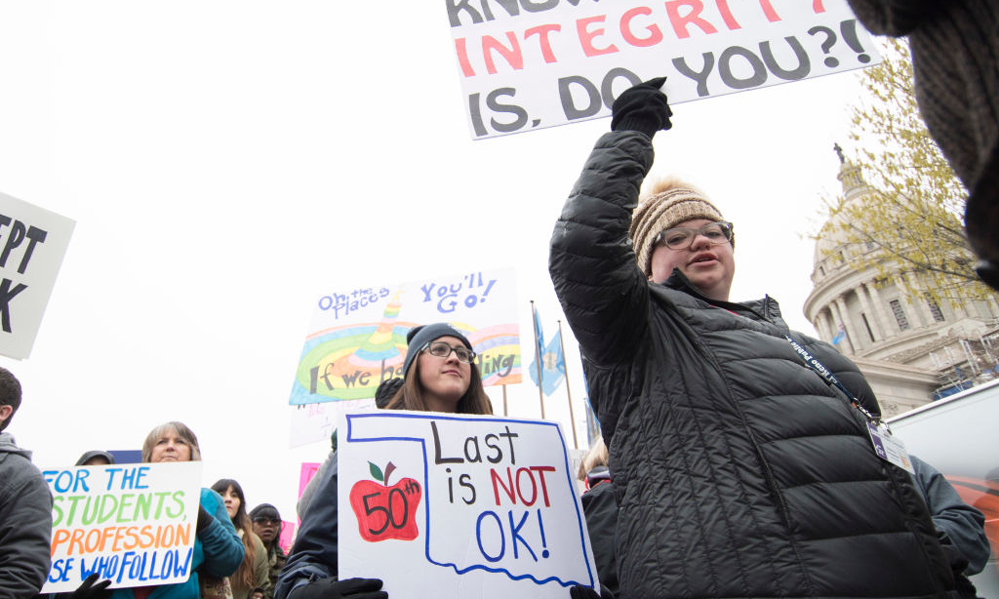
Oklahoma teachers have seen a recent pay increase, a welcome step after years of advocacy, but the state's commitment to its educators is still falling short. While a $2,000 raise might sound significant, for many, it translates to less than $6 extra per day after taxes, a stark reminder that the fight for fair compensation and robust education funding is far from over. This reality forces educators to re-evaluate their careers and the sustainability of teaching in the Sooner State.
The Incremental Climb: A Raise That Doesn't Quite Reach
For Nancy Jarvis, a kindergarten teacher with 26 years of experience in Chickasha, the joy of watching her students progress remains the core of her profession. She's seen children transform from knowing only a few letters to reading at a third-grade level by the time they enter first grade. This profound impact is what keeps many dedicated teachers like Jarvis in the classroom, despite the persistent financial challenges.
However, the satisfaction derived from student achievement doesn't always translate to the satisfaction of a livable wage. Jarvis notes that her take-home pay has increased by roughly 17% since 2018, a rate that significantly lags behind the rising cost of inflation. The most recent $2,000 salary bump, signed into law by Governor Kevin Stitt, offers a tangible, albeit small, acknowledgment of teachers' value.
"I definitely don’t do it for the money, but that was an eye-opener."
This sentiment encapsulates the dual reality for many Oklahoma teachers: a deep-seated passion for education coupled with the undeniable pressure of economic realities. The recent raise, while appreciated, underscores the persistent gap between the cost of living and the compensation offered to these vital professionals.
Echoes of 2018: The Lingering Impact of "Red for Ed"
Eight years ago, Oklahoma witnessed a historic "Red for Ed" movement, a nine-day walkout that saw over 30,000 educators converge on the state capitol. This massive demonstration was a powerful outcry for increased education funding and higher teacher salaries, pushing for a $10,000 raise and substantial budget increases, even after an initial $6,100 raise had been signed.
While subsequent years have seen further incremental raises in 2019 and 2023, many teachers, like Jarvis, feel that the progress has been too slow to truly bridge the compensation gap. Starting teacher pay in Oklahoma continues to hover near the bottom nationally, prompting many experienced educators to leave the state for more competitive opportunities.
This outflow of talent is a critical concern for the state's education system. Neighboring states have actively worked to improve their teacher compensation, leaving Oklahoma increasingly behind in the competition for skilled educators. The ripple effect is felt in school districts, some of which are exploring ways to extend the recent pay increase to non-teaching staff, further straining already tight budgets.
The Funding Conundrum: Capping Progress and Limiting Options
Shawn Hime, executive director of the Oklahoma State School Boards Association, acknowledges the legislative efforts, noting a 37% increase in teacher pay since 2018. Yet, he emphasizes that "we have to have substantial increases annually to catch up." The state's funding structure, while designed for equity by capping property tax increases, inadvertently limits districts' ability to offer significantly higher salaries.
Rebecca Sibilia, executive director of EdFund, explains that this cap, intended to prevent large funding disparities between affluent and less affluent communities, can force districts into difficult choices. In a state that is often hesitant to raise taxes, districts may find themselves "forced to decide between hiring more people and giving pay raises." This creates a perpetual tension between maintaining adequate staffing levels and ensuring competitive compensation for existing teachers.
"We’re all in the same race, and we started a lap behind."
This quote from Hime poignantly captures the ongoing challenge. Despite legislative action and increased funding, the cumulative effect of years of underfunding means Oklahoma teachers are still playing catch-up, a reality that impacts recruitment and retention efforts across the state.
Political Headwinds: Election Year Pressures and Budgetary Constraints
The political landscape in Oklahoma adds another layer of complexity to education funding. The 2018 tax increases required to fund the significant teacher raise faced a 75% supermajority threshold, a difficult hurdle to overcome. Now, in an election year, some lawmakers who supported those measures are facing criticism from opponents, making future tax increases a politically sensitive issue.
Charles McCall, a former House speaker and current gubernatorial candidate, has been targeted by challengers for his role in passing what opponents label "the largest tax increase in Oklahoma history." This political climate can create a reluctance among legislators to commit to the substantial, long-term funding increases that education advocates argue are desperately needed.
Compounding these issues is Oklahoma's year-to-year budgeting system, which prevents lawmakers from obligating funds for future years. Mark McBride, a Republican who previously chaired the House education appropriations committee, has long argued for a shift away from this practice. He recalls facing educator frustration when he voted against a previous $2,000 raise, preferring a more substantial, multi-year increase.
Beyond the Paycheck: Factors Driving Teachers Away
While salary remains a primary concern, it's not the sole determinant of a teacher's decision to stay in or leave the profession. Mandates, such as requiring struggling readers to repeat third grade, are seen by some advocates as exacerbating the teacher shortage. Erika Wright, a community organizer for the Oklahoma Appleseed Center for Law and Justice, warns that such policies could "exacerbate our teacher shortage" and lead to a reluctance to teach crucial grade levels.
A survey commissioned during former State Superintendent Joy Hofmeister's tenure revealed that a significant portion of certified teachers not currently in the classroom cited reasons beyond pay. Nearly a quarter of respondents indicated that their decisions were influenced by "the inability to make decisions related to instruction" and "burdensome standards and curriculum requirements."
The tone and rhetoric surrounding education can also take a toll. Past actions, such as the removal of educator hall of fame displays by former State Superintendent Janet Barresi and current State Superintendent Ryan Walters, have been interpreted by some as demeaning. Walters's efforts to revoke certificates, public criticism of educators, and the institution of a teaching test to filter applicants from certain states have contributed to a perception of disrespect.
"Disrespect crept in."
Bryan Duke, dean of the College of Education and Professional Studies at the University of Central Oklahoma, notes that this perceived lack of respect, combined with "job creep"—the increasing complexity of teaching duties and escalating behavior problems—can leave educators feeling unheard and undervalued. Many teachers feel like they are "screaming into the wind," their voices not being adequately heard.
Seeking Solutions: Innovative Tools and Collaborative Efforts
In the face of these challenges, educators are increasingly turning to innovative tools and strategies to enhance their teaching and manage their workloads. The development of AI-powered platforms offers a promising avenue for streamlining tasks and fostering more engaging learning environments. Tools for AI lesson plan generation can help teachers quickly create differentiated content, while AI grading features, like those offered by Mentofy Academia, can significantly reduce the time spent on assessments, particularly for handwritten work.
Furthermore, the ability to create effective exam creator tools with a variety of question types and curriculum alignments can help teachers assess student understanding more comprehensively. For classroom engagement, interactive platforms provide opportunities for students to participate actively. Features like live quiz sessions and various classroom games, such as word search games and trivia games, can transform routine lessons into dynamic learning experiences.
Effective student grouping is another area where technology can assist. Smart grouping tools can help teachers create balanced and productive groups for collaborative projects, while AI icebreakers can foster a positive classroom community. For managing classroom displays and activities, interactive widgets like countdown timers, scoreboards, and polling tools can enhance organization and engagement.
A Path Forward: Sustained Investment and Teacher Empowerment
The recent pay raise in Oklahoma is a step in the right direction, but it is clear that sustained, substantial investment is needed to truly elevate the teaching profession and ensure a high-quality education for all students. This includes not only competitive salaries but also a supportive professional environment where teachers feel valued, respected, and empowered to make instructional decisions.
The conversation around education funding and teacher compensation in Oklahoma is ongoing. The challenges are complex, involving economic realities, political considerations, and the fundamental need to attract and retain talented educators. As teachers like Nancy Jarvis continue to dedicate themselves to their students, the state must commit to providing the resources and recognition they so profoundly deserve. For those seeking immediate support and innovative teaching resources, exploring platforms like Mentofy, which offers a Mentofy is free for teachers program, can provide valuable assistance as educators navigate these critical issues.



 Explore AI Teaching Tools
Comments (0)
Please login to comment
No comments yet
Be the first to comment on this article