
A startling new report reveals that nearly one-third of K-3 teachers are still employing reading instruction methods widely considered ineffective, despite decades of research advocating for evidence-based approaches. This persistent reliance on "discredited" techniques, particularly the neglect of phonics, poses a significant challenge for educators striving to ensure all students achieve reading proficiency. The findings underscore a critical disconnect between the established science of reading and classroom practice, demanding immediate attention and strategic intervention.
The Persistent Shadow of Outdated Reading Methods
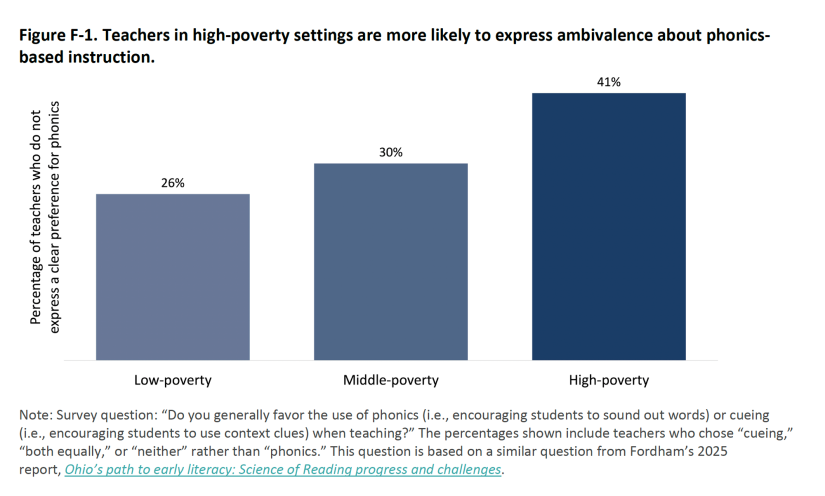
A comprehensive survey conducted by the Fordham Institute in the fall of 2025, encompassing over 1,200 K-3 educators, paints a concerning picture. The report, "From the Teacher’s Desk: A Science of Reading Progress Report," indicates that a substantial 30% of teachers do not prioritize phonics, a cornerstone of the science of reading that explicitly teaches the relationship between letters and sounds.
This hesitation to fully embrace phonics means that many students are not receiving the foundational decoding skills necessary for successful reading. The science of reading is a robust framework built upon five pillars: phonemic awareness, phonics, fluency, vocabulary, and comprehension. While the conversation has often centered on phonics, the report highlights that a significant portion of teachers are not adequately integrating this crucial element.
"Despite everything that has been said and written in the past few years, nearly a third of teachers still put phonics and cueing on equal footing."
The reliance on "cueing" – encouraging students to guess words using context clues or pictures – is particularly problematic. This method, often a hallmark of less effective approaches, can create significant barriers for students, especially those with learning differences or those who are English language learners. The report found that about half of all surveyed K-3 teachers described their approach as "structured," incorporating phonics, decoding, and related skills. However, nearly one in three still adhere to a "balanced approach" that includes cueing.
Furthermore, the report points to a disheartening disparity in knowledge and commitment to the science of reading based on school demographics. Teachers in high-poverty and majority-nonwhite schools are, on average, less informed and committed to these evidence-based principles than their counterparts in more affluent and whiter settings. This gap has profound implications for educational equity, potentially widening achievement gaps for the most vulnerable student populations.
Navigating the "Reading Wars" and Teacher Hesitancy
The journey toward widespread adoption of the science of reading has been far from smooth, marked by decades of debate and what many refer to as the "reading wars." This historical context, coupled with the sheer volume of evolving information, contributes to teacher hesitancy and a perceived lack of clarity.
Many teachers expressed a concern that the pendulum might swing too far, leading to a perceived imbalance. One teacher noted, "While I support our current emphasis on phonics, I worry that kids are going to lose out with less comprehension and vocabulary instruction." Another voiced a sentiment echoed by many: "the pendulum swings like political winds. Let us teach. Please!"
Concerns were also raised about the shift towards more non-fiction texts at the expense of rich literature, and the replacement of guided reading with phonics-based small groups. These sentiments highlight the complex realities teachers face as they attempt to reconcile research with practical classroom application and pedagogical preferences.
Despite these hesitations, the report also captured the positive impact of embracing the science of reading. Teachers who have fully internalized its principles report dramatic improvements in how quickly students learn to read. "They are happier learners because they aren’t as frustrated with reading," one teacher shared, underscoring the profound, positive effects on student engagement and success.
Bridging the Knowledge Gap: What Teachers Need
The Fordham Institute report identifies several key areas where teachers require more support and clearer guidance to fully implement the science of reading. A significant finding is that over 40% of teachers haven't "fully internalized the importance of knowledge and vocabulary to reading comprehension." This suggests that while phonics is often the focus, the interconnectedness of all five pillars of reading science needs greater emphasis.
The "chaotic information environment" is cited as a major hindrance, with teachers receiving conflicting advice from various sources. This lack of clarity makes it difficult for even the most dedicated educators to discern and implement best practices consistently.
"Teachers want to do the right thing, … [but there’s a] lack of clarity … about points that really should be clear."
The report also highlights a concerning trend: teacher knowledge of the science of reading tends to decline as the grade level increases. Kindergarten teachers generally demonstrate the deepest understanding, while third-grade teachers exhibit the least. This is particularly concerning given that many students still struggle with decoding by third grade, and the need to build knowledge and vocabulary remains critical in higher grades.
To address these challenges, the report offers several actionable recommendations for educators and institutions:
- Strengthen Pre-Service Teacher Education: Colleges of education must mandate instruction aligned with the science of reading to ensure new teachers enter the profession with a solid foundation.
- Targeted Professional Development: Implement mandates for K-3 teacher training to be completed within their first three years, focusing on practical application and ongoing support.
- State-Level Guidance: States should establish approved curriculum lists that are demonstrably aligned with the science of reading, providing teachers with clear, reliable resources.
- Focus on Knowledge and Vocabulary: Professional development and curriculum design must explicitly address the critical role of background knowledge and vocabulary in fostering reading comprehension.
- Embrace Technology for Reinforcement: Tools that can reinforce phonics and vocabulary in engaging ways can be invaluable. For instance, educators can explore MentofyCove classroom games like word searches or anagrams to make practicing these skills fun and interactive.
Actionable Insights for the Classroom
While systemic changes are crucial, educators can take immediate steps to enhance their practice and better support their students in learning to read. Understanding the science of reading is not just about adhering to mandates; it's about equipping students with the most effective tools for literacy success.
For teachers who are committed to the science of reading, integrating engaging activities can be a game-changer. Leveraging tools for dynamic lesson planning can help ensure that phonics, vocabulary, and comprehension are woven together seamlessly. Platforms offering Mentofy AI lesson plan generation can assist teachers in creating differentiated activities that cater to diverse learning needs.
Furthermore, assessment plays a vital role. While the science of reading emphasizes foundational skills, understanding student progress across all five pillars is essential. Tools that facilitate efficient assessment and feedback can free up valuable teacher time for instruction. For example, features like Mentofy AI grading can streamline the assessment process, allowing teachers to focus more on student learning.
The report’s findings about the persistent use of cueing methods highlight the need for explicit instruction on decoding strategies. Teachers can supplement their phonics instruction with targeted practice that helps students develop strong word-recognition skills. This might involve explicit teaching of phoneme-grapheme correspondences, blending, and segmenting.
It's also important to acknowledge the concerns about balancing phonics with comprehension and vocabulary. The science of reading does not advocate for neglecting these crucial areas. Instead, it posits that strong decoding skills are a prerequisite for deeper comprehension. Once students can decode efficiently, they are better positioned to engage with complex texts, build vocabulary, and develop robust comprehension strategies.
The report’s emphasis on knowledge building is particularly pertinent. Teachers can intentionally incorporate rich content across subjects, ensuring students encounter diverse vocabulary and background information. This can be achieved through read-alouds of high-quality texts, discussions, and hands-on learning experiences. Utilizing tools that support collaborative learning, such as MentofyGroups for smart student grouping, can also facilitate rich discussions and peer learning.
The science of reading is not a rigid dogma but a continuously evolving understanding of how children learn to read. By staying informed, embracing evidence-based practices, and leveraging available resources, teachers can effectively navigate the complexities of reading instruction and empower every student to become a confident, capable reader. The path forward involves a commitment to continuous learning, a willingness to adapt, and a focus on what research consistently tells us works best for students.




 Explore AI Teaching Tools
Comments (0)
Please login to comment
No comments yet
Be the first to comment on this article