
For over a year, Mississippi's childcare system has been in crisis, leaving thousands of families without essential support and providers teetering on the brink of closure. This isn't just a logistical hiccup; it's a full-blown economic and social challenge that demands immediate attention from educators, policymakers, and communities across the state.
The Silent Exodus of Mississippi's Childcare Providers
Nancy Burnside, a veteran of early childhood education with three decades of experience, describes the current situation as the worst she's ever witnessed. After returning to her home state and reopening her parents' Kosciusko childcare center, now known as 3 Steps Daycare, she has seen a staggering 75 of her 200 enrolled children depart in the last year alone.
These departures are directly linked to the state's voucher program, a critical lifeline for low-income families seeking affordable childcare. Without this support, the cost of care becomes insurmountable, forcing parents to make difficult choices about their employment and their children's early development.
"My mom worked 16-hour days... But this is the worst I’ve seen it."
Burnside's center is currently losing an estimated $28,000 per month. She hasn't drawn a salary in two years and is providing free or heavily discounted care for a significant number of children whose families can no longer afford the full cost. This unsustainable model is mirrored across the state.
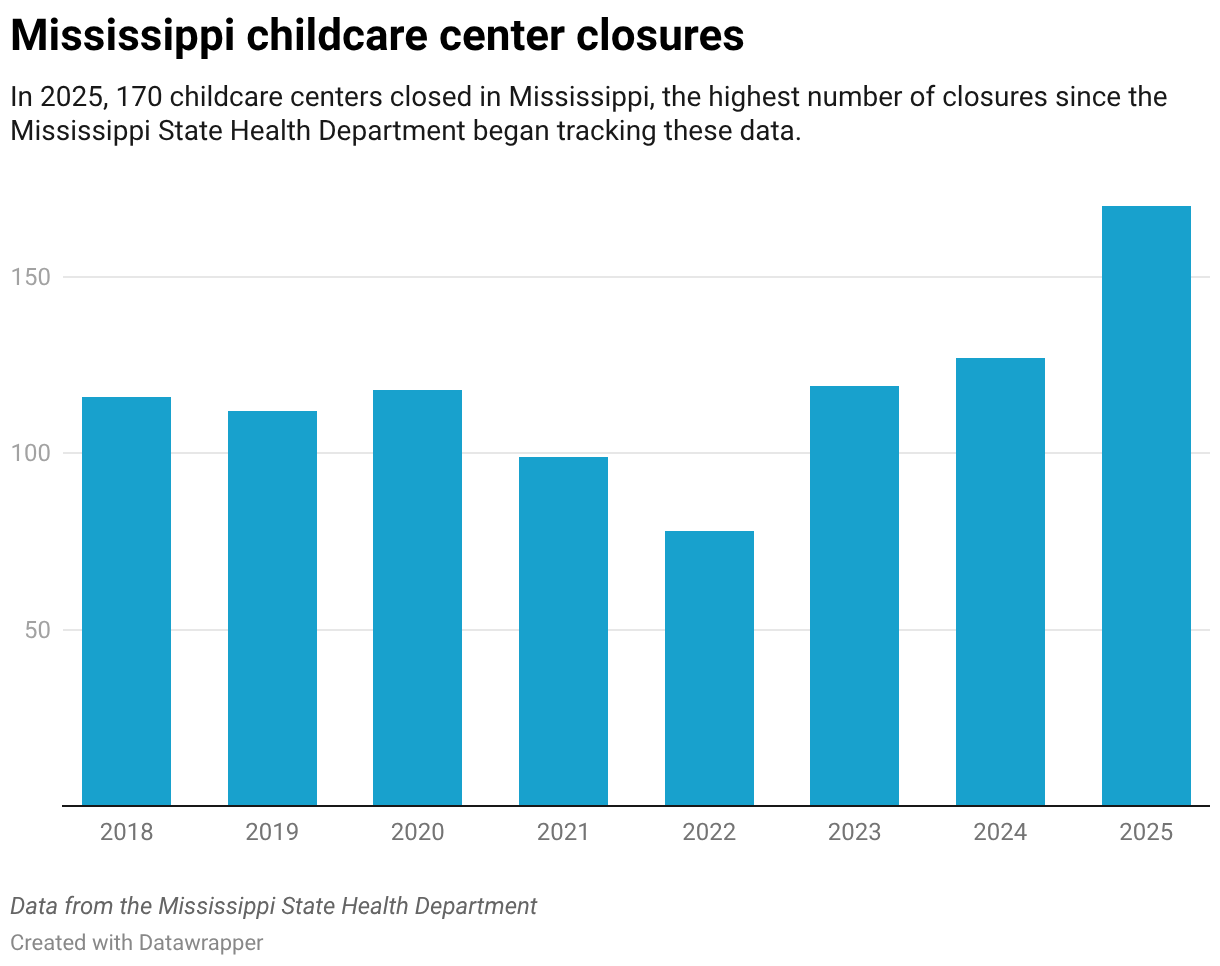
A recent report from the Mississippi Low-Income Child Care Initiative paints a grim picture: 89% of surveyed centers are struggling financially. The crisis deepened significantly after pandemic-era funds, which had propped up the fragile system, dried up over a year ago. This has led to an alarming number of closures, with 170 centers shutting their doors last year – the highest figure in nearly a decade.
The Ripple Effect: Families and Educators Bear the Brunt
The impact of these closures extends far beyond the providers themselves. Thousands of parents are now on waiting lists for vouchers, creating a domino effect that hinders their ability to work and contribute to the economy. For educators, the situation is equally dire, with many centers forced to terminate staff to stay afloat.
Out of 229 centers surveyed for the Mississippi Low-Income Child Care Initiative report, more than half had to lay off employees. Nearly half also reported caring for children whose parents were unable to pay, further straining already tight budgets. This often means providers are essentially operating at a loss, driven by a commitment to the children they serve.
Burnside candidly admits, "When you walk through, everybody says, ‘Your building is full.’ I know it’s full – that’s because I’m not charging." This dedication, while admirable, is not a sustainable business strategy.
A System Under Strain: The Voucher Program's Plight
The core of the issue lies in the underfunding of the state's childcare voucher program. Despite urgent pleas from educators and advocates, the Mississippi Legislature failed to allocate any new funds to support it. This inaction has left a critical gap in the system, impacting both providers and the families who rely on them.
The misconception that early childhood education is merely "babysitting" persists, despite evidence highlighting its crucial role in a child's development. Centers like Burnside's are not just places for supervision; they are foundational learning environments where children develop essential life skills, social competencies, and a love for learning.
"This is where they start... I don’t know anything else more important."
Darren Brewer, a single father in Kosciusko, understands this importance firsthand. He pays out-of-pocket for his 2-year-old daughter's care at 3 Steps Daycare, though he hopes to qualify for vouchers as his family navigates a single income. He credits the center's staff with early identification of developmental needs in his older son, which led to crucial interventions.
Brewer's experience underscores the profound impact of quality childcare, not just for child development but for the well-being and stability of families. He notes, "Ms. Nancy helps more people out than anybody in this town."
Searching for Solutions: A Glimmer of Hope on the Horizon?
Amidst the widespread challenges, a potential solution has emerged, championed by advocates and now being explored by the Mississippi Department of Human Services (MDHS). This proposed funding model involves redirecting unused funds from the federal Temporary Assistance for Needy Families (TANF) program to bolster the childcare voucher program.
Previously, MDHS officials stated it was not possible to allocate more TANF funds beyond the existing 30% maximum transfer to childcare. However, advocates pointed to other states that have successfully created separate revenue streams utilizing TANF funds to exceed this limit.
In a significant shift, MDHS officials announced in January that they are "exploring" this funding model. Mark Jones, chief communications officer at MDHS, has indicated the agency is finalizing a plan to implement the advocates' proposed approach. While an official announcement is pending, this represents a potential breakthrough.
The exact amount of funding to be allocated and the number of families it will serve remain undisclosed. However, advocates estimate that approximately $60 million is needed to clear the current waiting list for vouchers. Prior legislative considerations had included a $15 million allocation, which, while helpful, is seen as insufficient to fully address the crisis.
Matt Williams, director of research at the Mississippi Low-Income Child Care Initiative, emphasizes that any allocation through this new TANF model would be a "huge, positive development" and could establish a framework for accessing further funds in the future. The persistence of the waiting list, however, means that children, working parents, and providers will continue to face significant struggles.
Navigating the Waiting List: A Persistent Challenge
At the peak of the crisis, MDHS reported a waiting list of 20,000 families. This number has since been revised to 9,400 families, accounting for duplicates. Even in non-crisis times, the voucher program falls short of serving all eligible individuals, with many families unaware of their eligibility or deterred by bureaucratic hurdles.
Nationally, the voucher program serves only about one in seven eligible families, leaving a vast number without the necessary financial assistance for childcare. This systemic under-serving exacerbates the challenges faced by both parents trying to maintain employment and providers struggling to cover operational costs.
For providers like Nancy Burnside, the situation is becoming untenable. She fears she may not be able to keep 3 Steps Daycare open past January if the families she supports do not regain their lost vouchers. The potential closure represents a profound loss for the Kosciusko community, where her center has served as a vital resource for generations.
Beyond Basic Care: The Educational Imperative
Burnside's dedication highlights a fundamental truth often overlooked in discussions about childcare: it is an essential component of early education. The skills children learn in these environments – from self-care to social interaction – are critical building blocks for future academic success and lifelong well-being.
The work of early childhood educators is complex and demanding, requiring specialized knowledge and a deep commitment to child development. Tools and resources that support educators in their daily tasks, from curriculum development to student engagement, can make a significant difference. For instance, exploring Mentofy AI teaching tools for crafting engaging lesson plans or utilizing MentofyCove classroom games for interactive learning can help educators maximize their impact.
The ongoing crisis in Mississippi underscores the need for a broader societal recognition of early childhood education's value. Investing in childcare is not just an expenditure; it's an investment in the future workforce, the economic stability of families, and the overall health of the community.
Looking Ahead: Sustaining Support for Mississippi's Children
The proposed TANF funding model offers a promising path forward, but it is crucial that the state commits to allocating sufficient resources to fully address the waiting list and support the long-term sustainability of childcare providers. Any allocation, while helpful, will only provide temporary relief if the underlying funding structure remains fragile.
Educators and advocates continue to push for a comprehensive approach that prioritizes early childhood education as a critical infrastructure for the state. This includes not only adequate funding for voucher programs but also support for provider training, professional development, and initiatives that elevate the status of the early childhood workforce.
The resilience of providers like Nancy Burnside, who continue to serve children despite immense financial pressure, is a testament to their dedication. However, their efforts alone cannot solve a systemic crisis. The state of Mississippi must step up with sustained, substantial investment to ensure that all its children have access to the quality early care and education they deserve, and that the dedicated professionals who provide it can continue their vital work.






 Explore AI Teaching Tools
Comments (0)
Please login to comment
No comments yet
Be the first to comment on this article