
A seismic shift is underway in Connecticut’s high schools, with a new state mandate requiring personal finance courses for graduation. This isn't just about balancing a checkbook; it's about equipping a generation with the tools for economic independence. For educators, this presents a critical opportunity to rethink how financial literacy is delivered, moving beyond dry lectures to engaging, real-world applications.
Stamford High School Leads the Charge with a Cutting-Edge Financial Literacy Lab
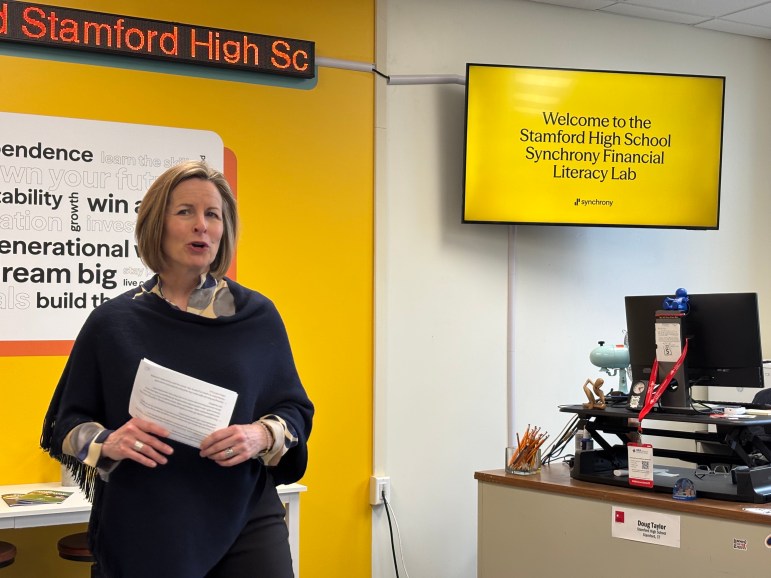
At Stamford High School, the journey to financial freedom is literally on the walls. A vibrant financial literacy lab, recently renovated, greets students with a dynamic stock ticker and a constant stream of business news. Words like “independence,” “generational wealth,” and “dream big” are emblazoned to inspire a proactive approach to personal finance.
This innovative space is more than just a classroom; it's a testament to how dedicated institutions, like Stamford’s public schools, are embracing the new statewide requirement. The district, already offering personal finance as an elective, has significantly enhanced its program, partly due to a substantial $150,000 grant from Synchrony, a prominent financial services company based in Stamford, Connecticut.
This funding is part of Synchrony's broader "Empowering Financial Futures" initiative, which has distributed $3 million nationwide over the past two years. It underscores a growing national interest in K-12 financial literacy, recognizing its crucial role in shaping young adults.
“Kids need to start to get focused on this, and they need to understand what true financial literacy is,” stated Sue Bishop, Synchrony’s Chief Corporate Affairs Officer, at the lab’s grand opening.
The grant has facilitated the acquisition of essential resources, including a live stock ticker, two large TV monitors, and a wealth of finance-related games, books, and activities. These materials are designed to support the now-mandatory personal finance class, which covers a comprehensive range of topics from household budgeting to investment and loan planning.
Connecticut's Bold Move Towards Economic Mobility
The push for financial literacy in Connecticut gained significant momentum in 2023 with overwhelming legislative support for a new graduation requirement. This mandate, championed by Governor Ned Lamont and State Treasurer Erick Russell, aims to provide young people with essential skills for economic independence and stability.
“Personal financial management is one of the most important instructional tools that we can give young people to achieve economic independence and stability throughout their lives,” Governor Lamont remarked when the bill was signed into law. He emphasized that requiring this course for high school graduation is a matter of common sense.
Starting with the graduating class of 2027, all public high school students in Connecticut must complete a half-credit personal finance course. The state has adopted a curriculum developed by Next Gen Personal Finance, a national organization recognized for its widely used personal finance educational materials.
State Treasurer Erick Russell views this requirement as a critical component of broader state efforts to foster wealth-building and financial security. He highlighted existing programs like baby bonds and the Connecticut Higher Education Trust (CHET), the state’s 529 college savings plan, as complementary initiatives.
“Having that strong educational foundation and understanding of finances is also key, so that people can take advantage of some of those opportunities,” Russell explained. “We want to make sure, as we look at this investment from Synchrony and others like it, as we look at the financial education course requirement, that we’re setting people up for long term success in our state.”
A Growing National Trend in Financial Education
Connecticut's decision to mandate personal finance coursework aligns with a significant national trend. According to a 2026 report from the Council for Economic Education, 39 states now require students to complete a personal finance course before graduating high school.
“As more states adopt these requirements, ensuring educators have the training, tools, and ongoing support to teach personal finance effectively is becoming increasingly important,” commented Steve Bumbaugh, CEO of the Council for Economic Education, in a statement released by Synchrony. This sentiment is echoed by organizations like Connecticut Financial Scholars.
Connecticut Financial Scholars has been actively promoting financial literacy education across the state, with a particular focus on urban centers and underserved school districts. Their objective is to ensure equitable access to financial knowledge, as stated by Executive Director Betsy McNeil.
“Without adequate financial education, students are more likely to struggle with debt or financial stress that really can impact them on a daily basis and can limit their economic mobility,” McNeil explained. “We’re looking to equip the students with the really essential financial skills, knowledge, awareness and confidence.”
Sue Bishop from Synchrony also pointed out the growing need for financial education, especially as young people, including college students, become increasingly involved in areas like sports gambling and prediction markets. She suggests that investing in the stock market or saving in mutual funds can provide a similar sense of excitement in a safer and more beneficial manner.
Connecticut Financial Scholars employs a multi-faceted approach to financial literacy education, encompassing curriculum development, teacher support, parent engagement, and community involvement. Following the establishment of the state’s personal finance requirement, the organization has been instrumental in training teachers on how to effectively implement these new curricula.
McNeil believes that initiatives like the Stamford High School lab are vital for fostering student learning by creating avenues for community and institutional support. She expressed hope that more communities will benefit from similar investments, noting that Stamford is an “alliance district,” designated as one of Connecticut’s under-resourced school districts.
“This is needed in Stamford, and we recognize and understand it is needed in other communities across the state as well,” McNeil added, emphasizing the widespread demand for robust financial education.
Stamford: A Pioneer in Practical Financial Learning
Synchrony's Sue Bishop highlighted the importance of covering fundamental topics like building a good credit score within personal finance courses. She emphasized that credit is an indispensable aspect of navigating life in the United States.
Bishop reflected on her own high school experience, where her financial knowledge was limited to balancing a checkbook. Her understanding of investing and broader financial concepts developed later in her career, initially at a mutual fund company, which she considers a pivotal learning experience.
Courses like the one at Stamford High aim to democratize this essential knowledge, ensuring that all students have exposure to it. This also benefits financial institutions, as Bishop noted, “We never want to loan money to someone who can’t pay us back. We have a vested interest in developing young people to be responsible adults.”
Doug Taylor, a personal finance teacher at Stamford High School, described the course’s capstone assessment: a “life scenario” where students must manage a household budget and navigate unexpected financial challenges, such as a car breakdown, while ensuring their budget remains balanced.
Stamford senior Nick Sutin shared how his finance classes have provided him with a competitive edge in securing a job with a local finance company. He credits his foundational knowledge from these courses for making a strong impression during the application process.
For students at Stamford High School interested in delving deeper into finance, a wealth of opportunities exists. The school boasts 12 business teachers, many with extensive experience in the financial sector, offering courses in entrepreneurship, business communications, and investing. Students can even develop stock portfolios and participate in inter-high school competitions.
Dorothea Mackey, head of Stamford High School's Career and Technical Education department, stressed that these courses are not merely vocational but are focused on core finance and investment principles. Mackey, who previously worked as an analyst at Chrysler Capital, played a key role in securing Synchrony's support for the new financial literacy lab.
“This is just pushing this envelope a little bit forward to make sure that the business education is solidified,” Mackey stated, underscoring the commitment to enhancing business education through practical financial learning.
The expansion of financial literacy courses in Connecticut, exemplified by Stamford High School's forward-thinking approach, signals a crucial step towards empowering students with the knowledge and confidence needed to navigate their financial futures. By integrating engaging activities and real-world scenarios, educators can effectively prepare students for economic independence, making Mentofy is free for teachers a valuable resource for developing dynamic lesson plans and interactive assessments to complement these vital courses.





 Explore AI Teaching Tools
Comments (0)
Please login to comment
No comments yet
Be the first to comment on this article