
Lead in School Water: A Silent Threat Lingers as California Schools Remain in the Dark
Imagine a student, just 13 years old, discovering through a teacher that the water they've been drinking at school might be contaminated with lead. This was the reality for Hannah Lau in Oakland, a situation that highlights a pervasive, often invisible, problem in educational institutions across California. Her shock and fear – "How long have we been drinking this water? Is it really bad?" – echo the anxieties of countless parents and students grappling with the potential health impacts of lead exposure.
The Lingering Shadow of Lead: A Tale of Two Cities
While many California school districts have moved on from mandated lead testing, the Oakland Unified School District (OUSD) stands out as one of the few that continues to monitor lead levels in its drinking water, years after state requirements expired. This commitment, however, reveals a disturbing truth: the problem isn't disappearing, and the science of lead contamination is far more complex than a single test can capture.
A Mandate's End, A Problem's Persistence
In 2017, a crucial extension to the California Safe Drinking Water Act mandated that school districts test at least five faucets in every school for lead and report their findings by July 2019. This directive provided a snapshot, but with state funding for such testing concluding after the deadline, many districts ceased their efforts. The exemptions for charter and private schools, coupled with the limited scope of the initial testing, mean that comprehensive, up-to-date statewide data on lead in school drinking water is virtually non-existent.
Seven years later, the challenge of ensuring safe drinking water in schools remains a significant concern for communities like Oakland. "We know there’s lead in the plumbing, and even if it is a low value, we know it's persistent," explains Elin Betanzo, a national drinking water expert. "If a kid is drinking water every day at school, that lead is always there. That lead can get into any glass. The studies show that the low-level exposures have a disproportionately high impact on the brain."
Inconsistent Readings, Unsettling Trends
An analysis of OUSD's water testing data from 2019 and 2024 reveals a disquieting pattern of inconsistency. The same water fixtures that registered below the state's action level of 15 parts per billion (ppb) in 2019 sometimes showed dramatically higher levels in 2024, with some reaching triple digits. "We know that this happens," Betanzo confirms. "If you sample the same tap at a school, you can get a low value that would appear safe one day and could get an extremely high, concerning level the next day."
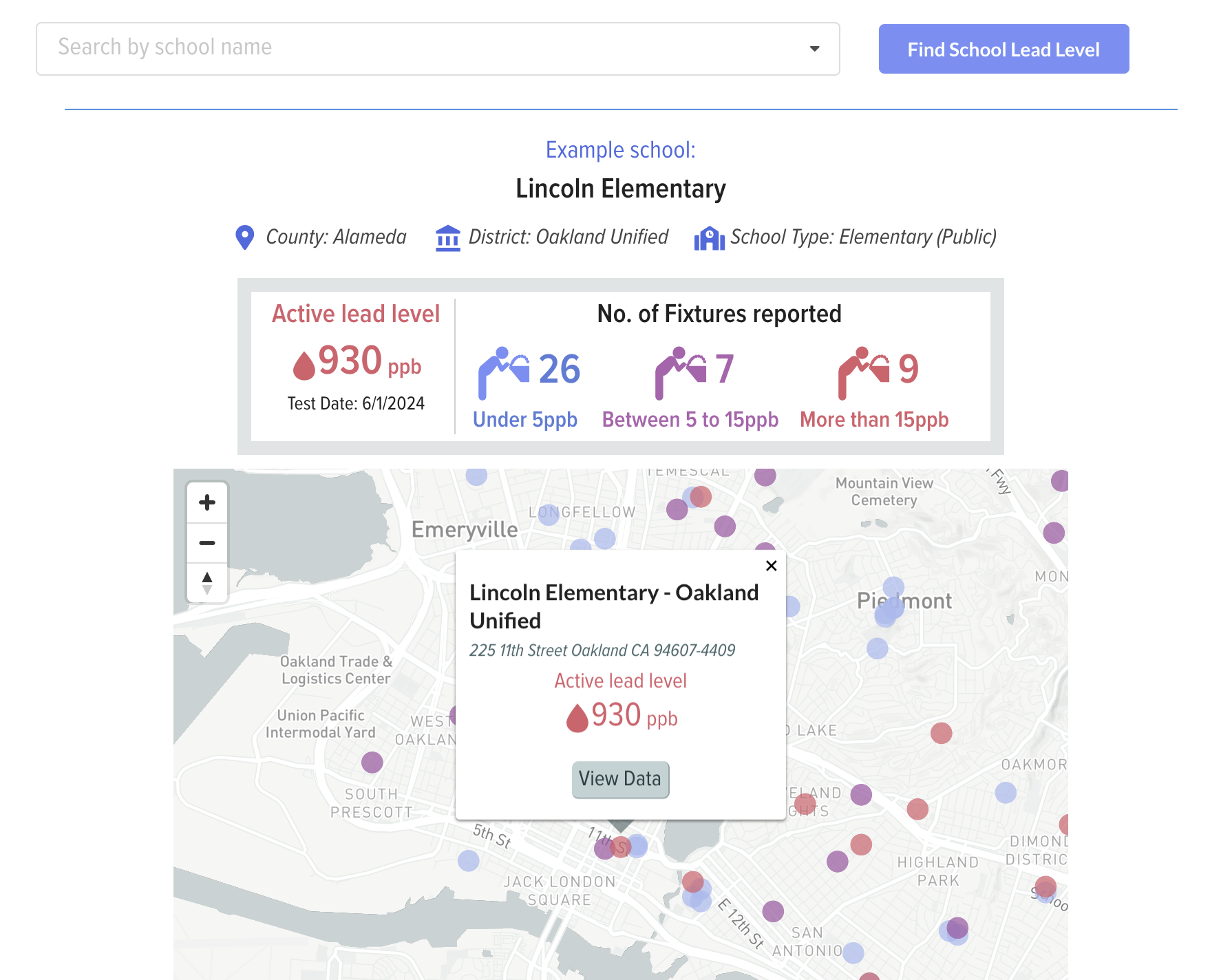
Lincoln Elementary School, for instance, saw a drinking fountain test at a staggering 930 ppb in June 2024, a stark contrast to its 2.1 ppb reading in 2019. While the 2017 law only required fixes for fixtures exceeding 15 ppb, OUSD adopted a more stringent policy in 2018, requiring remediation for levels above 5 ppb. This proactive approach, however, only highlights the volatility of lead contamination.
Another drinking fountain at Lincoln, initially testing at 3.3 ppb in 2019, registered 410 ppb just five years later. "This happened in my children's elementary school," Betanzo shares. "It is normal. We know all about it. And yet the requirements that states have put together for school drinking water don't acknowledge the science of this." The sporadic nature of lead release, particularly in older plumbing systems where water may sit stagnant during weekends and breaks, means that a single "safe" test result offers little long-term assurance.
The Plumbing Predicament
Oakland Unified spokesperson John Sasaki attributes these inconsistencies to the age of the school infrastructure. "Because most of our schools are relatively old, and the features including the plumbing are old, there has been degradation of some aspects of the systems since 2018, which has led to the elevated levels we have recently found," he stated. This degradation can lead to lead leaching from pipes and fixtures into the water supply.
Similar patterns of fluctuating lead levels have been observed at other Oakland schools, including Edna Brewer Middle School, Cleveland Elementary, Crocker Highlands Elementary, Horace Mann Elementary, Bella Vista Elementary, and Fruitvale Elementary. For parents like Nate Landry, the implications are deeply concerning. "It's terrifying at a personal level. It's terrifying at a collective level," he says.
A Systemic Blind Spot: California's Testing Gaps
The very structure of California's Safe Drinking Water Act has left many schools vulnerable. The lack of a mandate for follow-up testing means that districts that haven't re-tested since 2019 are essentially operating in the dark regarding current lead levels in their drinking water.
Exemptions and Omissions
Thousands of private and charter schools on private property were exempt from the initial testing requirements. Furthermore, the law did not require every faucet or drinking fountain to be tested, and schools built after 2010 were also excluded. With over 10,000 public schools in California, including approximately 1,300 charters, it's estimated that potentially thousands of water fixtures have never been tested for lead.
Kurt Souza, an enforcement coordinator for the State Water Resources Control Board, pointed out a potential reason for inconsistent results: the law mandated changing faucets, not valves, in fountains with lead levels exceeding 15 ppb. Valves, often located under sinks, can also be a source of lead contamination. "Never change out an old faucet without changing the valves," Souza advises, underscoring a crucial detail that may have been overlooked.
The Flawed Threshold
Critics argue that the 15 ppb action level for lead in drinking water, based on the U.S. Environmental Protection Agency's (EPA) recommendation, is too lenient. As the EPA itself states, "There is no safe level of lead exposure." Betanzo, a former EPA employee, clarifies that the 15 ppb figure was an "engineering metric" to indicate corrosion control effectiveness, not a public health benchmark. "If a water system looks at the 90th percentile of its sampling results, and it's greater than 15 parts per billion, it tells them they have an out-of-control corrosion situation that needs to be addressed."
While some districts, like Oakland, have adopted lower internal thresholds, the state's reliance on a higher benchmark leaves room for concern. The Biden administration's recent lowering of the federal lead action level to 10 ppb in October 2024 is a step forward, but California has yet to fully align with this updated standard.
A Call for Continuous Vigilance
The absence of a current state or federal directive for lead testing in school drinking water leaves a significant gap in public health protection. Despite efforts to introduce legislation requiring follow-up testing, such as AB-249 and AB-1851, these initiatives have faced setbacks, including gubernatorial vetoes and legislative holds. "It was another blow," says Colleen Corrigan of Children Now, a statewide advocacy organization. "We hope that Proposition 2 will pass, and we really want to make sure that that distribution of money is equitable and accessible." The passage of Proposition 2 in November 2024 promises up to $115 million for lead remediation in schools, offering a glimmer of hope.
Oakland's Proactive, Yet Imperfect, Approach
Despite the broader state challenges, Oakland Unified has been actively addressing lead in its water. However, recent revelations about the district's communication practices have eroded some community trust.
Transparency Troubles
At the start of the school year, the discovery that OUSD had withheld testing results showing elevated lead levels in dozens of schools sent shockwaves through the community. Notices to families were not sent until August, despite some test results being available in April. "The scope of their failure to communicate pretty crucial public health information was shocking," parent Nate Landry stated.
District officials have since acknowledged their communication shortcomings and pledged improved transparency. "We have instituted improved protocols to ensure we are more transparent and more consistent in our communication with our families and staff," a statement read. "We will inform you before any testing begins at your school."
Mitigation Efforts and Future Plans
A key priority for OUSD has been the installation of FloWater machines, filtered refillable water stations. Most schools now have at least two, with an additional 60 installed this school year and plans for 88 more. Students like Hannah Lau have been provided with reusable water bottles and encouraged to use these stations or drink bottled water.
The "Get the Lead Out of OUSD" coalition, comprising the Oakland teachers union and community partners, is advocating for even more stringent measures, including a zero parts per billion lead threshold, immediate and annual testing of all water sources, and free blood testing for students and staff. The coalition's demands reflect a growing understanding that ensuring safe drinking water is a continuous, multifaceted effort.
As Oakland continues its efforts, the experiences of its students and the ongoing challenges with lead contamination serve as a critical reminder for the entire state. The path forward requires not only robust testing protocols but also unwavering transparency and a commitment to the fundamental principle that every student deserves access to safe, clean drinking water at school.







 Explore AI Teaching Tools
Comments (0)
Please login to comment
No comments yet
Be the first to comment on this article