
Beyond the Diploma: How Real-World Training is Redefining College Readiness for High School Students
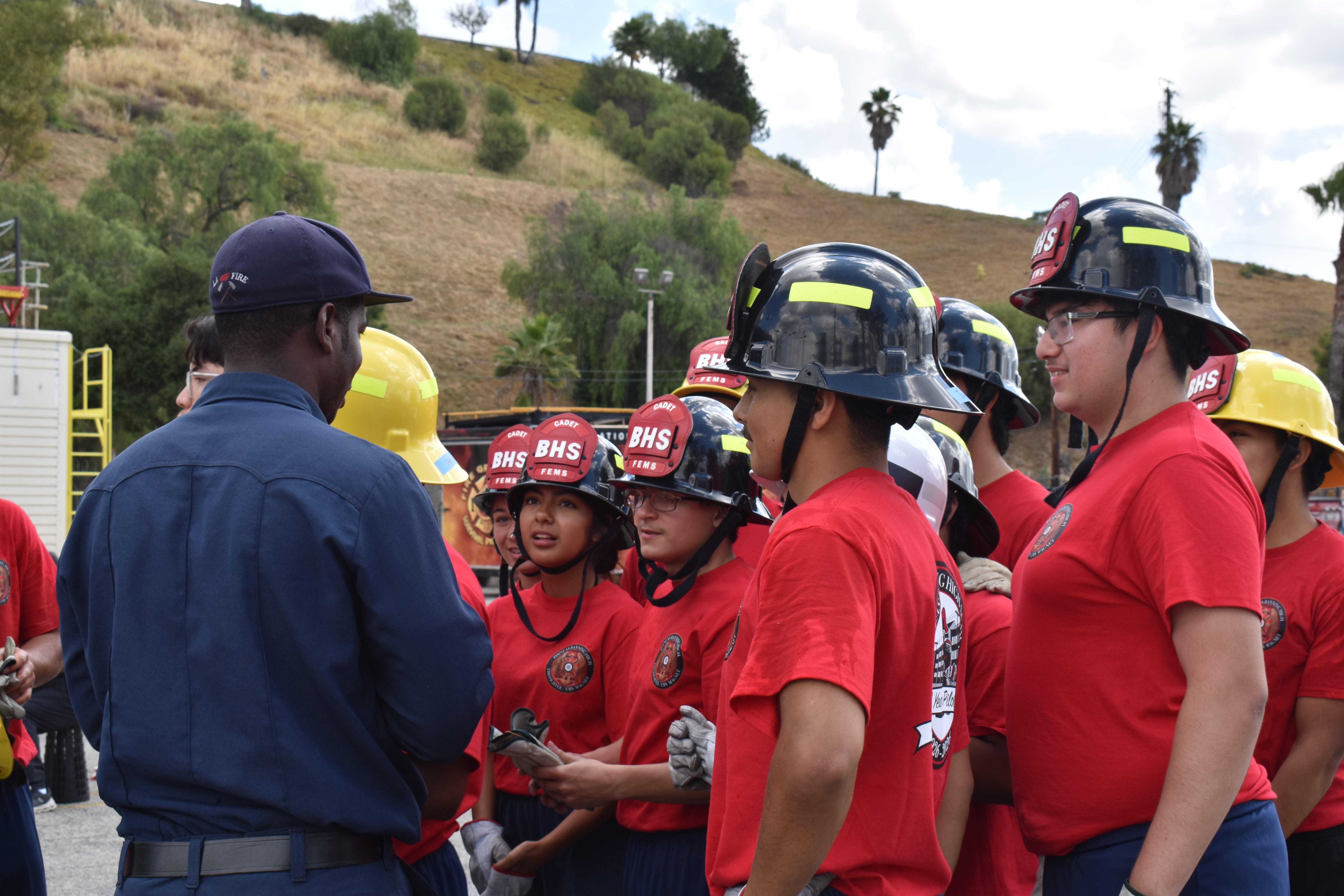
Imagine a high school senior, not just memorizing textbooks, but confidently directing emergency medical teams in a hospital setting. This isn't a scene from a medical drama; it's a reality for students in Los Angeles Unified's innovative career education programs. A groundbreaking new study reveals that these hands-on experiences are not only preparing students for immediate careers but are also significantly boosting their readiness for college.
Bridging the Gap: From Classroom to Career
The traditional image of career and technical education (CTE) as a fallback for students not headed to college is rapidly fading. A comprehensive report from SRI International highlights a powerful shift: students who engage deeply in CTE pathways, particularly those that seamlessly blend academic rigor with practical workplace learning, are demonstrating superior outcomes in both high school graduation rates and post-secondary enrollment.
This research comes at a pivotal moment for career education in California. The state has made substantial investments, allocating hundreds of millions of dollars annually to expand CTE initiatives and an additional significant sum for new facilities. These investments are clearly yielding tangible results, challenging long-held perceptions and opening new horizons for countless students.
The Power of Pathways
In the sprawling landscape of Los Angeles Unified, one of the nation's largest school districts, over 165,000 high school students, approximately a quarter of the student body, were immersed in CTE programs during the 2021-22 school year. These programs span 15 diverse industry sectors, encompassing 265 traditional CTE pathways and 72 "Linked Learning" pathways. The latter are specifically designed to integrate rigorous college preparatory coursework with in-depth technical training and real-world experience.
While nearly two-thirds of all students sampled took at least one CTE course, the study found the most profound positive impacts among a dedicated group: roughly one-fifth of students who successfully completed an entire CTE or Linked Learning pathway. This distinction between a single course and a full pathway is crucial, underscoring the depth of learning and skill development achieved through sustained engagement.
"The more the word can get out about the value of completion versus just a one-off course, the more that all the staff at the school can support students in meeting that goal," noted Miya Warner, the lead author of the report. She observed instances where students were enrolled in the initial stages of a CTE sequence but lacked the structured support to see it through to completion, highlighting the need for comprehensive guidance and institutional commitment.
A Real-World Emergency, A Real-World Skill
Consider the experience of Brandon Maldonado, a senior at Bravo Medical Magnet High School. During a simulated medical emergency at Los Angeles General Medical Center, where he was gaining hands-on experience through the school's patient care pathway, Brandon instinctively grabbed an intercom to call a "code blue." His swift and calm response, honed through his training, brought immediate assistance from hospital staff.
"That experience stuck with me because it taught me how to stay calm under pressure, and I didn't panic," Brandon shared. "I knew what to do." This is precisely the kind of critical thinking and practical application that CTE programs aim to foster, demonstrating that learning extends far beyond theoretical knowledge.
Bravo Medical Magnet High exemplifies this integrated approach. Students begin with foundational medical prerequisite courses as sophomores, then specialize in areas like sports medicine or patient care. Brandon's immersion in departments like ophthalmology and the infusion clinic at the partner hospital provided him with invaluable insights into different facets of healthcare, helping him clarify his future career aspirations.
"I wanted to get real-world experience and get an overview of different departments; that way I can know which field I want to go into," Brandon explained. "The value of getting the early exposure stage is you're not just thrown out there. The (program) gives you the basic skill of how to respond."
Boosting Completion Rates
The district itself is actively working to enhance these programs. Ben Gertner, director of Linked Learning at LAUSD, reported a significant increase in CTE pathway completion rates, climbing from approximately 18% to nearly 25% between 2022 and 2025. Simultaneously, the number of Linked Learning pathways has more than doubled, expanding from 43 to 100.
"We want to ensure that we focus on developing school-site capacity," Gertner stated. "We also help schools to balance competing priorities, increase graduation rate and college and career readiness." This dual focus on capacity building and student success is key to the ongoing evolution of career education.
Navigating the Pathways: Access and Equity
Despite the growing success, access remains a critical challenge for many students aspiring to complete CTE pathways. The study revealed an interesting pattern: students with the highest and lowest academic performance tended to enroll in fewer CTE courses compared to their middle-performing peers. This suggests that the demanding schedules of advanced placement classes or credit recovery programs can sometimes create scheduling conflicts, limiting participation in CTE.
Furthermore, many incoming freshmen, despite having access to an average of nine different pathways, often miss the crucial window of opportunity to learn about and enroll in them. Warner emphasized the importance of early engagement, noting that starting a CTE program sooner allows students to build transferable skills, cultivate professional networks, and gain essential hands-on experience.
She shared an anecdote about a theater pathway student who, while aspiring to become a lawyer, developed crucial communication and collaboration skills through her coursework. Another student in a patient care pathway discovered that a career in healthcare wasn't the right fit for him. "How much better to figure that out in high school than wait, going into debt in a program that turns out is not actually a good fit for you," Warner reflected. "It’s better to have those experiences early."
Linked Learning: A Model for Integrated Success
The report shines a particular spotlight on "Linked Learning," a model that distinguishes itself by deeply integrating academic instruction, career-based learning, and authentic work-based experiences. This approach aims to prepare students holistically for both college and career demands.
In contrast, traditional CTE often focuses on imparting specific technical and occupational skills through standalone courses. The SRI International study found that students participating in Linked Learning pathways consistently demonstrated stronger outcomes compared to those in traditional CTE programs.
Tangible Benefits for College Enrollment
High school graduates who successfully completed a certified Linked Learning pathway were found to be approximately 16% more likely to finish college preparatory courses and a significant 24% more likely to enroll in college than their peers who had not taken any CTE courses. This suggests a powerful correlation between the integrated nature of Linked Learning and a student's trajectory toward higher education.
"In the Linked Learning pathways, we saw a little bit more integration of those work-based learning experiences into the curriculum," Warner observed. She added that students in these programs often exhibit higher levels of engagement, fueled by their direct involvement in real workplace environments.
Karen Benavides, another senior in the patient care pathway at Bravo Medical Magnet High, vividly recalled her experience assisting in the surgical intensive care unit during a period of staff shortage. "I got to help a patient, help the nurses. I took phone calls, and it was just a very immersive experience," she recounted. "I didn't stop for a second, and I really liked the rush."
Karen, who aspires to become a physician assistant, credits the program with enhancing her confidence in communicating with diverse individuals, including peers, teachers, and even uncooperative patients. "I also feel like it's helped improve my teamwork and being able to think critically, go through situations and see what the best course of action is," she added.
Collaboration Fuels Success
The report also noted that approximately half of the students enrolled in certified Linked Learning pathways successfully completed their programs, a completion rate significantly higher than the roughly quarter of students who completed traditional CTE pathways. Interestingly, students at schools designated as "higher-need" demonstrated greater access to Linked Learning pathways, while having fewer traditional CTE options compared to students at "lower-need" schools.
Suzanne Bogue, a teacher within Bravo Medical Magnet High's patient care pathway, highlighted the critical role of strong teacher collaboration in the success of Linked Learning. "The junior year teachers and the senior year teachers, we all work together and help each other target the students that might need a little more support," Bogue explained. This coordinated effort ensures that students receive consistent and tailored support throughout their academic and experiential journey.
At LAUSD, the adoption of Linked Learning pathways requires a 75% faculty vote, a measure that, according to Gertner, "has led to more of a sense of commitment to the Linked Learning approach." This broad buy-in from educators is fundamental to fostering a school-wide culture that champions this integrated model of learning.
Looking Ahead: A New Vision for Student Success
Brandon Maldonado is now setting his sights on UC Riverside to pursue a biology degree, with the ultimate goal of becoming an anesthesiologist, a path illuminated by his shadowing experience through the program. "One of the valuable skills I've learned is teamwork," Brandon reflected. "It just gives you that exposure to being able to talk to people you've never really talked to before."
These programs are not just about acquiring job skills; they are about cultivating adaptable, confident, and college-ready individuals. By providing authentic learning experiences and fostering essential soft skills, career education pathways are proving to be a powerful engine for student success, redefining what it means to be prepared for the future, both in college and beyond.


 Explore AI Teaching Tools
Comments (0)
Please login to comment
No comments yet
Be the first to comment on this article