
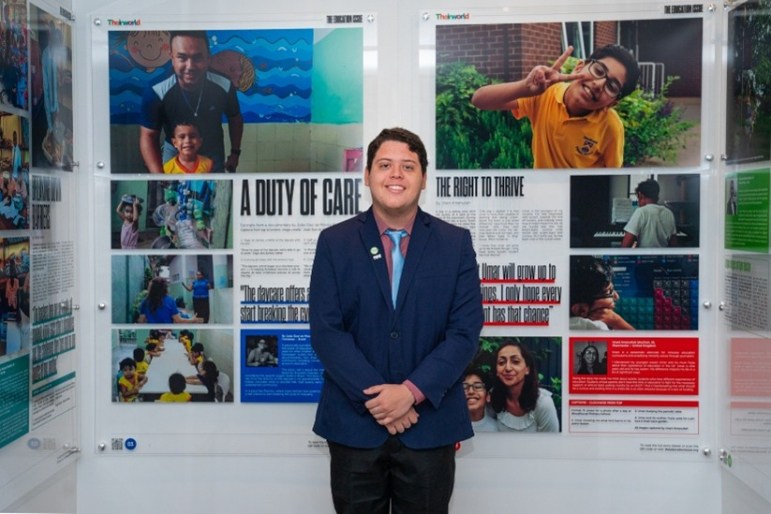
In a significant stride for early childhood education, Brazil's state of Ceará is set to construct 30 new daycare centers, a move directly influenced by the powerful advocacy of its youth. This initiative, which will benefit nearly 8,500 children aged 0 to 3, underscores a growing recognition among policymakers that listening to the voices of young activists can yield tangible improvements for the nation's youngest learners.
Youthful Voices Catalyze Policy Shifts for Ceará's Youngest
The recent announcement in Ceará to build 30 new daycare centers is more than just an infrastructure project; it's a testament to the impact of grassroots activism intersecting with political will. These new facilities, with 10 in the capital Fortaleza and one each in 20 rural towns, promise to provide essential nurturing care, quality learning, and safe play spaces for approximately 8,500 children from birth to three years old, all at no cost to their families.
This development is part of a broader national effort, the federal Growth Acceleration Program (PAC Seleções), which earmarks R$1.83 billion (US$340 million) for new daycare centers nationwide. While Fortaleza's new centers will significantly reduce its waiting list of 10,000 children, the challenge remains substantial across Ceará, where an estimated 23% of children aged 0 to 3 were unable to access daycare in 2024 due to shortages and accessibility issues, according to research by Todos Pela Educação.
The early years are universally acknowledged as the most critical period for brain development. Ensuring children receive adequate nurture, nourishment, and education during this phase is paramount to preventing long-term disadvantages. Brazil's progressive legal framework already mandates universal access to education for ages 4 to 6, and its leadership in 2024 as G20 president, highlighting early education within a Global Alliance Against Hunger and Poverty, signals a growing commitment at the highest levels.
"What is being done here is something that is happening nationwide: the recovery of education. It’s a step forward in the structuring of an early childhood education network and, within it, the advancement of the full-time early childhood education network in Brazil and Ceará."
Despite this national momentum, children aged 0 to 3 in Ceará, and indeed much of Brazil, have historically been underserved. While enrollment in pre-primary education for four- and five-year-olds approaches 95%, the rate for children under three hovers between 60% and 65%, as per the Maria Cecilia Souto Vidigal Foundation. The new initiatives aim to redress this significant imbalance.
From Favela to Global Stage: A Youth Ambassador's Journey
The driving force behind some of these crucial policy shifts in Ceará is the tireless advocacy of young individuals like João Davi de Morais Barbosa Saraiva, a Theirworld Global Youth Ambassador. Growing up in Grande Pirambu, one of Brazil's largest favelas, João witnessed firsthand the profound impact of quality early childhood education through his grandmother, Dioneia Barbosa. For over a decade, she has run the Arpoador community creche, a volunteer project originally founded in 1981, which provides essential skills for a healthy childhood, including play, hygiene, meals, and art.
The Arpoador Daycare Center has not only supported thousands of children but has also become a recognized model for early childhood care, earning a UNICEF seal of approval as an Early Childhood Friendly Unit. João, inspired by his grandmother's work, began sharing stories about Arpoador, channeling his passion into advocacy for the youngest children in his community and beyond. His journey led him to become a Global Youth Ambassador with Theirworld, a charity dedicated to advocating for early years care and education.
At just 19, João's voice resonated on the international stage when he attended the 80th United Nations General Assembly in September 2025. He presented his reflections on early childhood education in an article for "The Education Issue," a new annual publication. This platform allowed him to connect with Brazil’s Federal Minister of Education, Camilo Santana, leading to a widely viewed video and a subsequent announcement regarding the construction of new daycare centers in Ceará.
Bridging the Gap: Politicians Embrace Youth Insights
João’s return from New York opened further avenues for policy influence. He engaged with state politicians, including co-authors of this piece, who were impressed by his dedication to improving the welfare of young children. These discussions, coupled with his earlier outreach to Fortaleza's First Lady, Cristiane Leitão, and Early Childhood Protection Manager, Lara Picanço, directly informed the "Inclusive Fortaleza Plan" and its "Living Childhood Fortaleza" project.
This plan incorporates various Sustainable Development Goals (SDGs) into early childhood services. Notable outcomes include the "Sunflower Spaces," offering free services and safe environments for neurodivergent children and those with disabilities, and "Children’s City," a new park designed for educational, artistic, and recreational activities for young children and families. These initiatives demonstrate a tangible commitment to creating inclusive and enriching environments for all early learners.
Ceará actively seeks to engage its youth, exemplified by programs like the Young Environmental Agent Program, which trains and supports young people in environmental preservation and sustainability. However, the level of involvement from someone with João's background—growing up in a favela and actively shaping policy—is particularly noteworthy. His insights provide policymakers with invaluable, on-the-ground perspectives that are often difficult to access through traditional channels.
The contribution of someone from João’s background is invaluable, as it gives the sort of insight that policy makers often find hard to access.
João's journey, from his local community to pursuing higher education on scholarship at the University of Hong Kong, highlights how activism can pave unexpected paths. He has become a de facto representative for Ceará in Hong Kong, fostering educational and programmatic collaborations between Chinese institutions and the Federal Institute of Education, Science and Technology of Ceará. This trajectory serves as a powerful reminder to politicians of why they entered public service: to listen to and learn from the communities they represent.
Actionable Strategies for Educators and Policymakers
The success story in Ceará offers several key takeaways for educators and policymakers striving to improve early childhood education:
- Empower Youth Voices: Actively create platforms and opportunities for young people to share their experiences and perspectives on educational issues. Their lived realities offer crucial insights that can inform policy development.
- Foster Cross-Sector Collaboration: Partnerships between youth activists, politicians, educators, and community organizations are vital for driving meaningful change. Such collaborations ensure that policies are both informed and implementable.
- Prioritize the Early Years: Recognize the foundational importance of early childhood education (ages 0-3) for lifelong learning and development. Increased investment and focus on this age group are critical.
- Address Accessibility Barriers: Identify and dismantle barriers to daycare and early education access, including geographical limitations, cost, and availability of places. Innovative solutions are needed to reach underserved populations.
- Integrate Global Best Practices: Leverage international frameworks and initiatives, such as the SDGs, to guide and enhance national and local early childhood education strategies.
For educators, understanding the policy landscape and advocating for the needs of their students is crucial. Tools like Mentofy AI teaching tools can assist in developing comprehensive lesson plans and engaging materials, freeing up time for educators to participate in community dialogues and policy discussions. Similarly, utilizing MentofyCove classroom games can create more dynamic learning environments, demonstrating the potential of engaging pedagogy.
The commitment to expanding early childhood education in Brazil, particularly in states like Ceará, is a beacon of hope. By actively listening to and collaborating with young advocates, policymakers can craft more effective, equitable, and impactful education systems for all children. The journey of youth like João Davi de Morais Barbosa Saraiva demonstrates that the most powerful change often begins with a single, persistent voice amplified by collective action.




 Explore AI Teaching Tools
Comments (0)
Please login to comment
No comments yet
Be the first to comment on this article