
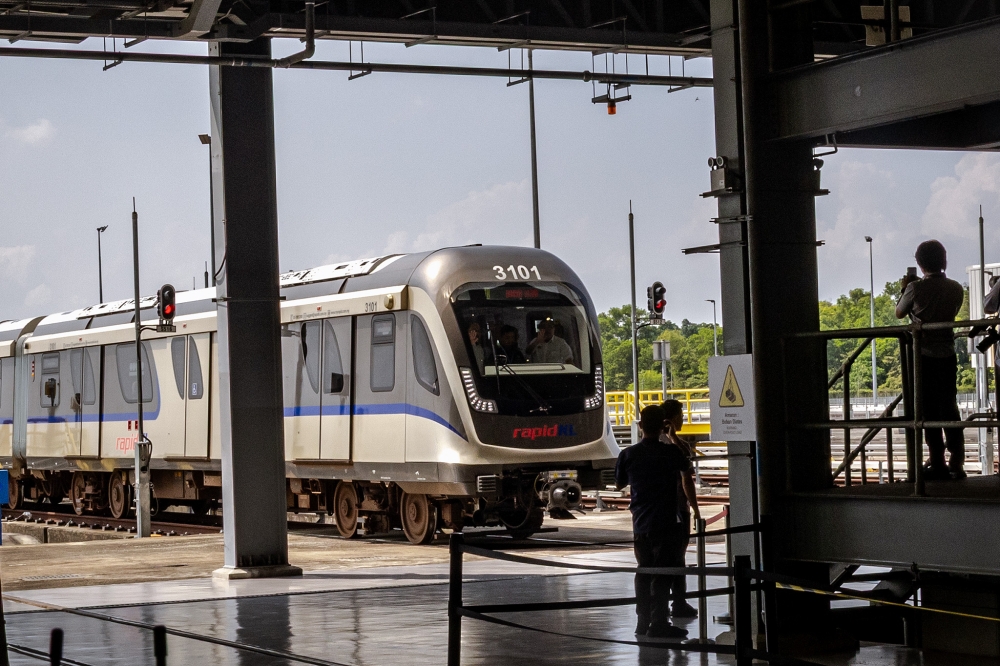
Transit Hubs Poised for Housing Revolution: Affordable Homes to Rise at LRT Stations
A bold new strategy is emerging to tackle two of the nation's most pressing challenges: the critical shortage of affordable housing and the need to boost public transportation ridership. The government is exploring a transformative plan to repurpose underutilized park-and-ride facilities at key public transport stations into vibrant residential and commercial developments.
This initiative aims to unlock the latent value of public land, transforming vast surface car parks into much-needed homes and commercial spaces. The vision is to create integrated communities where residents can seamlessly transition from their doorstep to public transit, making daily commutes more convenient and sustainable.
Repurposing Prime Public Land
The focus of this ambitious redevelopment will be on specific stations along the recently launched LRT3 Shah Alam Line, particularly those boasting significant parking infrastructure. This strategic approach ensures that the most impactful opportunities for land utilization are prioritized.
Officials have identified substantial parcels of land surrounding certain stations that are currently dedicated solely to vehicle parking. These areas represent a significant opportunity for development, moving beyond mere transit access to fostering community growth.
The Sri Andalas Example
The Sri Andalas station has been highlighted as a prime candidate for this innovative approach. Its expansive park-and-ride facility, capable of accommodating 500 vehicles, sits on a considerable tract of land.
Leaving such valuable land as a simple car park is seen as an inefficient use of resources. The potential for development is immense, promising not only financial returns but also a significant stimulus for the surrounding economic landscape.
A Mandate for Affordable Living
The Transport Minister has secured the Prime Minister's endorsement to accelerate these developments, with a particular emphasis on creating affordable housing options in close proximity to rail stations. This directive signals a strong commitment to addressing housing affordability.
The plan involves collaborations with private developers, leveraging government-owned land managed by the public transport operator. The core principle remains ensuring that the resulting homes are genuinely affordable for the public.
Living Steps from the Station
The overarching objective is to expand the availability of affordable housing in urban centers, directly adjacent to crucial public transport nodes. This proximity is key to encouraging a shift away from private vehicle dependency.
When residents can easily walk to a train station, public transport transforms from an alternative into a practical and preferred choice for their daily journeys. This integration is fundamental to building more sustainable urban mobility.
Integrated Developments for Modern Commuters
The proposed developments envision a multi-layered approach. Existing parking needs will be met through the incorporation of basement parking facilities. Above these, affordable residential units and modest commercial spaces will be integrated.
It is acknowledged that not all stations are suitable for such extensive redevelopment. Many existing stations are already situated within established urban environments with limited scope for large-scale new construction.
Prioritizing Public Needs
The Prime Minister has voiced strong support for the proposal, emphasizing that large landholdings around rail stations should not remain underutilized. Future developments must prioritize public housing over luxury residences.
Alongside affordable homes, the plans will include ample parking and accessible retail spaces designed to benefit small businesses and local communities. This ensures that the developments serve the broader public interest.
Expediting the Vision
A dedicated unit is being established to expedite the planning and execution of these integrated housing and transit projects. This streamlined approach will allow the public transport operator to maintain its focus on delivering an efficient and reliable service.
The integration of housing with transit stations is expected to significantly reduce commuting costs for residents. Furthermore, it promises to enhance accessibility and generate more substantial commercial returns from valuable government land.
There is a strong expectation of cooperation from the state government and local authorities in facilitating these proposed developments. This collaborative spirit is vital for realizing the full potential of this transformative urban planning initiative.






 Explore AI Teaching Tools
Comments (0)
Please login to comment
No comments yet
Be the first to comment on this article