
Farming's Digital Frontier: Universities Cultivate a New Breed of Agricultural Innovators Amidst Tech Revolution
Beneath the vast, fertile plains of Nebraska, a silent revolution is unfolding. While the iconic expanse of corn and soybeans ready for planting paints a picture of traditional agriculture, a deeper, more complex reality is being addressed by institutions of higher learning. The very systems that sustain these crops—the vital aquifers and groundwater—face mounting pressures from drought and contamination, demanding innovative solutions and a new generation of skilled professionals.
Bridging the Gap: Where Data Science Meets the Soil
At the forefront of this transformation is the University of Nebraska-Lincoln, where faculty and researchers are not only tackling pressing environmental challenges but also actively shaping the future of agricultural education. Their pioneering major, agricultural systems technology, represents a bold fusion of rigorous scientific principles, sophisticated data analytics, and essential engineering and management skills.
This forward-thinking curriculum is designed to equip students for the era of precision agriculture. This high-tech approach leverages cutting-edge tools to enhance both farming efficiency and environmental stewardship. Beyond foundational agricultural knowledge, students delve into the intricacies of data science, learning to interpret information gleaned from satellite imagery and a myriad of sensors that monitor soil health, crop development, and water consumption.
A 2024 Government Accountability Office report highlighted a significant hurdle: many seasoned farmers, particularly those from older generations, have found it challenging to adopt these new technologies due to a lack of specialized education. Experts suggest that widespread adoption could be a critical factor in enabling farms to maintain profitability and operational capacity, even amidst evolving labor dynamics.
The Data Deluge: From Collection to Insight
Professor Derek Heeren, a specialist in precision irrigation within the biological systems engineering department at Nebraska-Lincoln, emphasizes the sheer volume of available data. "There’s growing numbers of data available, but it's hard to make use of all that data," he states. "So a lot of what we do is that tech piece, collecting data, logging data, analyzing data."
Introducing these complex concepts to undergraduates is a relatively recent development in agricultural education. Among the many institutions offering agriculture-related degrees, only a select few, including Nebraska-Lincoln, Iowa State, Oklahoma State, the University of Missouri, South Dakota State, and Utah State, offer a dedicated major in agricultural systems technology.
The curriculum at Nebraska-Lincoln extends beyond data analytics, encompassing vital areas such as hydraulics, electrical systems, and entrepreneurship. Students gain hands-on experience with advanced tools like drones for targeted pesticide application and land surveying, as well as the operation of autonomous tractors through remote interfaces.
Beyond the Classroom: Cultivating Real-World Expertise
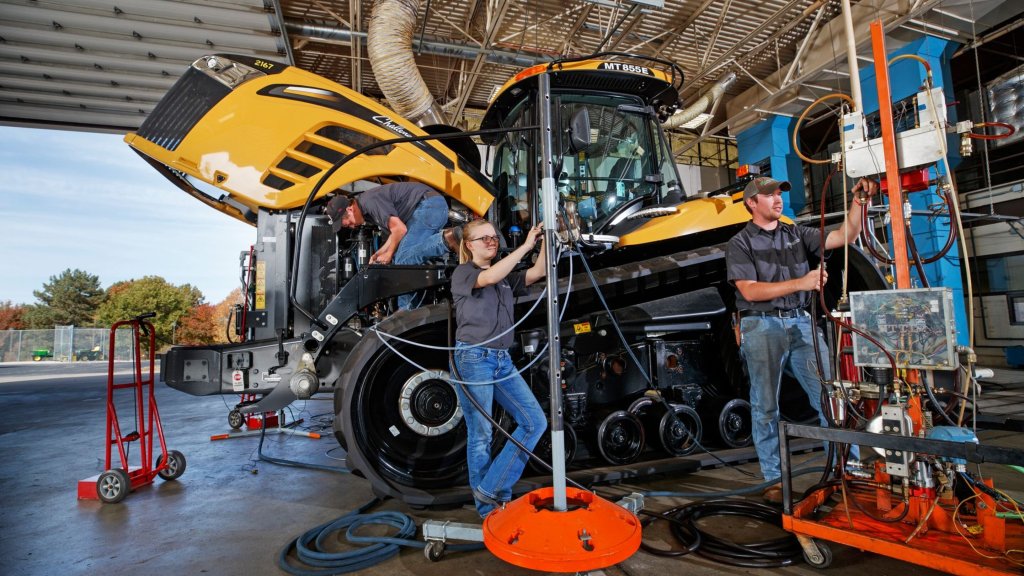
Practical experience is a cornerstone of the program. Students have opportunities to intern at specialized on-campus labs, including the Machine Automation & Agricultural Robotics Lab, the Agricultural Intelligence Lab, and the Nebraska Tractor Test Lab—a unique facility in the nation dedicated to independent tractor performance testing.
Participation in student organizations, such as the quarter-scale tractor team, provides a competitive platform where students design and build small tractors for national competitions, fostering teamwork and practical engineering skills.
Cody Nieratka, a sophomore in the agricultural systems technology program, expresses enthusiasm for the integration of autonomous equipment and artificial intelligence in agriculture, particularly drones and remote-sensing technologies. While he envisions a future working on a farm, he acknowledges the rapid evolution of the field. "I'm not sure where I'll end up career-wise, because it's changing so rapidly," Nieratka admits.
He believes these technological advancements hold the key to the survival of smaller farms. "If we can get some of these smaller farms to access this technology and they can do the job of 10 or however many people, that could save them," he explains.
Addressing the Agricultural Workforce Challenge
The agricultural sector has long grappled with labor shortages, exacerbated by an aging farmer population. National data reveals a steady increase in the average age of farmers, from 53 in 2002 to 58 in 2022, according to the U.S. Department of Agriculture’s Census of Agriculture. The hired farmworker demographic also shows a similar aging trend.
Despite the shift towards less labor-intensive and more technology-driven farming methods, the pipeline of students prepared to fill these emerging roles remains insufficient. A joint report from Purdue University and the USDA projects a significant demand for nearly 20,000 jobs in food production annually between 2025 and 2030. However, current agricultural programs are projected to graduate only a fraction of the necessary workforce.
Joe Luck, interim department chair of biological systems engineering at Nebraska-Lincoln, underscores the urgency. "We can't graduate enough students in any of these programs right now because there's just such a demand across the state," he states.
Luck also notes challenges in attracting undergraduate enrollment to the new major. While the precursor program, mechanized systems management, had approximately 100 students in 2019, the agricultural systems technology major currently has 37 students. Enrollment saw a dip during the COVID-19 pandemic and has yet to fully recover, prompting a call for universities to enhance their outreach regarding the career opportunities these agriculture degree programs offer.
Perceptions and Prospects in a Shifting Industry
Bruce Erickson, a professor of digital agriculture at Purdue University, suggests that the lower enrollment numbers might be linked to the current turbulence within the agriculture industry. "Agriculture has lots of problems right now," Erickson observes, citing high fertilizer prices, fluctuating crop markets, and environmental concerns, including water pollution and potential health impacts from pesticide use.
He adds that the public perception of farmers can sometimes be negative, influencing some students' decisions. "The typical farmer is viewed somewhat suspiciously," he notes, "out there with their humongous sprayer putting on pesticides." This perception, he believes, may deter students from pursuing agricultural studies.
Abbie Cox, a junior from Texas who was involved in the National FFA Organization in high school, voices concerns about the financial stability of a farming career. "With everything going up and down and with trade being so crazy, I do see it scaring some young people away from being farmers," Cox says. Her own career aspirations lie in the corporate sector, and she hopes an upcoming internship will lead to a job offer.
The Nebraska Advantage: Unique Resources for Future Farmers
The Nebraska Tractor Test Lab, according to Luck, is a significant draw for potential employers. This facility provides independent verification of tractor performance claims made by manufacturers nationwide. Student interns play a crucial role in assisting the lab team with tractor testing each spring and fall.
"There's not another tractor test lab in the country," Luck highlights. "That's a real competitive advantage for our students."
The development of a new National Center for Resilient and Regenerative Precision Agriculture in Lincoln by the USDA is anticipated to further boost student interest in agriculture. Professor Guillermo Balboa, an agronomy professor at Nebraska-Lincoln, believes the center will create valuable internship opportunities and potentially host classes, making the field more attractive.
Navigating the AI Frontier in Agriculture
As the agricultural landscape evolves, so do parental concerns about future job security. Luck recounts that parents touring the university with their children are increasingly asking if degrees from their programs are "AI-proof." "Who would’ve thought five years ago you'd be answering questions like that in a recruitment visit?" he muses.
However, many agriculture professors at Nebraska-Lincoln are optimistic about the role of artificial intelligence. Professor Rick Stowell of biological systems engineering notes a shift in pedagogical approach: "We've changed from how can we keep students from using AI to how can we encourage them to use AI appropriately and when is it appropriate and when is it not?"
Luck believes that students will indeed utilize AI in future agricultural roles but doesn't foresee it as a complete replacement for human expertise. "I'm not concerned about that threat to them yet because we still interface with the real world," he asserts. "Our programs are really geared towards, 'How do we interface with water, soil, plants, animals and humans.'"






 Explore AI Teaching Tools
Comments (0)
Please login to comment
No comments yet
Be the first to comment on this article