
Native American Students in California Face Persistent Attendance Gaps, Echoes of Historical Trauma
While chronic student absences have seen a statewide decline in California, a stark reality persists for Native American students, with nearly one-third experiencing this critical educational barrier last year. This ongoing disparity is forcing schools to re-examine their approaches, focusing on fundamental needs, mental well-being, and robust outreach to re-engage students in the wake of pandemic-induced disruptions.
Unpacking the Disparity: Beyond Pandemic Fallout
The challenges faced by Native American youth often mirror those of other marginalized communities, including poverty, systemic discrimination, and health disparities. However, for these students, an additional layer of historical mistrust in educational systems complicates their engagement.
This mistrust stems from the lingering impacts of past federal policies that forcibly removed Native American youth from their families and communities, confining them to boarding schools. This legacy continues to cast a long shadow, influencing current educational experiences.
"With quite a few of our Native American learners, we’ve recognized that there has been a lot of trauma in the family," shared Heather Golly, superintendent of Bonsall Unified in San Diego County. "It affects everyone in the family when there is trauma."
Chronic absence is defined as missing 10% or more of a student's scheduled school days, regardless of whether the absences are excused or unexcused. For students on a standard 180-day academic calendar, this equates to approximately one month of missed instruction per year.
A Troubling Trend: Data Reveals Persistent Gaps
Data from the California Department of Education paints a clear picture: during the 2023-24 school year, Native American students experienced chronic absenteeism at a rate of 33%. This significantly outpaces the statewide average of 20.4% for all students.
While the chronic absenteeism rate for Native American students has seen a decrease since its peak of 43.6% in the 2021-22 school year, the disparity remains substantial. This issue predates the COVID-19 pandemic; even before the widespread school closures, Native American students had a chronic absence rate of 21.8%, compared to 12.1% for all students.
It's important to note that the state's official School Dashboard may present lower chronic absenteeism rates by focusing solely on grades K-8. The data discussed here encompasses all grades, from transitional kindergarten through 12th grade.
Echoes of the Past: Boarding Schools and Contemporary Challenges
Ashley Rojas, policy director for Indigenous Justice, highlights the profound connection between current attendance issues and the historical trauma of federal boarding schools. Every Native American student is a descendant or relative of someone who endured these institutions, which operated from the mid-1800s to the mid-20th century.
These boarding schools systematically stripped Native American children of their language, culture, and family ties. Rojas observes that echoes of this cultural erasure persist in contemporary American public schools.
She frequently hears from students who feel their perspectives are omitted from historical narratives taught in schools, particularly concerning California statehood and mission history. Furthermore, many schools continue to utilize mascots that perpetuate harmful stereotypes of Native American people.
"Every year, we deal with districts trying to remove this right from our young people, trying to tell them, ‘You can't wear your feathers, you can't wear your beads. You must fit into our image of a graduate,’" Rojas stated, referencing instances where students are prohibited from expressing their heritage during graduation ceremonies, a practice that contravenes California law.
“Given the historical and ongoing traumatization of our students and communities by these systems, we just can't stand for that,” she added, emphasizing the deep-seated impact of these experiences.
Understanding the Numbers: Who Are We Talking About?
Approximately 26,000 students, or about 0.4% of California's nearly 6 million K-12 public school students, identify as Native American. This figure is likely an undercount, as Native Americans are more inclined than other groups to identify with multiple racial backgrounds, potentially leading to their inclusion in broader multiracial student categories.
While state education law outlines various reasons for excused absences, school officials commonly cite illness and mental health as primary drivers. However, Native American students in California missed an average of 18.5 days of school in 2023-24, more than any other racial or ethnic group.
Crucially, their absences were more likely to be unexcused than excused, a pattern that extends across the state. Unexcused absences often occur when students lack documentation, provide no reason for their absence, or offer a reason that doesn't meet the criteria for an excusable absence.
A student can be flagged as truant after accumulating more than three unexcused absences in a single school year. While all absences can impede academic progress, truancy carries the potential for punitive measures for parents, including fines and even jail time.
Cultural Disconnects and Unacknowledged Traditions
For many Native American students, colonization and historical repression have led to a disconnect from their heritage and communities. However, those who remain connected often participate in spiritual ceremonies involving communal dancing, prayer, and time spent with elders.
These significant cultural and spiritual observances are frequently not recognized on California school calendars. Consequently, students may accumulate unexcused absences while attending these vital community events, placing them at risk of being labeled as truant.
“When your school already makes you feel like you don't belong, and then they're going to punish you for going to the only places that you do belong, it's really going to be difficult to convince a young person that it's important to be there,” Rojas explained.
Systemic Hurdles and Community Impact
Chronic absences are often symptomatic of deeper systemic challenges. These can include inconsistent transportation, food insecurity, domestic violence, homelessness, and undiagnosed learning disabilities. Higher rates of school suspensions also play a role.
Out-of-school suspensions for Native American students accounted for 1.5% of absences, compared to the state average of 0.9%. This suggests a disproportionate disciplinary impact on this student population.
The issue is particularly acute in certain regions. Along California's Northern coast, where the Native American population is more concentrated, chronic absenteeism rates are alarmingly high. In Humboldt County, for instance, where Native American students represent 8.7% of the student body (compared to 0.4% statewide), 55.4% were chronically absent last year, a stark contrast to the countywide rate of 27.3%.
A report titled "Failing Grade: The Status of Native American Education in Humboldt County," published by the American Civil Liberties Union (ACLU) Northern California and the Northern California Indian Development Council, detailed these "egregious" disparities in chronic absenteeism, academic performance, and discipline. The report directly linked these issues to the enduring legacy of federal boarding schools in the region.
The historical context of these boarding schools, which operated for approximately 150 years nationwide, is critical. They were designed to sever Native American children from their families and cultures, employing methods such as solitary confinement, food deprivation, and the prohibition of Indigenous languages and practices.
A U.S. Department of the Interior report in July revealed that at least 973 Native American students died in these boarding schools, a number considered an undercount. Colby Smart, deputy superintendent of the Humboldt County Office of Education, stated, "Federal boarding schools were specifically designed to erase Native American people and Native American culture. That doesn’t go away in one year, and it doesn’t go away in one generation.”
Native American communities today continue to grapple with the profound consequences of colonization, which contribute to elevated chronic absentee rates. In Humboldt County, 75% of Native American students face socioeconomic disadvantages, according to the California Department of Education. Smart also pointed to high rates of suicide, substance abuse, and other health problems within these communities.
A Case Study in Extremes: Klamath-Trinity Joint Unified
Klamath-Trinity Joint Unified, located in Hoopa, a town situated on the Hoopa Valley Tribe's federal reservation and a former site of a federal boarding school, serves as a stark example. This district enrolls 774 Native American students, constituting the majority of its student population and representing the largest number of Native American students in any single district in the state.
During the 2023-24 school year, a staggering 70% of these students were chronically absent, with Native American students missing an average of 36 days. Alarmingly, the chronic absenteeism rate in this district actually increased by 7 percentage points between the 2023-24 school year and the year prior.
Forging Solutions: Partnerships with Tribal Nations
High rates of chronic absenteeism do not reflect a lack of value for education within Native American communities, according to Rojas. "Indigenous people are super pro-education, but they just want to be sure that what is being learned is not going to cause further harm," she explained.
A cornerstone of fostering a welcoming and engaging school environment for Native American students lies in collaborative partnerships with local Native American communities. While areas like the Central Valley and Del Norte have significant Native American populations, they may not have the same level of tribal engagement as found in Humboldt County, home to the politically active Yurok Tribe.
The Humboldt County Office of Education is actively working to support local districts in addressing chronic absenteeism by implementing "pull" factors that encourage parental and student engagement, making school a place where students feel welcomed and even excited to attend.
For instance, local high schools now offer the Indigenous Yurok language as a college-preparatory course, simultaneously connecting students with their cultural heritage. "If students feel like they belong, not only do kids go to school more, but their academic outcomes improve," Smart noted.
Culturally Relevant Curriculum: A Pathway to Engagement
Smart emphasized the critical role of culturally relevant curriculum in engaging Native American students. The Humboldt County Office of Education is collaborating with the San Diego County Office of Education, over 100 California tribes, Native American organizations, and scholars to develop a statewide curriculum model for Native American studies, slated for release next September.
This innovative curriculum will offer age-appropriate learning experiences. Kindergartners might learn the Yurok language while counting acorns, a staple food source. Middle school students could explore the traditional foods of Native Californians, and high school students may delve into the history of federal boarding schools.
Bonsall Unified and the Pala Band of Mission Indians: A Model Partnership
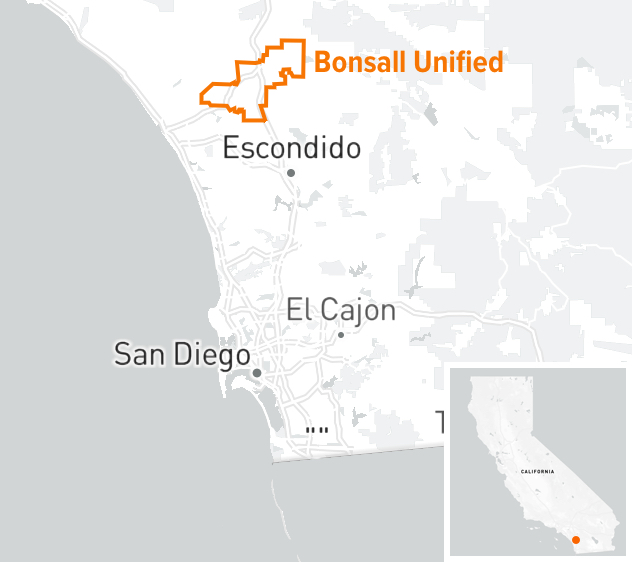
In northern San Diego County, Bonsall Unified School District has forged a significant partnership with the Pala Band of Mission Indians to enhance support for their Native American students. This collaboration enables the district to share attendance data with tribal leaders and convene joint meetings to discuss student and family support strategies aimed at improving school attendance.
For students facing transportation challenges, the tribe may offer to sponsor bus fees. A new position, the Pala attendance support specialist, is being established to conduct home visits for chronically absent students and provide tailored solutions.
During the 2023-24 school year, Bonsall Unified saw a reduction in chronic absenteeism among its Native American youth across all grades, decreasing from a high of 50.9% in 2021-22 to 41%. This progress is attributed not only to the recent agreement, spearheaded by district trustee Eric Ortega and Chairman Robert H. Smith of the Pala Band of Mission Indians, but also to foundational efforts over several years.
Approximately eight years ago, Bonsall Unified schools began hosting Pala Valley Day, an annual event designed to educate students about local Native American history, with presentations often delivered by Native American students themselves. These ongoing initiatives have been instrumental in cultivating a stronger sense of belonging among Native American students.
More recently, middle and high school students participated in a field trip to the American Indian Studies department at Cal State San Marcos. A mural celebrating Native American students is also in development.
“When they belong — when they feel like they belong — they’re more in tune with being happy to be there and wanting to be there,” Ortega remarked about the district's Native American students.
Building Trust Through Collaboration
Many Native American students navigate challenges similar to their peers statewide, including inconsistent transportation, a need for tutoring, and access to counseling. However, by intensifying their collaboration with the Pala Band of Mission Indians, Golly and her staff have observed that students and families are more receptive to support when it originates from their tribal community.
Golly attributes the success of these partnerships, as chronic absences gradually decrease, to the unwavering support from tribal leaders like Chair Smith, whom she described as "a wonderful partner, and he believes strongly in the power of education."
The district also established a Native Learner Advisory Committee, holding its meetings on the Pala reservation. These meetings are coordinated with the Pala learning center and the tribal council to ensure accessibility for a wider range of participants.
Golly emphasized the importance of the district demonstrating that it actively listens to the concerns of its Native American families and responds with actionable solutions based on their feedback. Most recently, a panel of five Native American students presented to the entire certificated staff, sharing insights into their cultural experiences and what makes them feel a sense of belonging or alienation at school.
Ortega views building trust as an ongoing process that requires sustained effort and multi-level collaboration, from school administrators to tribal leaders and parents. “We are right on the precipice of what we’re doing, and so anything can make it go wrong. It's not perfect, but we want this to be our culture, our way of life,” he stated about the partnership. “The more and more we do it, the more positive results we have, the better we’re going to be.”




 Explore AI Teaching Tools
Comments (0)
Please login to comment
No comments yet
Be the first to comment on this article