
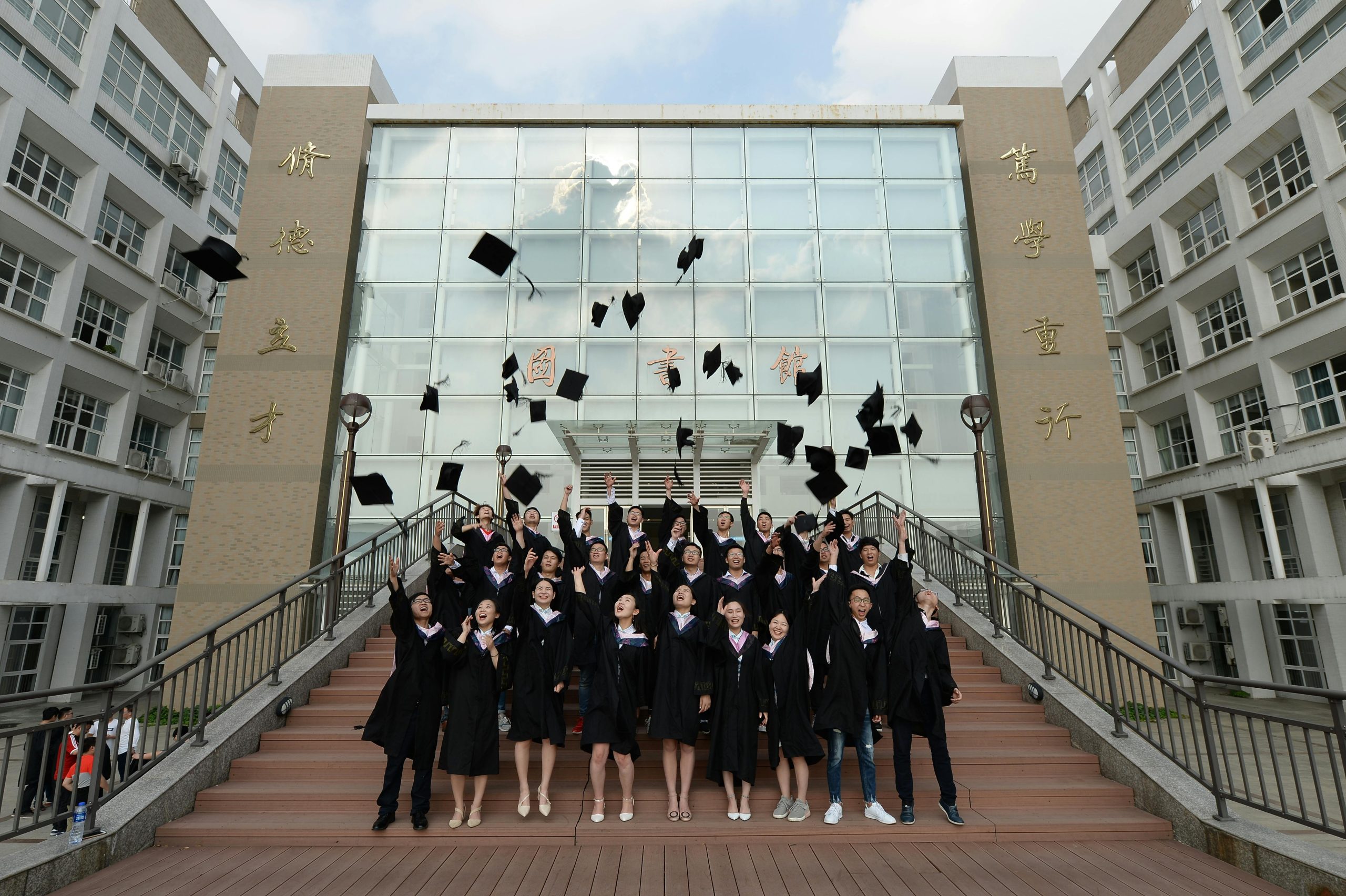
China's ambitious vision for educational reform, aiming to become a global leader by 2035, presents a compelling case study for educators worldwide. This strategic imperative, deeply rooted in national rejuvenation and modernization, places higher education at the forefront of innovation and societal development. Understanding these shifts is crucial for educators seeking to prepare students for a rapidly evolving global landscape.
Higher Education as the Bedrock of a Strong Nation
The Chinese government's commitment to education is not merely rhetorical; it's a foundational pillar for national strength and progress. This focus underscores the transformative power of education, particularly higher education, in shaping a nation's future trajectory.
President Xi Jinping's assertion that "education is the bedrock of building a strong country and achieving national rejuvenation" encapsulates this philosophy. The National Conference on Education in 2024 solidified the goal of building a leading country in education by 2035, emphasizing equitable and quality learning for all.
Higher education institutions are identified as critical hubs for nurturing innovative talent, driving basic research, and achieving scientific breakthroughs. Their effectiveness is directly linked to a nation's future prosperity and global standing.
"The development and effectiveness of higher education are directly linked to the nation’s future. It is increasingly becoming one of a country’s most valuable assets."
Expanding Access, Elevating Quality
China's approach to higher education development is characterized by a dual focus on expanding access while simultaneously enhancing educational quality. This strategy ensures that more individuals can benefit from higher learning without compromising the standards of education received.
The scale of higher education in China has seen remarkable growth. From 1998 to 2025, the number of higher education institutions more than tripled, from 1,022 to 3,167. The student enrollment numbers have surged even more dramatically.
Over the same period, the number of enrolled students grew from 3.6 million to over 48 million, an increase of more than tenfold. This expansion signifies a historic leap toward universal access in higher education, a trend echoed in global education reports.
The gross enrollment rate has nearly doubled every decade, reaching 61.2% today. This transition to universal access is a testament to the nation's dedication to providing more opportunities for its citizens.
Alongside this expansion, significant efforts are being made to improve the overall quality of education. This includes increasing undergraduate educational resources and fostering international cooperation in educational initiatives.
Key Strategies for Quality Enhancement:
- Expanding the supply of undergraduate educational resources.
- Promoting international cooperation in running schools.
- Ensuring that more students have access to quality higher education.
Driving Innovation Through Scientific Advancement
A core tenet of China's higher education strategy is its role in advancing scientific and technological progress. Universities are instrumental in fostering an environment conducive to research, discovery, and innovation.
The nation has implemented major plans to guide universities toward excellence and scientific breakthroughs. These initiatives target fundamental disciplines and encourage interdisciplinary research to push the boundaries of knowledge.
Special emphasis is placed on cultivating young talent in cutting-edge fields. This foresight ensures a pipeline of skilled researchers and innovators for the future.
New platforms such as regional technology transfer centers, university science parks, and advanced research institutes have been established. These entities are designed to integrate teaching, research, and innovation.
This robust innovation ecosystem fosters a cycle of learning, application, and further development. It aims to translate academic research into tangible societal and economic benefits.
"China’s comprehensive ranking in the National Innovation Index now stands at 10th globally, to which higher education has made a vital contribution."
Continuous increases in R&D investment within higher education institutions directly contribute to the nation's overall innovation capacity. This sustained investment fuels the engine of scientific progress.
Talent Cultivation for Economic and Social Development
Higher education plays a pivotal role in supplying the high-calibre talent needed to support China's vast market and complex industrial system. The alignment of educational output with societal demands is a key focus.
Each year, Chinese higher education institutions graduate over 10 million students, with a significant portion specializing in STEM fields. This demographic reflects the nation's emphasis on technological and scientific development.
Vocational education is also crucial, providing over 70% of the new high-quality, high-skilled talent required by modern industries. This highlights a comprehensive approach to workforce development.
Reforms are actively promoting the alignment of talent supply with demand. This includes exploring demand-oriented engineering education models to ensure graduates possess relevant and sought-after skills.
The creation of a rich talent pool enhances the resilience of China's economy. It positions the nation as a key driver of both domestic modernization and global innovation.
Ensuring Equity in Educational Access
Promoting equity in education is a fundamental principle guiding China's higher education reforms. The goal is to ensure that financial circumstances do not prevent any young person from pursuing higher learning.
A comprehensive financial aid system for university students has been established. This system provides a crucial safety net for aspiring scholars from all backgrounds.
With annual funding exceeding RMB 200 billion (USD 29.3 billion), this aid system supports nearly 47 million beneficiaries. It ensures that cost is not a barrier to quality education.
Special national enrollment programs specifically target students from rural and formerly impoverished areas. Cumulatively, these programs have admitted 1.37 million students, fostering greater inclusivity.
The widespread application of intelligent technologies is also being promoted to enhance educational accessibility. The National Smart Education Platform, with an international version reaching over 200 countries, aims to make high-quality resources more available globally.
"The widespread application of intelligent technologies is being promoted, along with the development and implementation of the National Smart Education Platform, of which the international version has now covered over 200 countries and regions to make high-quality educational resources more accessible and inclusive, transcending geographical barriers."
Adapting Higher Education for a Changing World
As China implements its 15th Five-Year Plan, the nation is driving educational reform towards its 2035 goal of becoming a leading educational power. This aligns with the UN's 2030 Agenda for Sustainable Development, particularly SDG 4.
The current global landscape, marked by rapid technological advancements like artificial intelligence, presents new challenges and opportunities. Higher education must adapt to these shifts to remain relevant and impactful.
Shifting Focus to Competency and Values
Universities worldwide are being encouraged to emphasize the development of core competencies. This includes critical thinking, interdisciplinary problem-solving, and global awareness.
Integrating scientific and technological education with humanities education is vital. This fosters both a spirit of scientific inquiry and a foundation of humanistic values, preparing well-rounded individuals.
Digital education and AI should be leveraged to provide equitable access to high-quality resources. This is especially important for learners in remote areas or from disadvantaged backgrounds.
The aim is to equip students with the skills to "learn to know, learn to do, learn to live together, and learn to be." This holistic approach ensures they can navigate and contribute to a complex world.
Embracing Cross-Sector Integration
The era of "innovation intensity" demands greater collaboration between academia, industry, and technology sectors. Higher education can no longer operate in isolation.
Strengthening basic research and interdisciplinary studies is crucial. Encouraging students to solve real-world problems fosters practical application of knowledge.
Mechanisms that mutually support scientific innovation and talent cultivation are being explored. This includes fostering collaboration among government, industry, academia, and finance to accelerate the commercialization of research.
This integrated approach aims to translate knowledge into commercial value and provide forward-looking solutions for sustainable development.
Championing Openness and Global Cooperation
Education serves as a bridge for dialogue and mutual understanding among civilizations. In an interconnected world, cooperation is paramount to addressing global challenges.
Issues like climate change, public health crises, and energy security require collective action. Higher education institutions have a vital role in fostering this collaborative spirit.
Upholding principles of openness, trust, and innovation among universities is essential. This fosters a global community of learning dedicated to progress.
By engaging in close exchanges and collaboration, global higher education can collectively address humanity's major challenges. This joint effort contributes to the advancement of human civilization and sustainable global development.
The ongoing evolution of higher education in China, with its emphasis on quality, innovation, and equity, offers valuable insights for educators globally. As the world navigates complex challenges, the role of adaptable and collaborative higher education institutions becomes increasingly critical for fostering individual development and driving societal progress.






 Explore AI Teaching Tools
Comments (0)
Please login to comment
No comments yet
Be the first to comment on this article