
D.C. Education at a Crossroads: Will Political Battles Derail Student Progress?
The nation's capital stands on the precipice of a political storm that could profoundly impact its students. As a new administration prepares to take the helm, the unique governance structure of the District of Columbia, coupled with national political divisions, sets the stage for potential conflict, with educational progress hanging in the balance.
A Mayor With Unprecedented Power, Facing Unprecedented Opposition
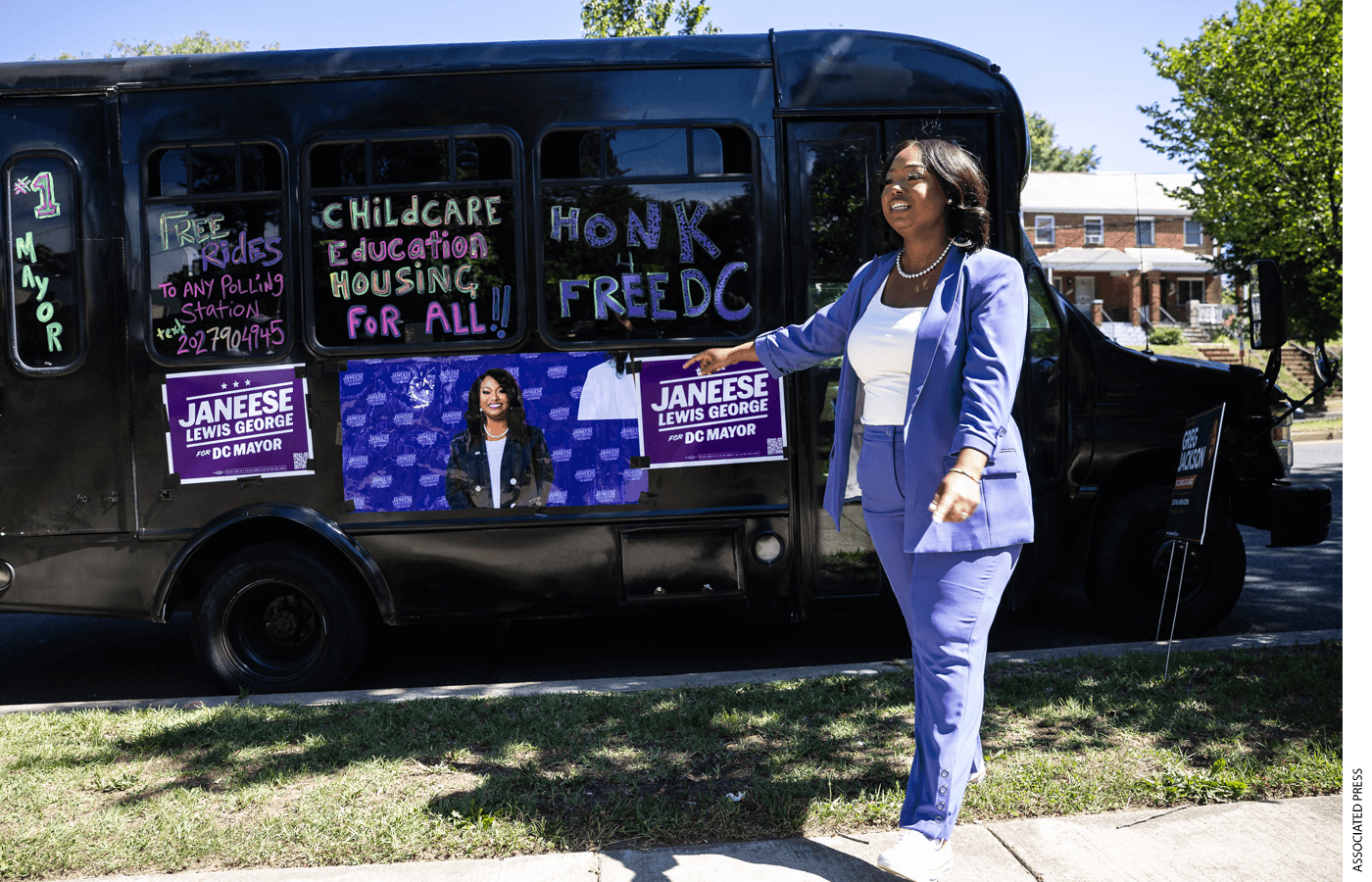
Janeese Lewis George, poised to become the next mayor of Washington, D.C., inherits a position unlike that of many other city leaders. Unlike mayors in New York City, for example, who must navigate the complexities of state legislative approval for many initiatives, the D.C. mayor wields both mayoral and gubernatorial powers under the Home Rule Act.
This dual authority means Lewis George faces fewer immediate constraints from a state legislature potentially at odds with her progressive agenda. Furthermore, the District's business landscape, largely dominated by sectors like hospitality and lobbying, may offer less resistance to her policy goals compared to the powerful financial and corporate interests in larger metropolitan areas.
However, this expanded power comes with a significant caveat: annual oversight from Congress. While federal approval is required for taxation and expenditure policies, the current polarized political climate on Capitol Hill creates a complex dynamic. The need for bipartisan consensus to pass legislation means that even a unified Congress can be stymied by a few dissenting voices, making unilateral federal action unlikely.
The Trump Factor: A Looming Political Showdown
The most significant obstacle for Lewis George may not be within the District's borders, but from the White House. A potential clash with former President Donald Trump, should he seek and win the presidency again, seems almost inevitable. Both figures have much to gain politically by engaging in a high-profile conflict.
Trump could leverage a fight with a Black, self-identified socialist Democrat to energize his base and solidify his standing within the Republican party. Conversely, Lewis George could use such a confrontation to consolidate her power and leadership within the District, rallying residents against an external political adversary.
This anticipated battle could escalate into a protracted legal and political struggle. Executive orders from the White House could be met with lawsuits from the District, leading to a prolonged period of uncertainty as these cases wind their way through the courts. The ultimate victims of such a protracted conflict could be the very students the mayor aims to serve.
A Decade of Remarkable Educational Gains at Risk
The stakes are particularly high given the significant strides made in District of Columbia public schools over the past two decades. At a time when national student achievement has stagnated or declined, D.C. students have shown remarkable improvement.
In 2007, the average academic performance of D.C. students on the National Assessment of Educational Progress (NAEP), often referred to as "The Nation's Report Card," lagged significantly behind the national average. Students were trailing by approximately 23 points in reading and 25 points in math, representing a learning gap of roughly three years.
By 2024, this gap had dramatically narrowed. District students were now only 5 points behind the national average in reading and 7 points behind in math. This impressive turnaround coincided with a resurgence in student enrollment, climbing from a low of just over 70,000 in 2007 to nearly 100,000 by 2026.
The Legacy of Reform: Merit Pay and Union Influence
These educational advancements are widely attributed to a series of reforms initiated during the tenure of Mayor Adrian Fenty, who appointed Michelle Rhee as chancellor of the public school system. Rhee replaced the traditional "step-and-lane" salary structure, which based compensation solely on years of service and academic credentials, with a system that offered the potential for significantly higher salaries based on demonstrated classroom excellence.
Teachers were presented with a choice: remain on the established salary schedule or opt for a "green path" that rewarded exceptional performance with substantial pay increases. This merit-based pay system, however, ignited fierce opposition from teachers' unions, both locally and nationally, contributing to Fenty's electoral defeat and Rhee's eventual resignation.
Despite the controversy, the core tenets of these reforms have largely persisted. Research suggests that these structural changes played a crucial role in the observed improvements in student achievement on the NAEP. As one prominent education policy analyst noted, the District has achieved "one of the most important reform success stories in the country."
A Union's Demand and a Mayor's Dilemma
Now, the local affiliate of the American Federation of Teachers (AFT) is actively campaigning for the dismantling of this merit pay plan. Laura Fuchs, the president of the D.C. AFT, has expressed optimism about Lewis George's potential leadership, stating, "She takes us seriously and believes we are partners."
If Lewis George aligns with the philosophy of the Democratic Socialists of America (DSA), the political organization that has supported her rise, she may feel compelled to concede to the union's demands. Such a decision could lead to the dissolution of the merit pay system that has been linked to the District's educational successes.
While Trump might seek to intervene in such a scenario, union leaders and their allies across the political spectrum are likely to rally in support of Lewis George, potentially amplifying the political conflict.
A Path Towards Cooperation or Continued Conflict?
However, a destructive political battle is not the only possible outcome. Lewis George has already signaled her support for charter schools, indicating a willingness to diverge from some traditional union stances. She could also choose to collaborate with a potential Trump administration on initiatives focused on improving public spaces and infrastructure.
A scenario mirroring the pragmatic accommodation observed between New York City's leadership and the Trump administration could unfold in Washington, D.C. This would involve prioritizing tangible improvements to city operations and public services, a concept sometimes referred to as "sewer socialism," which focuses on enhancing municipal functions rather than enacting sweeping social transformations.
The hope for such a cooperative approach, one that prioritizes the well-being of the District's students above political posturing, remains. Yet, the current political climate suggests that the path of conflict may be the more probable, with the future of D.C. education hanging precariously in the balance.





 Explore AI Teaching Tools
Comments (0)
Please login to comment
No comments yet
Be the first to comment on this article