
Unlocking Children's Potential: Why Play and Creativity Are Essential for Early Education
Imagine a classroom buzzing with energy, where laughter echoes and curious minds are actively engaged.
This isn't just a dream; it's the reality of effective early education.
For young children, the world is a vibrant playground of discovery, and their innate drive to explore, create, and play is the most powerful engine for learning.
At Mentofy, we understand that fostering this natural inclination is not just beneficial, but crucial for developing well-rounded individuals equipped with the skills they need for a bright future.
This article delves into why play and creativity are not mere pastimes but fundamental pillars of a robust education, transforming how children learn and grow.
The Indispensable Role of Play in Childhood Development
Play is often perceived as a simple activity, a way for children to pass the time.
However, extensive research and expert consensus highlight its profound impact on a child's cognitive, social, emotional, and physical development.
From the earliest stages, children naturally gravitate towards play, using it as their primary tool to understand the world around them.
This hands-on, experiential approach allows them to experiment, problem-solve, and build foundational knowledge in a way that passive instruction cannot replicate.
The desire to play is deeply ingrained, driving their curiosity and motivation to explore.
When children engage in various forms of play, they are not just having fun; they are actively constructing their understanding of concepts.
Whether it's building with blocks, engaging in imaginative scenarios, or exploring the outdoors, each activity presents opportunities for learning.
This is particularly evident in early childhood education, where the emphasis is on nurturing this natural inclination.
Studies indicate that children who participate in rich play-based learning environments demonstrate significant advantages in areas such as language development, mathematical reasoning, and social-emotional intelligence.
The skills they acquire through play are not isolated; they are interconnected and transferable to various aspects of their lives.
Types of Play and Their Educational Benefits
The spectrum of play is vast, with each type offering unique contributions to a child's development.
Understanding these different forms can help educators and parents create more enriching learning experiences.
- Dramatic Play: When children pretend to be doctors, chefs, or superheroes, they are developing empathy, understanding social roles, and practicing communication skills.
They learn to negotiate, collaborate, and express themselves creatively.
- Constructive Play: Building with blocks, sand, or other materials allows children to develop spatial reasoning, problem-solving abilities, and an understanding of cause and effect.
They learn about balance, structure, and design.
- Physical Play: Running, jumping, and climbing are essential for developing gross motor skills, coordination, and a healthy body.
This type of play also helps children release energy and improve focus.
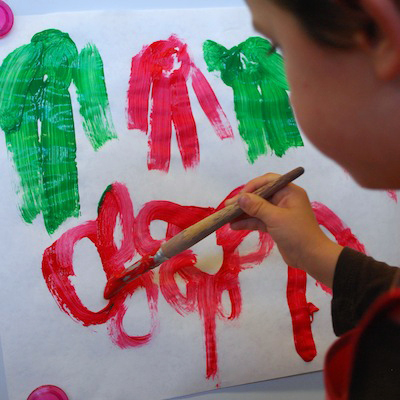
- Creative Arts Play: Activities like drawing, painting, sculpting, and music allow children to express their emotions, explore their imagination, and develop fine motor skills.
They learn to experiment with different materials and techniques.
The integration of these diverse play experiences ensures a holistic approach to education, catering to the multifaceted needs of growing children.
It's about allowing them the freedom to explore their interests and discover new possibilities through active engagement.
Creativity: The Superpower for Future Readiness
Creativity is more than just artistic talent; it's a fundamental cognitive skill that enables individuals to think outside the box, generate novel ideas, and approach challenges with innovative solutions.
In the context of early education, nurturing creativity is paramount for preparing children for a rapidly evolving world.
The ability to think creatively allows them to adapt to new situations, solve complex problems, and contribute meaningfully to society.
Children are naturally creative, possessing an uninhibited imagination and a fearless approach to experimentation.
This innate capacity is a precious resource that education should aim to cultivate, not stifle.
When children are encouraged to express their ideas, explore different perspectives, and take risks without fear of judgment, their creative potential flourishes.
This process not only enhances their problem-solving abilities but also builds their confidence and resilience.
Fostering Creativity Through Engaging Activities
Creating an environment that encourages creativity involves providing children with opportunities to explore, experiment, and express themselves.
This doesn't require elaborate setups; often, simple, hands-on experiences yield the most significant results.
- Open-Ended Materials: Providing materials like clay, paint, building blocks, and recycled items allows children to use their imagination and create whatever they envision.
- Storytelling and Role-Playing: Encouraging children to create their own stories or act out different scenarios fosters imagination, language development, and social understanding.
- Problem-Based Learning: Presenting children with real-world challenges and allowing them to brainstorm solutions encourages critical thinking and creative problem-solving.
- Music and Movement: Engaging in singing, dancing, and playing musical instruments allows for creative expression and develops an understanding of rhythm and harmony.
The goal is to move beyond rote memorization and towards a deeper understanding that is built through active participation and creative exploration.
This approach ensures that children develop not only knowledge but also the ability to apply that knowledge in innovative ways.
The Synergy Between Play, Creativity, and Learning
It's a misconception to view play and creativity as separate from academic learning.
In reality, they are powerful catalysts that enhance and deepen the learning process.
Research consistently shows that when children are engaged through play and creative activities, their retention of information improves, and their understanding becomes more profound.
Consider the simple act of singing educational songs.
Melodies and rhymes leverage our natural inclination to remember patterns, making it easier for children to internalize facts like the alphabet or the days of the week.
This playful approach transforms potentially dry memorization into an enjoyable experience, embedding knowledge into long-term memory.
Similarly, when children engage in pretend play, such as running a make-believe restaurant, they are simultaneously practicing literacy (writing menus), numeracy (calculating bills), and social-emotional skills (interacting with customers).
This integrated learning is far more effective than isolated drills.
The educational philosophy at Mentofy emphasizes this synergy.
We believe that the most effective learning happens when children are actively involved, curious, and empowered to express themselves.
By integrating playful and creative elements into our learning modules, we aim to make education not just effective but also joyful and inspiring for every child.
Addressing the Dichotomy: Play vs.
Academics
A common challenge in educational systems is the artificial separation of play from formal learning, particularly as children transition into kindergarten and first grade.
Often, play is relegated to a reward or an activity that happens *after* academic tasks are completed.
This creates a false dichotomy, suggesting that play is less important or less educational than structured instruction.
However, experts argue that this approach can be detrimental to a child's development and their overall love for learning.
Studies indicate that this shift can lead to a decline in intrinsic motivation and curiosity.
When the focus becomes solely on achieving specific academic outcomes, the joy of discovery can be lost.
This is where the role of educators as guides and facilitators becomes crucial.
Instead of being taskmasters, they can act as "Sherpas," leading children on adventures of learning, where play and exploration are integral to the journey.
The pressure to achieve high test scores can inadvertently lead to an overemphasis on drill-and-practice methods, which may not foster the critical thinking and problem-solving skills that children truly need.
This is especially relevant in today's world, where artificial intelligence can perform computational tasks with unparalleled speed.
To thrive, children need to develop uniquely human skills like creativity, adaptability, and emotional intelligence – skills that are best nurtured through play and creative exploration.
The Importance of Play for All Ages
While the focus is often on early childhood, the need for creativity and free play extends to older children and even teenagers.
The pressure to excel academically can sometimes lead to a reduction in opportunities for arts, sports, and unstructured downtime.
This can lead to increased anxiety and a diminished capacity for deep learning.
Some experts suggest that the current educational landscape may even be "ruining" children's natural curiosity by the time they reach first grade.
The American Academy of Pediatrics emphasizes that play is not frivolous; it is essential for building the architecture of the developing brain.
It enhances executive functions, such as planning, focus, and self-control, which are critical for goal pursuit and ignoring distractions.
When play and nurturing relationships are absent, children are more susceptible to the negative impacts of stress, which can disrupt cognitive and social-emotional development.
In situations of adversity, play becomes an even more vital tool for resilience and well-being.
The pandemic has further highlighted the need for more, not less, play and creative engagement.
As educators and parents, it's vital to recognize that fostering these aspects of development is an investment in a child's long-term success and happiness.
At Mentofy, we advocate for learning experiences that are not only academically rigorous but also deeply engaging and creatively stimulating for learners of all ages.
Conclusion: Embracing Play and Creativity for a Brighter Future
The evidence is clear: play and creativity are not optional extras in a child's education; they are fundamental necessities.
They are the engines that drive curiosity, foster critical thinking, build essential life skills, and cultivate a lifelong love of learning.
By embracing play-based learning and nurturing children's innate creativity, we empower them to become adaptable, innovative, and well-rounded individuals ready to face the challenges and opportunities of the future.
At Mentofy, we are committed to providing learning experiences that champion these vital principles.
We believe that by integrating playful exploration and creative expression into our educational offerings, we can unlock the full potential of every child, ensuring they not only learn but also thrive.
Let us work together to create a world where children are encouraged to play, to create, and to learn with boundless enthusiasm, building the foundation for a brighter tomorrow.







 Explore AI Teaching Tools
Comments (0)
Please login to comment
No comments yet
Be the first to comment on this article