
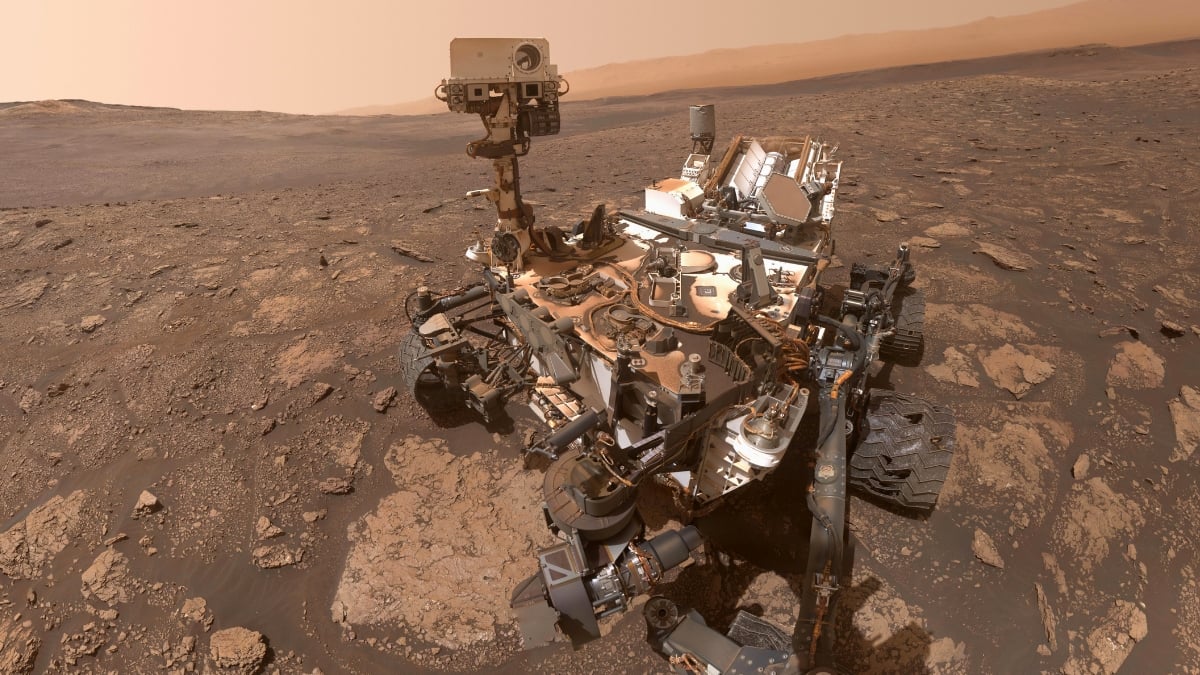
The universe whispers secrets, and sometimes, those secrets are found not in grand pronouncements, but in the subtle chemical signatures of distant worlds. A recent landmark experiment on Mars has unearthed tantalizing clues that could redefine our understanding of life's fundamental building blocks. This discovery isn't just a win for astrobiology; it's a potent reminder for educators about the enduring power of curiosity and the unexpected places where profound learning can occur.
The Martian Soil Yields Unexpected Chemistry
For decades, the search for extraterrestrial life has been a cornerstone of scientific inquiry. While definitive proof remains elusive, the recent analysis of Martian soil has provided a significant leap forward, revealing complex organic molecules previously thought unlikely to persist in such an environment. This sophisticated chemical experiment, conducted remotely, has opened a new chapter in planetary science.
The findings suggest that the conditions on Mars, even billions of years ago, may have been more conducive to the emergence of life than previously hypothesized. The presence of these specific organic compounds, found in a sample collected by a rover, indicates a potential for prebiotic chemistry that mirrors some of Earth's earliest stages.
"This isn't just about finding life on Mars; it's about understanding the very origins of life itself. The molecules we've detected are the fundamental building blocks that, on Earth, eventually led to everything we know."
This breakthrough underscores the importance of persistent, long-term scientific exploration. It's a testament to how carefully designed experiments, even those conducted light-years away, can yield revolutionary insights. For educators, this serves as a powerful analogy for the classroom: consistent effort and a willingness to explore the unknown can lead to remarkable discoveries about our students and the world around them.
Rethinking Learning Through the Lens of Martian Discovery
The implications of this Martian experiment extend far beyond the realm of space exploration. It fundamentally challenges our assumptions about where and how complex chemistry can arise, prompting a reevaluation of our own planet's history and the potential for life elsewhere. This spirit of questioning and re-evaluation is precisely what we should be fostering in our students.
Educators are constantly seeking new ways to ignite student curiosity and make learning relevant. The story of the Mars experiment offers a compelling narrative: a complex problem, advanced technology, and a groundbreaking discovery, all driven by human ingenuity and a deep-seated desire to understand. This is the kind of engagement that can transform passive learning into active exploration.
Consider the process: scientists didn't just land on Mars and hope for the best. They meticulously planned experiments, built sophisticated tools, and interpreted complex data. This methodical approach, coupled with a healthy dose of curiosity, is a model for effective pedagogy. It highlights the value of structured inquiry and the iterative process of learning from results, even unexpected ones.
Igniting Curiosity with Interactive Tools
How can educators translate this spirit of discovery into their daily practice? The answer lies in embracing tools that encourage exploration and active participation. Platforms that offer engaging MentofyCove classroom games, for instance, can transform abstract concepts into tangible challenges, much like the rover's mission.
Imagine using a live quiz focused on planetary science or the building blocks of matter. These activities, when framed within a larger narrative of scientific endeavor, can make complex topics accessible and exciting. The thrill of competition and the immediate feedback from a trivia game can mirror the scientific community's excitement over new findings.
Furthermore, the development of new scientific understanding is often a collaborative effort. Tools that facilitate student grouping and shared project work, like those offered by MentofyGroups, can help students learn to work together, share ideas, and build upon each other's insights—just as scientists on Earth collaborate on major projects.
The Building Blocks of Future Learning
The Mars experiment is a powerful reminder that learning is not always linear. Sometimes, the most significant advancements come from unexpected detours and the relentless pursuit of questions that seem, at first, unanswerable. This is particularly true when we consider the development of essential life skills.
The ability to adapt, to analyze complex information, and to remain curious in the face of uncertainty are crucial competencies for the 21st century. The very process of scientific discovery on Mars, from the initial hypothesis to the final data analysis, is a masterclass in these skills. Educators have the unique opportunity to cultivate these abilities daily.
By integrating hands-on activities, encouraging open-ended questioning, and celebrating the process of investigation—not just the outcome—teachers can help students develop a mindset that mirrors the pioneering spirit of space exploration. This approach moves beyond rote memorization and toward a deeper, more meaningful engagement with knowledge.
- Embrace the unknown: Encourage students to ask "what if" and explore unconventional ideas.
- Foster a growth mindset: Frame mistakes not as failures, but as opportunities for learning and iteration.
- Utilize interactive technologies: Leverage tools like Mentofy AI teaching tools for dynamic lesson planning and assessment.
- Promote collaboration: Create opportunities for students to work together and build upon shared knowledge.
- Connect learning to real-world phenomena: Use current scientific discoveries, like the Mars experiment, as springboards for discussion.
The ongoing exploration of Mars and the discoveries it yields are more than just scientific milestones; they are potent educational narratives. They demonstrate the profound impact of sustained curiosity and the power of collaborative effort in uncovering fundamental truths about our universe and, by extension, ourselves. As educators, we can harness this inspiration to build a future where every student feels empowered to explore, question, and discover their own building blocks of knowledge and life.






 Explore AI Teaching Tools
Comments (0)
Please login to comment
No comments yet
Be the first to comment on this article