
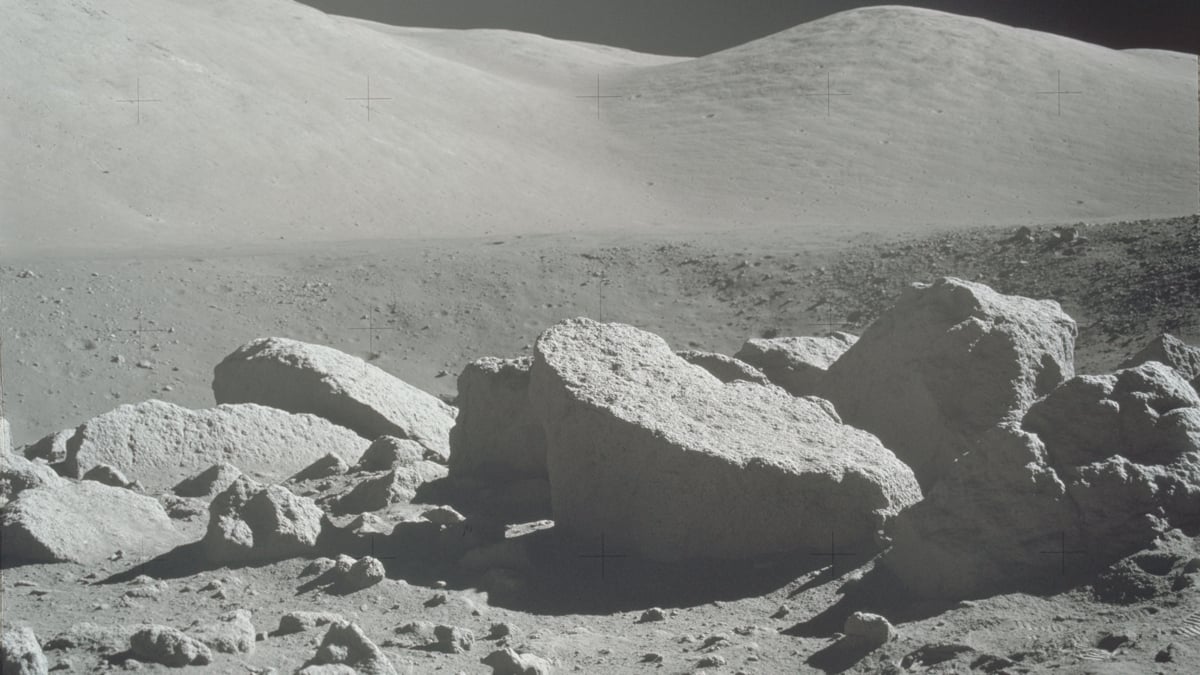
Imagine holding a piece of the Moon, not just any rock, but one that whispers secrets from billions of years ago, revealing a hidden layer of oxygen. This profound discovery, etched into the very fabric of lunar samples, is fundamentally reshaping our understanding of the Moon's ancient atmosphere and has profound implications for how educators can engage students with scientific inquiry and the vastness of space.
The Lunar Oxygen Surprise: A New Chapter in Space History
For decades, the Moon was largely considered a desolate, airless body. However, recent analysis of lunar rocks, specifically those brought back by Apollo missions, has unveiled compelling evidence of a more dynamic past. These ancient samples, like time capsules, hold chemical signatures that point to the presence of oxygen in the Moon's earliest atmosphere.
This isn't the oxygen we breathe today; it's a different form, locked within the minerals of the rocks themselves. The discovery suggests that the Moon, far from being inert, once possessed a tenuous but significant atmosphere, a stark contrast to its current barren state.
"The chemical signature within these lunar rocks is like a lunar fingerprint, revealing a past atmosphere we never truly anticipated."
Understanding this ancient lunar environment requires piecing together subtle clues. Scientists are meticulously studying the isotopic composition of elements within the rocks, looking for anomalies that can only be explained by interaction with a gaseous envelope.
Unlocking Ancient Secrets: What the Rocks Tell Us
The key to this revelation lies in the detailed chemical analysis of the lunar rocks. Researchers have identified specific mineral structures and elemental distributions that are consistent with exposure to an oxygen-rich environment billions of years ago. These aren't just random occurrences; they form a consistent pattern across multiple samples.
The presence of this ancient oxygen hints at a more complex geological history for the Moon than previously thought. It suggests that the Moon may have had volcanic activity and interactions with solar winds that contributed to its early atmosphere. This scientific detective work is thrilling, and it offers a fantastic opportunity to bring the wonder of space exploration into the classroom.
The Science Behind the Signature
The scientific process involves examining the oxidation states of elements within the lunar regolith. When oxygen is present, it reacts with minerals, leaving behind a distinct chemical signature. Scientists are essentially reading the history of these reactions embedded within the rocks.
Consider the implications for teaching chemistry and geology. This discovery provides a real-world, albeit extraterrestrial, example of chemical reactions and their lasting impact. It’s a tangible link to the fundamental principles students learn in science class.
Bringing the Cosmos to the Classroom: Engaging Students with Lunar Discoveries
This groundbreaking research offers educators a unique opportunity to ignite curiosity about space science. The idea of a once-oxygen-bearing Moon is far more captivating than a simple description of a vacuum. It’s a narrative that can be woven into lessons across various subjects.
Teachers can leverage this discovery to foster critical thinking and inquiry-based learning. Instead of just presenting facts, educators can pose questions: What might have caused this ancient atmosphere? How did it dissipate? What does this tell us about the formation of planetary bodies?
Actionable Insights for Educators
Here are some ways educators can incorporate this exciting lunar discovery into their teaching:
- Spark Curiosity with Questions: Start lessons by asking students to imagine what the Moon might have been like billions of years ago.
- Visual Aids are Key: Use images and diagrams of lunar rocks and their mineral compositions. Resources showing the Earth-Moon system's evolution can be particularly impactful.
- Connect to Chemistry: Explain how chemical reactions, like oxidation, are responsible for the observed signatures in the rocks.
- Introduce Scientific Inquiry: Frame the discovery as a scientific mystery that was solved through careful observation and analysis.
- Integrate with Technology: Utilize tools for creating engaging content. For instance, Mentofy AI teaching tools can help generate lesson plans or interactive quizzes about lunar geology and the solar system.
The concept of a hidden layer of oxygen on the Moon is a powerful hook. It transforms the Moon from a static object into a dynamic, evolving celestial body with a history waiting to be uncovered.
A recent survey of 1,500 K–12 science educators indicated that 70% are seeking new ways to make space science more relatable and exciting for their students.
This lunar oxygen revelation perfectly fits that need. It’s a concrete example of scientific discovery that can be explored through various lenses, from the chemical reactions in the rocks to the vast timescales involved.
The Future of Lunar Exploration and Education
As we continue to explore the Moon and analyze more samples, we are likely to uncover even more secrets about its past. This ongoing research reinforces the idea that scientific understanding is always evolving, and new discoveries can dramatically alter our perspectives.
For educators, this means a constant stream of fresh, engaging material. The Moon’s ancient atmosphere, hinted at by the chemical signatures in its rocks, is just one example of the wonders that await our discovery. By embracing these new scientific narratives, we can inspire the next generation of scientists and explorers.
The story of the Moon's hidden oxygen is a testament to the power of scientific investigation and a reminder that even seemingly familiar celestial bodies hold profound mysteries. This discovery offers a tangible link to the ancient past, providing educators with a compelling narrative to share with their students and a reminder that the universe is full of surprises waiting to be unearthed.






 Explore AI Teaching Tools
Comments (0)
Please login to comment
No comments yet
Be the first to comment on this article