
Connecticut schools are witnessing a seismic shift in how they approach early literacy, driven by a powerful realization: the earliest detection of reading delays is paramount. For too long, a significant number of children have slipped through the cracks, their struggles with foundational reading skills going unnoticed until they reach upper elementary grades, a point where remediation becomes exponentially more challenging. This proactive stance, fueled by the science of reading and legislative mandates, is reshaping classrooms and offering a brighter future for countless students.
The Science of Reading Demands Early Intervention
Decades of research underscore a fundamental truth: all children develop reading abilities through a common set of cognitive processes. This principle holds true for every child, whether they are English language learners, students with dyslexia, or those who grasp reading concepts with ease. The science of reading reveals that some kids simply require more explicit, targeted instruction to strengthen specific, underdeveloped reading skills.
However, the crucial first step in this process is identifying precisely which skills are lagging. This requires specialized teacher training and the right diagnostic tools, resources that were historically scarce in many Connecticut schools. The landscape began to change dramatically with the 2023 Right to Read law, which mandates that districts implement K-3 literacy curricula firmly rooted in the science of reading. Early indicators suggest this legislative push is yielding positive results in identifying and addressing reading delays.
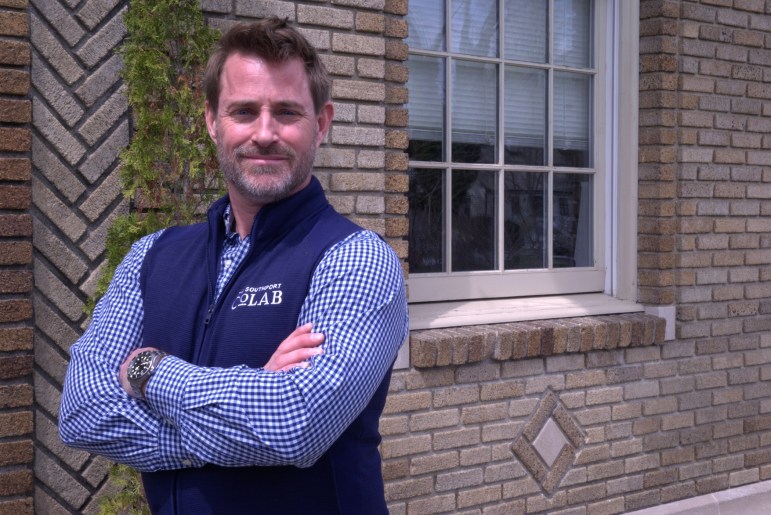
“From a developmental standpoint, we are much better off — exponentially better — by flagging these kids early,” says Benjamin Powers, Executive Director of The Southport CoLAB. Early identification, he emphasizes, is not just beneficial; it's a critical pathway to ensuring long-term academic success.
Unlocking the Powers of Early Detection
The Southport School, a private institution that has long championed science of reading-based instruction, has been at the forefront of this movement. Through its outreach arm, The Southport CoLAB, it has offered free reading screenings to parents across Connecticut. This spring, a significant surge in demand prompted a partnership with Sacred Heart University to expand screening capacity. Benjamin Powers notes that the number of screenings has doubled from the previous year, highlighting a growing parental awareness and concern.
Powers frequently encounters children whose reading delays go undetected until fourth or fifth grade. By this stage, the academic gap has widened considerably, making it an uphill battle for them to catch up. This predicament is exacerbated by the fact that fourth grade marks the transition to "reading to learn," meaning that a child's ability to absorb content across all subjects hinges on their reading proficiency.
How Early Screening Works
The screening process, as implemented by organizations like The Southport CoLAB, is designed to be efficient and informative. A typical screening session lasts between 20 to 30 minutes, depending on the child's age, and is conducted on a tablet. These sessions involve a series of engaging activities that collect data on various cognitive processes essential for reading. One such process is "rapid automatized naming" (RAN), which assesses a child's speed and accuracy in retrieving familiar object names from memory.
Upon completion, the program generates a comprehensive report tailored for both teachers and parents. This report clearly indicates whether the child is at risk for conditions like dyslexia. It's important to note that these screeners do not provide a formal diagnosis but rather serve as an early warning system, enabling proactive support for the child, their teacher, and their family.
The core principle behind this proactive approach is "dosage"—ensuring children receive the right amount of targeted practice. As Powers explains, "Some kids just need a lot more exposure and practice." The key is to be specific: if a child struggles with particular letter patterns or sound-symbol relationships, the instruction must directly address those areas. Yet, he reassures that "every child really needs the same kind of scope and sequence to build the reading brain." With appropriate support, the vast majority of kids can achieve reading proficiency.
Right to Read Transforms Public School Classrooms
The Right to Read law is now actively disseminating these foundational principles throughout Connecticut's public school system. While the screeners employed by districts may vary in length—the widely used DIBELS assessment, for instance, takes under 10 minutes—the underlying strategy remains consistent. Children are guided through a series of prompts, and the resulting data is used to pinpoint specific skill deficits. This information then informs the delivery of targeted interventions.
Diana DiIorio, Stratford's Assistant Superintendent for PreK-6, elaborates on the DIBELS process. "The teacher sits one-on-one with the child. It is on a Chromebook… It's very self-explanatory. They hit a button that starts, they have prompts of what to ask the child and the child responds on the Chromebook according to what they feel the answer is. A lot of it is timed."
DiIorio acknowledges that prior to the Right to Read initiative, Stratford's screening efforts were heavily weighted towards comprehension. "What we were missing was the really systematic and explicit teaching of all of those phonemic awareness and phonics skills, which is the basis and the foundation" for advanced reading. This oversight meant that students who entered kindergarten already reading fluently but lacking the building blocks for multisyllabic words would eventually falter, often by fourth grade.
Targeting the Building Blocks of Reading
Jennifer Novelli, New Haven's Supervisor of Elementary Reading and Language Arts, provides a concrete example of how younger children are assessed for "phoneme segmentation fluency." This critical skill, developed before formal reading instruction, involves breaking down spoken words into their individual sounds. Novelli explains, "So, if I say ‘mop,’ the child would be expected to take that word and segment it" into its constituent sounds: "mm," the short "o," and "p."
Crucially, at this stage, the focus is not on letters but on the child's understanding of how to deconstruct words aurally. Phoneme segmentation, Novelli clarifies, falls under the umbrella of phonological awareness—a foundational skill that acts as a vital precursor to reading acquisition.
Districts across Connecticut are now screening students multiple times per year, with many incorporating additional progress monitoring between these formal assessments. The initial results from diverse districts offer compelling evidence of the impact of these new strategies. In the affluent town of Fairfield, where 74% of kindergarteners were already proficient readers in the 2023-24 school year, the implementation of a new science of reading-aligned curriculum and screening regimen (using Acadience) did not cause the anticipated dip in performance. Instead, by the end of first grade, the proficiency rate for that same cohort had risen to 78%.
Janine Goss, Fairfield's Executive Director of PK-12 Literacy, expressed surprise: "You do expect implementation dips. We did not see them." This positive trend was observed across all student groups benefiting from the new Right to Read instruction.
In New Haven, a district with a significantly different demographic profile, the impact has been equally notable, albeit on a different starting point. While 61% of first graders in 2024 were "well below" grade level, the science of reading-aligned programming has demonstrably narrowed the gap. By second grade, only about 51% remained "well below," and the percentage of students reading at or above grade level saw a welcome increase. Novelli also reported a reduction in the "summer slide," the typical decline in reading skills over the long vacation.
Bridging the Early Learning Gap
Despite these encouraging trends, Novelli points to a persistent challenge: the shortage of accessible, high-quality pre-kindergarten education. "Our students that go to our preschools in the city are definitely better equipped and more ready with the literacy skills," she states. Expanding preschool access, she believes, would significantly bolster early literacy preparedness.
New Haven's director of early childhood has indeed implemented a robust phonemic awareness and phonics program for 3- and 4-year-olds. Children who miss out on this early exposure, particularly those who begin kindergarten without foundational English reading skills developed at home, face an inherent disadvantage. While catching up is theoretically possible, it hinges on having a sufficient number of well-trained teachers equipped with the time and resources to provide necessary interventions.
This brings us to another significant hurdle: teacher training. Despite Connecticut's commitment to the science of reading for K-3, many new teachers graduate without the specific skills needed to interpret and act upon reading screener data. Consequently, the responsibility of providing this crucial training often falls to individual school districts, a task that extends to upskilling existing educators who never received this foundational knowledge.
The Imperative of Ongoing Professional Development
DiIorio highlights that the true transformation to a science of reading approach often occurs within districts through sustained professional development. "We spent all last year looking at the data [from the reading screenings]," she recounts. "How to analyze the data, and then what to do with it. And then it was a whole 'nother module of planning lessons based on what data was in front of you."
Stratford participated in early state-led science of reading training sessions, which occurred approximately monthly over a six-month period. Subsequently, the district partnered with HILL for Literacy to provide ongoing online training, in-person coaching, and data analysis support. The challenge, DiIorio notes, is "bringing that knowledge to the entire district."
Goss in Fairfield has also invested heavily in teacher training. Under her guidance, literacy teams have been established at both district and building levels across elementary and middle schools. With approximately 200 elementary classroom teachers, she recognized the impossibility of providing individualized support to each one. She commends her staff for their willingness to mentor newer educators: "We feel really good about knowing that even though they may not have the experience they need coming straight from college, they're going to get that support when they come into our schools."
DiIorio points out that the challenge of adequately preparing new teachers extends beyond literacy instruction. "I went through it myself," she shares. "I have a teaching degree. Nobody shows you how to handle management of students, the behaviors of the students, the social emotional skills. You learn about it. You learn that there's trauma in children. … But the training is not there."
Equity and the Reading Divide
The funding structure of Connecticut's public schools introduces an inherent equity issue. Wealthier districts often possess significantly more resources than those in urban centers like New Haven or Hartford, where the local tax base is more constrained. This disparity directly impacts the quality and availability of new teacher training programs.
DiIorio experienced this firsthand. "I started in a very affluent school district, a couple miles away. My training as a new teacher was so different from when I came to Stratford as a principal. It was so eye-opening … the difference in new teacher training and what they get."
New Haven employs literacy coaches in each school to deliver professional development on the science of reading. However, Novelli believes the district would benefit from a greater number of dedicated reading interventionists—specialists who focus exclusively on providing targeted small-group instruction. "Last year, we did lose two positions … and we don't have enough people as it is," she states. "If we could have a certified reading interventionist at each school, it would be so helpful."
The shortage of certified reading specialists is a statewide concern. At a March meeting of the General Assembly's BERGIN Commission, University of Connecticut literacy professor Rachael Gabriel presented data indicating that poorly implemented Tier 2 interventions, which include targeted group instruction, can actually yield negative outcomes for students. Gabriel noted, "There was a shortage in this area [of literacy specialists] when I moved to Connecticut 16 years ago, and the programs [to train them] have shrunk, not grown."
Gabriel highlighted the inaccessibility and cost of these specialized training programs. Her program at UConn, which meets state requirements and spans over 18 months and 21 credits, is akin to a master's degree. "That is super expensive. So, for a practicing teacher to say, ‘I’m gonna take my evenings and my weekends and do this for two years and pay $30-$40,000 for it,’ is a really significant ask."
Beyond Reading: The Executive Function Challenge
While the focus on early literacy is critical, Benjamin Powers expresses a deeper concern that keeps him up at night: a significant decline in students' executive function over the past decade. "Ten years ago, somebody could focus on the screen for about two and a half minutes before they got distracted. Today, that's down to about 40 seconds," Powers observes. This diminished capacity for sustained attention and focus directly impacts a child's ability to absorb information, including reading material.
Powers speculates that societal shifts, such as increased screen time and a potential decrease in unstructured play and reading exposure, may be contributing factors. "Qualitatively speaking, you see, going to the grocery store, parents are just giving kids their phones to keep them occupied. Or even on the playground, you'll see parents pushing kids on the swing set, and they're looking at their phone," he says. "Kids just don't have the same reading exposure they used to."
The commitment to early detection and targeted intervention, as mandated by the Right to Read law, represents a monumental step forward. However, addressing the complex interplay of foundational reading skills, early childhood education, comprehensive teacher training, and the broader challenge of executive function will require sustained effort and innovative solutions. The journey towards ensuring every child in Connecticut can read proficiently is ongoing, demanding collaboration and a continued focus on evidence-based practices to empower both educators and students.



 Explore AI Teaching Tools
Comments (0)
Please login to comment
No comments yet
Be the first to comment on this article